Wednesday, July 1, 2026 · Trucking & Freight
Freight Forwarders Risk Customer Churn Through Slow Quotes and Poor Visibility
Noted by Team Logi-Sys · 840 reads
Slow quotations, delayed updates and disputed invoices can erode shipper trust over time, even when freight rates remain competitive.
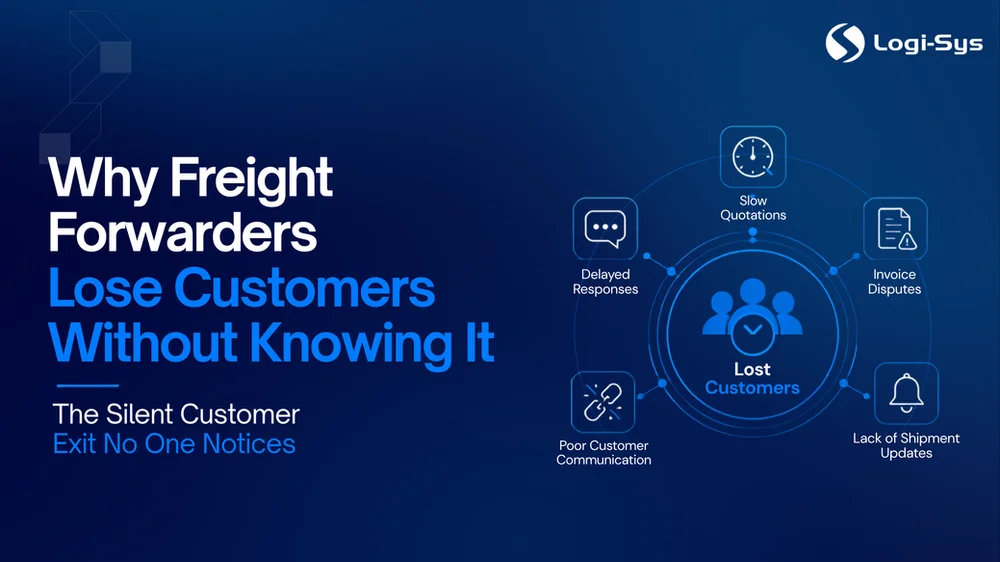
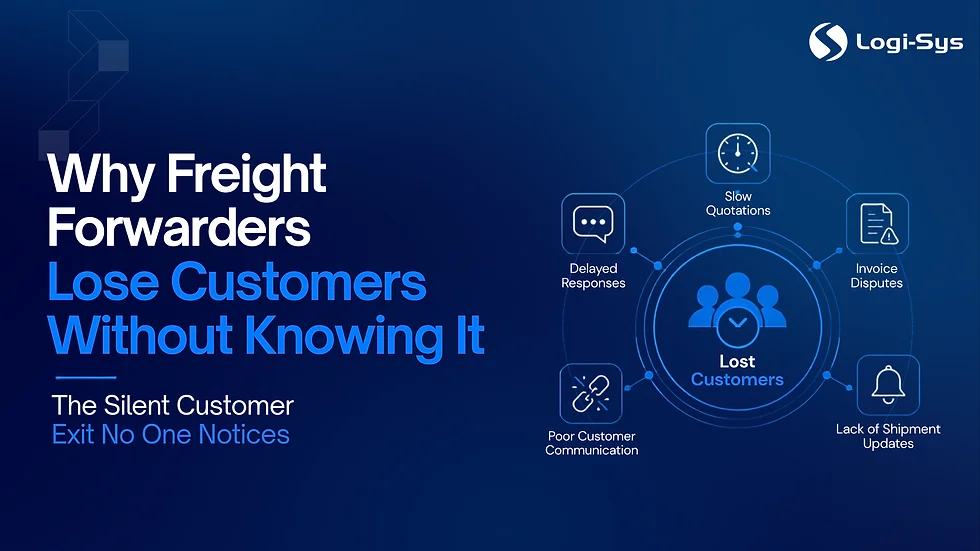
Small service failures can drive shippers away
A competitive rate may win a shipment, but it rarely secures an account by itself. For freight forwarders, customer losses can build gradually through routine friction: quotes that arrive late, unanswered questions, unexpected invoice items and shipment updates that customers have to request.
Each incident may seem manageable in isolation. Repeated across bookings, they make a shipper question whether the forwarder can handle the next load reliably. By the time the customer begins seeking alternatives, the underlying problem may have been present for some time.
Price still matters, but it may not explain why a customer stops tendering freight. The more useful clues can be found in the daily work around a shipment: how quickly the team prices it, how clearly it communicates changes and whether billing matches what the customer expected.
Quote delays affect more than one booking
Shippers often request pricing from several forwarders at once. A timely, accurate quote gives a provider a chance to compete for the load. When the response depends on scattered emails, spreadsheets and manual approvals, however, the customer may receive an answer after another provider has already secured the business.
The delay can reveal a wider process problem. Sales may be waiting for rates, operations may be searching for shipment details and managers may need to approve pricing one request at a time. The shipper sees the wait, not the internal handoffs causing it.
One missed booking is a direct loss. Repeated slow responses can also shape expectations: a customer may start to assume that routine requests will require extra follow-up. That impression can affect whether the forwarder is considered for future freight, even when the quoted price is competitive.
Silence makes routine uncertainty harder to manage
International and domestic freight can involve changing schedules and multiple handoffs. Shippers may accept that plans change; they still need timely information about what has happened and what comes next. Questions about departure, clearance and delivery timing are easier to manage when the forwarder can answer without a long internal search.
When shipment details sit across separate systems or teams, operations staff may need to check several sources, customer service may send internal requests, and sales may chase an update. Hours can pass, and sometimes days, before the customer hears back.
Even when cargo is progressing as planned, a lack of communication can leave the shipper unsure whether anyone is monitoring it. Regular updates help the customer plan around milestones and spot when a schedule change needs attention. They also reduce the need for repeated calls and messages simply to establish a shipment’s status.
Billing disputes can undermine confidence
An invoice that differs from the original quote gives customers a reason to ask what changed. Additional charges may relate to operational developments, data entry or a gap between billing and shipment records, but the customer needs a clear explanation of the amount and when it became known.
Without that context, a billing difference can look like a lack of transparency. Resolving the dispute then draws time from finance, operations and customer service, while the shipper waits for an answer. Even a correct charge can become a source of friction if it arrives without a timely explanation.
Predictable billing depends on accurate information passing between the teams that quote, handle and invoice a shipment. When each team works from disconnected records, details can be entered more than once or fail to reach the invoice. Clear communication about cost changes can help customers understand what they are paying for and why.
Visibility should answer what happens next
Customers want more than a location update. They need to know which milestones are complete, whether a delay has emerged and what action or event is expected next. If they have to contact the forwarder for each piece of information, they may feel responsible for managing a shipment they entrusted to the provider.
Visibility is therefore part of the service experience. It connects operational progress with the decisions shippers need to make, such as coordinating receiving activity or updating internal plans. A status message is most useful when it arrives at the point the customer needs it and explains any meaningful change.
Proactive communication also covers the smaller interactions that shape an account: returning a call, answering a message, sending shipping advice and explaining revised costs. When these tasks repeatedly fall behind, customers can stop expecting a prompt response and quietly begin asking other providers for quotes. Silence from an account is not necessarily a sign that service is working well.
Look for the operational causes
Customer experience is shaped by the work behind the service. When sales, operations, finance, documentation and customer communication rely on separate workflows, staff may duplicate information, miss updates or spend time reconciling inconsistent records. Customers experience the resulting delays and confusion even if they never see the internal process.
A more connected workflow can help teams find shipment information, keep pricing and billing details aligned, and send routine updates with less manual chasing. The practical goal is consistency: a quote that arrives in time to be useful, an answer based on current shipment information and an invoice the customer can understand.
Forwarders can look for recurring friction in the questions customers ask and the work required to resolve them. Frequent requests for status, repeated invoice queries and slow quote turnaround point to different parts of the service process. Tracking those patterns gives teams a clearer place to start than treating each complaint as an isolated event.
Trust is built shipment by shipment
Replacing an account takes time spent prospecting, meeting, preparing proposals and negotiating. Losing one through avoidable service problems can also affect referrals, long-term revenue, staff morale and sales capacity. Those effects may be hard to see when customers reduce their bookings gradually instead of announcing a departure.
Fast, accurate quotations, useful updates, understandable billing and dependable visibility give shippers reasons to keep returning. They don't remove every disruption from freight operations, but they can make problems easier to identify and explain. The clearest signal to watch is whether customers can get the information they need without repeatedly asking for it.


