Wednesday, December 4, 2024 · Warehousing & Fulfillment
Mustang Boots: A Teenager’s Purchase, a Slippery School Hallway and a Lasting Memory
Noted by Dan Bridger · 608 reads
A Milwaukee teenager bought Mustang boots with pointed toes and heels, then learned the hard way that metal heel cleats and school linoleum didn’t mix.

The Mustang name first caught my attention on cars. When Ford introduced the car in 1964, I was 12, and I thought it looked great. Ford sold more than one million Mustangs during the first two years, a launch that soon prompted other automakers to offer cars with the same long-hood, short-deck look.
A couple of years later, that familiar name turned up somewhere I hadn’t expected: on a pair of boots in a Milwaukee shoe store. I was about 14 or 15, shopping at Father and Sons, which I think was near Fond du Lac and Hampton Avenue. I can’t remember what I originally went in to buy. I do remember the moment I saw the Mustang boots.

The boots had the kind of details that made an immediate impression on me: a Mustang logo, pointed toes and heels about an inch and a half high. A zipper ran up the inside of each ankle, making them easy to put on and take off. I tried on a pair, found one that fit, and decided I wasn’t leaving without them. Fortunately, I had enough money with me to pay for the purchase.
Only after I’d left the store did another thought catch up with me: What would my parents say? I don’t remember them objecting much. I’d spent money I had earned myself, so I wasn’t especially worried they would make me return the boots. In my mind, they were a keeper. I wanted to protect them from wear, and I soon came up with a plan for the heels.
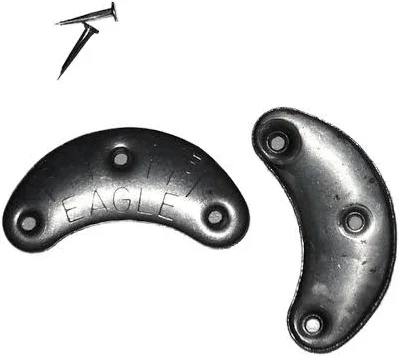
The next day, I bought metal cleats and nailed them onto the heels. It was the weekend, and once I’d finished hammering them in, I was ready to show off my new boots at school on Monday. The cleats seemed like a practical way to help the heels last. I hadn’t yet considered what metal on the bottom of a shoe might do on a smooth floor.
Monday morning brought the sound I’d been looking forward to: the boots clicking as I walked down the hall. Then I came to a corner. The linoleum was slippery beneath the metal cleats, and I hadn’t learned to adjust my step. I lost my footing and nearly fell in front of a couple of girls.
It was an embarrassing introduction to the boots’ new hardware. After that close call, I paid attention to how I walked for the rest of the day. The cleats had changed the way the boots met the floor, and the hallway made the consequence clear. A heel covering that seemed useful for protecting a favorite pair could also make an ordinary school walk less steady.
The next morning, a teacher stopped me as I came down the hall. He told me cleats weren’t allowed at school and that I had to remove them when I got home. If I came back wearing them, he said, I would be sent home. That settled the question of whether I could keep the metal on the heels while wearing the boots to class.
At home, I clawed the cleats off. The boots went on without them, and I wore down their soles over time until I eventually had to throw them away. Their useful life ended, but my affection for them didn’t. I remember the logo, the pointed toes, the heels and the excitement of finding something I wanted so much that I bought it on the spot.
The Mustang name had first made an impression through a car; later, it showed up on footwear that felt just as exciting to a teenager. My attempt to make those boots last added a lesson I hadn’t planned on: a small change in how footwear contacts a floor can affect how it feels to walk. I kept the memory long after the soles wore out.


