Friday, September 11, 2026 · Supply Chain Tech
What Makes a Contract Binding: Key Terms, Fairness and Management
Noted by [email protected] (Sean Heck) · 933 reads
Contracts rely on clear agreement, value exchanged and legal capacity. Implied terms and unfair gains can also shape obligations after signing.
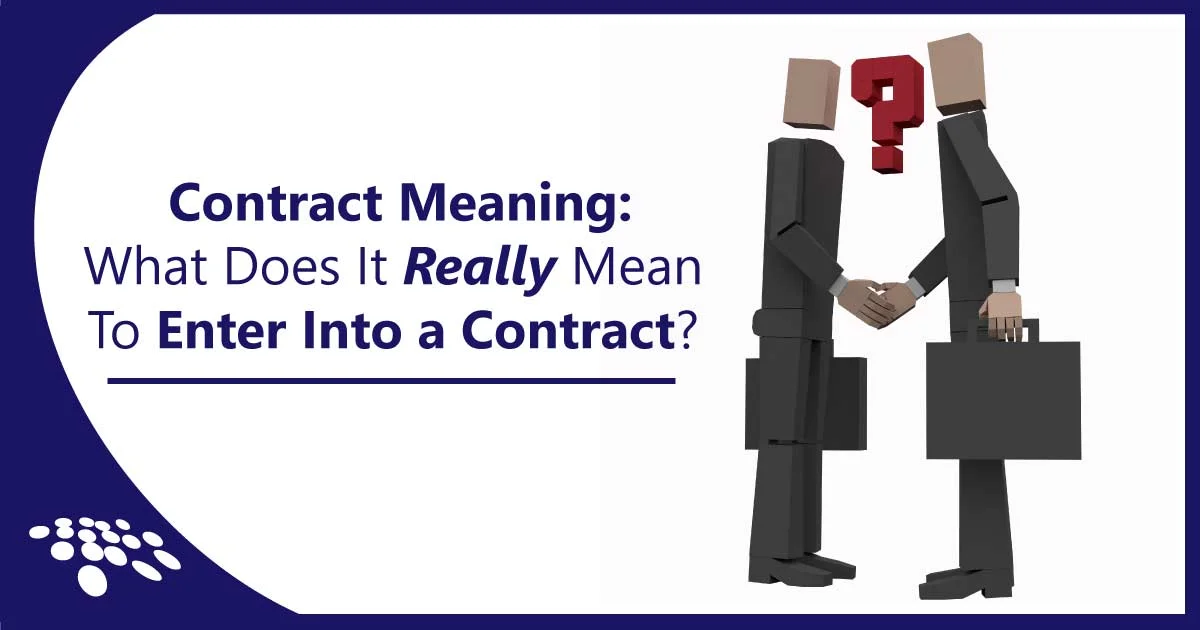
Contracts shape routine business activity, from buying equipment to hiring service providers. Their practical value depends on more than a signature: the parties need a clear agreement, an exchange of value, the ability to enter the agreement and terms that serve a lawful purpose. Understanding those elements helps teams spot gaps before an agreement is signed and manage obligations afterward.
A contract is an agreement between two or more parties to do something or refrain from doing something. It can be enforced through the legal system when it meets the applicable requirements. Contracts are used across industries and in personal transactions, but the details of each agreement determine what the parties have committed to do.
How agreement takes shape
Offer and acceptance establish what the parties are agreeing to. One party proposes terms, and the other accepts them. If the recipient changes the proposed terms, that response is a counteroffer; the agreement is not complete until the parties accept the same terms. Clear wording matters because it helps each side understand the commitments and the consequences of accepting them.
A signature commonly records that agreement and supports execution. Electronic signatures are one way to sign. A response that makes acceptance conditional on additional terms signals interest but leaves the agreement unresolved until those conditions are accepted. Teams should track the final version and confirm that the terms signed match the terms the parties settled.
The parties also need to understand that they are agreeing to be bound and that each has obligations under the arrangement. Without this mutual commitment, an apparent agreement may be one-sided or incomplete. That shared understanding is part of what turns a discussion into a contract.
Value, capacity and lawful purpose
Consideration means that each side gives or promises something of value in exchange for something else. The exchange may take different forms, but it must be lawful and understandable within the agreement. This principle is often summarized as “what for what”: the contract should make clear what each party provides and what it receives in return.
Each party must also have the legal capacity to enter the agreement and understand its terms. The source material identifies capacity as a core requirement but does not list the specific circumstances that can affect it. In practice, teams should verify that the people signing have authority to commit their respective parties and that the relevant requirements have been considered.
A contract must have a lawful purpose. An agreement intended to support an illegal enterprise can be invalid. For contract managers, this makes the purpose and the activities described in the document as important as the commercial exchange. If the underlying arrangement is not lawful, clear signatures and payment terms cannot fix that defect.
These basic elements are often described as the foundation of a valid contract and an executed contract. They are useful review points during drafting, negotiation and approval. For a closer look at the elements, see this contract overview.
When one party benefits without paying
Contract disputes can involve benefits received even when a written agreement does not settle the issue. Unjust enrichment describes a situation in which one party benefits at another’s expense in circumstances considered unfair. The party that received the benefit may be required to provide restitution or reimbursement to the party that bore the loss.
Consider an IT provider hired to repair a company’s computers. The provider completes repairs on half the machines, then the company ends the arrangement and refuses to pay for the completed work. The company has received a benefit, while the provider has not been reimbursed for that work. The example shows why teams need to monitor services delivered and payments due, particularly when an agreement ends before all work is complete.
Adhesion agreements and implied terms
An adhesion contract gives one side substantially more influence over the terms. The stronger party, often a business, prepares a standard form that the other party has little practical ability to negotiate. The recipient can usually accept or reject the offer, but may have limited room to change its conditions. That structure is common in transactions where one party presents the same template to many customers.
A landlord’s lease is one example described in the source. The landlord may provide a standard agreement to prospective tenants, and requests to amend it may be declined. The tenant then chooses whether to sign the presented terms or leave the arrangement. For organizations reviewing such agreements, it helps to distinguish terms that can be negotiated from those that are presented as fixed, and to understand the obligations before committing.
Not every contractual obligation appears word for word in a signed document. Implied terms can arise from statutes, industry norms or the operation of law. These terms may set expectations associated with good faith even when the agreement does not expressly state them. For example, a company buying electronics in bulk may reasonably expect the products not to have severe defects. The example illustrates how surrounding rules and commercial expectations can affect an agreement’s meaning.
Managing obligations across the contract lifecycle
As an organization handles more agreements, keeping terms, approvals, deadlines and responsibilities visible becomes an operational task. Contract lifecycle management practices can help teams follow agreements from drafting and negotiation through execution, compliance and renewal. The source’s  points readers to a guide on those stages, while its Contract Lifecycle Management Best Practices resource addresses risk and obligations.
Software can support that work by organizing agreements and helping teams track their lifecycle. The source describes AI-enabled contract management as a way to support legal intake and contract processes, and names CobbleStone Contract Insight® as one platform. It also links to a  buyer’s guide and a product demonstration.
The practical takeaway is to check the agreement at each stage: confirm the offer and acceptance, document what each side gives, establish who can sign, and review the purpose and obligations. After execution, track performance and payment so that work delivered, terms owed and renewal decisions remain visible. Those habits help organizations manage their agreements and the business relationships built around them.
The source says it was updated on September 11, 2026, and first published on November 30, 2023. Its information is educational and is not a substitute for advice from an attorney on a specific matter.