Friday, May 22, 2026 · Trucking & Freight
Fleet TCO: Where to Cut Vehicle, Fuel and Maintenance Costs
Noted by Basil Marcus · 309 reads
Fleet costs extend beyond purchase price. Lifecycle analysis, driver habits, fuel controls, maintenance and resale value shape total cost of ownership.

A fleet’s purchase price captures only one part of what it costs to keep vehicles working. Fuel, repairs, insurance, administration and eventual resale all affect the total cost of ownership (TCO). Fleet managers who compare those costs across a vehicle’s full service life can make better buying, maintenance and replacement decisions.

The savings often come from looking at costs together. A lower priced vehicle may lose value faster or be poorly suited to its work. Fuel waste can accumulate across many vehicles, while unmanaged repairs and administrative tasks consume staff time. Here’s where fleet teams can focus.
Compare vehicles across their full life cycle
Purchase price alone can make a vehicle look economical. But a model that depreciates quickly, or doesn’t fit the job, may cost more over time than a better matched option. A life cycle cost analysis includes acquisition, operating costs and projected resale value, helping managers compare vehicles on the same basis.
Acquisition choices also affect who carries the risk when a vehicle’s value changes. Leasing and financing have different TCO implications, and open end and closed end leases allocate residual value risk differently. Those costs can come into focus at the end of a term, so fleet teams should include the lease structure in their comparison.
Historical data on depreciation, resale value and maintenance can help managers estimate the full cost of different makes and models. A life cycle analysis can also inform budgets, maintenance schedules and the timing of vehicle replacement or sale.

Before committing to a vehicle, estimate its value at disposal as well as its operating costs. Reconditioning a vehicle before sale may improve the price it receives at auction. Sale timing also matters because used vehicle markets change. These factors can add up across a fleet.
Compare leasing and buying and review lease structures as part of the analysis. For disposal planning, fleet remarketing can help managers consider sale timing and returns.
Include the time spent managing vehicles
Administrative work is another fleet cost, even when it doesn’t appear on a fuel or repair invoice. The source estimates that a manager earning $75,000 a year who spends 10 hours each week on fleet tasks represents nearly $40,000 in annual labour cost.
Those hours can go to arranging service, reviewing insurance, handling claims, tracking registrations and coordinating vehicle sales. Managers may also spend time advertising and negotiating when they sell vehicles themselves. Each task draws attention from customer work and other business priorities.
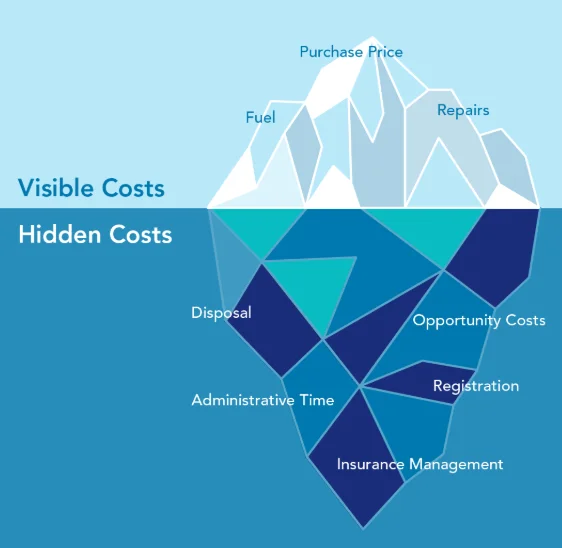
Tracking the time spent on these activities gives fleet managers a fuller picture of operating costs. It can also show where centralized processes or outside support might free up staff capacity.
Driver habits affect fuel use and wear
Driving behaviour can affect costs as much as vehicle choice. Hard braking, rapid acceleration, speeding and extended idling can raise fuel consumption and put additional wear on vehicles. Liability claims and insurance costs add further expense when driving problems persist.
Driver training and telematics can help teams identify patterns and address them. Telematics data is useful when managers can connect it to practical steps, such as coaching drivers or reviewing vehicle use. The goal is to reduce avoidable fuel use, wear and risk across the fleet.
Make fuel purchases visible
Fuel waste can be hard to spot one transaction at a time, but repeated across a fleet it can become a substantial cost. A multi brand fleet card can give drivers more options for buying fuel nearby, instead of limiting them to one chain’s prices.

Purchase records also help managers check whether a transaction fits the vehicle and its needs. The article describes two examples. Mainland Group of Companies, in Greater Vancouver, previously saw fuel spending as a dollar total but couldn’t match purchases to individual vehicles or tell whether a fill exceeded a vehicle’s needs. Its fleet card now links purchases to specific vehicles.
Tidewater Midstream, which operates in Western Canada, set dollar limits on driver cards and monitored transactions in real time. The system flags purchases that don’t make sense, including fills larger than a vehicle’s tank capacity. Tidewater receives a fuel exception report within minutes of a flagged transaction.
These examples show how vehicle level records and transaction alerts can support cost tracking and identify suspicious purchases. A fleet fuel tracking system can help managers examine these controls across their own operations. More detail is available in this guide to fleet fuel tracking.
Use maintenance schedules to control costs
Tire pressure, timely servicing and the right motor oil can affect fuel efficiency. The source says these steps have improved fuel efficiency for some clients by up to 45%, while proactive maintenance programs have cut overall maintenance costs by 20–30%. Those figures are presented as client results, not as a guaranteed outcome for every fleet.

The practical challenge is maintaining schedules across many vehicles and locations. Automated reminders can help teams keep up with planned service. Review processes can also help distinguish necessary repairs from work that can wait or may not be needed.
Mainland Group’s earlier process left drivers to book service, pay by credit card and submit expenses, with no shared schedule or reliable way to track the work. Under its current process, reminders use vehicle data and technicians review repair recommendations before approval. They can question unnecessary work, suggest lower priced vendors and flag vehicles that may be better replaced than repaired. The article says this approach saves clients like Mainland an average of $60 per maintenance purchase order.
That kind of review links maintenance spending to the vehicle’s broader life cycle. A repair decision can affect downtime, future maintenance costs and whether it makes sense to keep the vehicle.
Assess electric vehicles by route
Electric vehicles may make financial sense for some fleet uses, particularly predictable routes with access to charging. The source estimates that a driver covering 20,000 kilometres annually in a densely populated area with developed charging infrastructure could save around $2,000 in fuel by switching to an electric vehicle.
EVs can also reduce some maintenance needs: they don’t require oil changes, fan belts or air filters, and regenerative braking reduces brake wear. Their purchase price is higher, so the relevant comparison is total life cycle cost. A small pilot on predictable routes can help a fleet assess how the vehicles fit its work and charging access.
Coordinate the work across the fleet
Each cost control can help on its own, but the results depend on how well the pieces fit together. Vehicle selection, fuel purchases, maintenance, staff time and resale all affect TCO. A fleet management company may combine these functions through vehicle analysis, fuel card programs, maintenance review, remarketing, telematics and safety programs.
Tidewater Midstream’s fleet grew from zero to 35 vehicles within 18 months and now stands at 135 units, according to the source. Its fleet card program, invoicing and strategic planning are managed externally. The company says it hasn’t needed to hire a fleet administrator and estimates annual savings of $30,000–$40,000. The source also quotes a Tidewater supervisor saying that handling the work internally would require a substantial amount of staff time.
For fleet managers, the useful measure is whether the combined data leads to lower costs, less downtime or reduced risk. A TCO review can bring the main decisions into focus: which vehicles to buy, how to manage them, when to replace them and how to sell them. Evaluating a fleet management company is one way to assess whether outside support fits those needs.


