Tuesday, October 20, 2026 · Ocean Shipping & Ports
Northern Sea Route Passes 2025 Transit Record as Cargo Volumes Climb
Noted by Sam Chambers · 534 reads
The route logged 104 confirmed transits by Sept. 30, with tankers and Russian energy cargo driving growth.
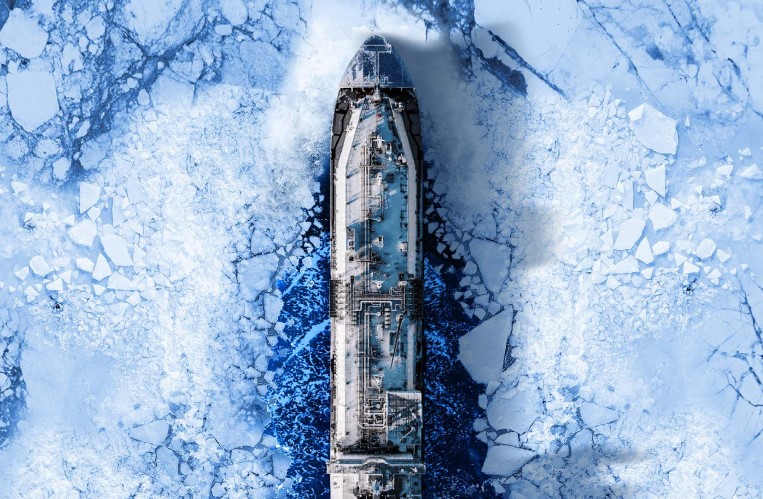

The Northern Sea Route has already exceeded its full-year transit record, with energy cargoes accounting for much of the increase. By Sept. 30, Norway’s Centre for High North Logistics (CHNL) had confirmed 104 voyages along the route, one more than the 103 recorded during all of 2025 and ahead of the 97 transits in 2024.

The figures point to a busier Arctic shipping season, though the confirmed count is only part of the picture. CHNL identified another 45 potential transits that were either underway or within the route at the end of September. If those voyages are completed, the season could approach 150 transits and carry more than 4.5 million tonnes of cargo. Those are estimates, rather than completed totals.
Tankers account for most eastbound cargo
Estimated transit cargo had reached 3.7 million tonnes by the end of September, 15% above the total for all of 2025. The combined deadweight of vessels using the route rose 26% to 7.8 million tonnes. These measures describe different parts of the activity: cargo estimates track the goods moved, while deadweight reflects the vessels’ carrying capacity.
Tankers were the largest contributors to eastbound cargo. Twenty-two eastbound tanker voyages carried approximately 2.1 million tonnes, predominantly Russian crude bound for Asia. Bulk carriers added 1.1 million tonnes of eastbound cargo. Westbound activity was also substantial, with ships making the return journey from Asia toward European Russia, including vessels repositioning for further work.
That mix matters for interpreting the transit count. A record number of voyages does not, by itself, show how much cargo the route carries or how regularly it serves a particular trade. The cargo and vessel figures provide a fuller view: crude oil dominates the reported eastbound tanker totals, bulk cargo adds another significant stream, and repositioning contributes to the movement in both directions.

More direct Asia-Europe voyages
CHNL recorded four completed direct Asia-Europe voyages by Sept. 30, compared with one during the whole of 2025. That remains a small number relative to the wider transit total, but it signals increased use of the route for through voyages between the two regions.
Russian energy exports are a central source of traffic. Russian oil exports through the Northern Sea Route have climbed nearly 50% this year, and approximately 20 million barrels were shipped to Asia between July and mid-October. CHNL also counted four eastbound liquefied natural gas cargoes, together carrying about 300,000 tonnes.
Disruptions around the Strait of Hormuz, the Suez Canal and the Black Sea have added to the route’s appeal, despite the expense and hazards of Arctic passage. The figures don’t establish how much each disruption contributed to the increase, or whether the current level of use will continue. They do show that shippers and operators have moved more cargo through the route during this season, particularly energy shipments heading east.
Operating trade-offs in Arctic waters
The growing volume comes with environmental and operating risks. The route crosses waters that are especially sensitive to pollution, and the effects of a spill can be harder to manage in remote areas with harsh conditions and limited response infrastructure. More tanker voyages mean more exposure to that risk, though the source figures do not report any spill incidents.
Dr. Sian Prior, lead advisor to the Clean Arctic Alliance, warned earlier this year that increased commercial shipping would bring “increased climate impacts, increased pollution and increased loss of biodiversity.” The organization has highlighted black carbon from ships burning fossil fuels. When soot settles on snow or ice, it darkens the surface and reduces the sunlight reflected away, which can speed melting.
Research from Switzerland points to another possible local effect. Scientists at Lausanne’s Swiss Federal Institute of Technology used emissions from their own research vessel to study how ship exhaust can alter Arctic cloud formation. Preliminary estimates suggest that polluted clouds forming above ice could change cloud properties and produce around 1 millimetre of additional melting per day within roughly 100 metres. That finding describes a localized estimate; it does not quantify the effect across the whole route.
For freight planners, the record is a measure of rising activity, not proof that the passage is suitable for every cargo or schedule. The projected season total remains contingent on the potential voyages identified by CHNL being completed. Final transit and cargo figures will clarify how much of the late-season activity materialized, while the cargo mix will show whether growth remains concentrated in energy shipments and bulk freight. For now, the clearest operational takeaway is that the route has already surpassed its previous annual transit mark, with further voyages still possible.


