Thursday, October 22, 2026 · Ocean Shipping & Ports
FrieslandCampina Puts Factory Operators at the Center of Supply Chain Improvements
Noted by Henrieke Wagenvoort · 807 reads
FrieslandCampina’s factory changes focus on standard work, cost benchmarking and giving operators more responsibility as dairy prices fall.

FrieslandCampina’s supply chain changes put factory operators closer to decisions about performance, equipment and efficiency. David Cutter, the company’s chief supply chain and research and development officer, says the aim is to unlock the skills of people on the factory floor and give them greater ownership of their work. That approach is now being carried forward by local teams after several years of introducing and establishing the methods.
Cutter joined the Netherlands-based dairy company in 2022 and took a seat on its Executive Board at the same time. He brought more than 30 years of experience in global supply chains. His remit has included simplifying and standardizing factory operations, strengthening day-to-day discipline and improving operational performance and efficiency. He also introduced a structured programme for comparing costs and finding savings across Cost of Goods Sold.
Factory teams take greater ownership
For Cutter, the central idea is that factory employees are among the company’s most important and undervalued people. Their practical knowledge of machines and processes, he argues, can help improve performance when teams have the authority and support to use it. His description of operators becoming the “CEOs” of their machines captures the shift: those closest to production should have a stronger role in caring for equipment and managing its performance.
That requires a different relationship between leaders and frontline teams. Cutter describes an “inverted pyramid” and a “help, not tell” mentality: managers should support operators rather than rely on instructions handed down through the organization. In practice, that means building a common way of working while making the people who run production part of the effort to improve it. The source does not detail particular machine-level procedures, but the stated emphasis is clear: factory performance depends in part on whether local teams can apply their knowledge and take responsibility.
Cutter says he initially led the programmes from the front. As the methods became established and demonstrated their value, his role shifted toward encouraging teams and keeping them engaged. That change suggests the company is trying to make the approach part of regular factory work, rather than a project that depends on one senior leader directing each step. For operators, the practical test is whether the new responsibilities come with enough support to identify problems and act on them.
Standard work and cost discipline
Simplifying and standardizing factory operations gives sites a shared basis for running and assessing their work. Cost benchmarking adds another layer: teams can compare costs systematically and look for savings across the goods they produce. Cutter’s programme covers all aspects of Cost of Goods Sold, though the available account does not name individual cost categories, savings targets or factory results.
Those limits matter when judging the scale of the improvement. The company says the changes have significantly improved operational performance and efficiency, and that they have strengthened resilience. It does not provide figures for output, downtime, cost reductions or the number of factories involved. The reported gains therefore describe the direction of the work, while leaving the size of the results unquantified.
Standardization and operator empowerment serve related purposes. Shared methods can make it easier to establish consistent routines across factories; local ownership can help teams apply those routines to the equipment and conditions they know best. The balance is important for a global manufacturer: consistency provides a basis for comparison, while operator involvement keeps improvement connected to the realities of production. The account presents that combination as a change in both factory practice and mindset.
Market pressure raises the stakes
The operating changes come after a difficult 12 months for dairy markets. High global milk production has contributed to falling dairy commodity prices, according to the source. That market pressure makes factory efficiency and cost control especially relevant to a business that processes milk into a broad range of products. It does not, by itself, establish how much the programmes have offset lower prices; no financial contribution or savings figure is provided.
FrieslandCampina is owned by more than 15,000 dairy farmers in the Netherlands, Belgium, Germany and France, who are members of Zuivelcoöperatie FrieslandCampina U.A. The company traces its roots to 1871, when Dutch farmers joined together to strengthen their market position and begin cheese production. Its product range now extends from milk, yoghurt and cheese to infant nutrition and specialized ingredients for food and pharmaceutical industries.
That breadth makes the factory operating model relevant across different forms of dairy production, although the source does not say how the approach is tailored to each product or site. The practical focus remains on common operating discipline, cost comparisons and the capabilities of factory teams. With Cutter reappointed to the Executive Board for another four years, he is set to continue helping shape the company’s direction. For supply chain leaders watching the programme, the key evidence will be whether factory teams sustain the methods and whether the company reports measurable performance and cost results.
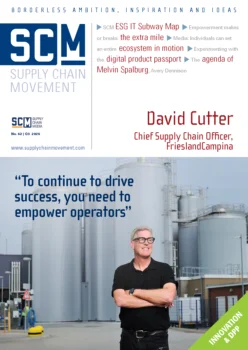
Get your digital subscription of Supply Chain Movement No. 62, Q3 2026 now! >>
The post David Cutter, FrieslandCampina: “To continue to drive success, you need to empower operators” appeared first on Supply Chain Movement.
===

