Friday, October 23, 2026 · Warehousing & Fulfillment
Empathy and Employee Empowerment Can Set Supply Chain Service Apart
Noted by Henrieke Wagenvoort · 434 reads
At inNOWvate, Steven Van Belleghem argued that lasting customer loyalty depends on understanding people and giving employees room to respond.
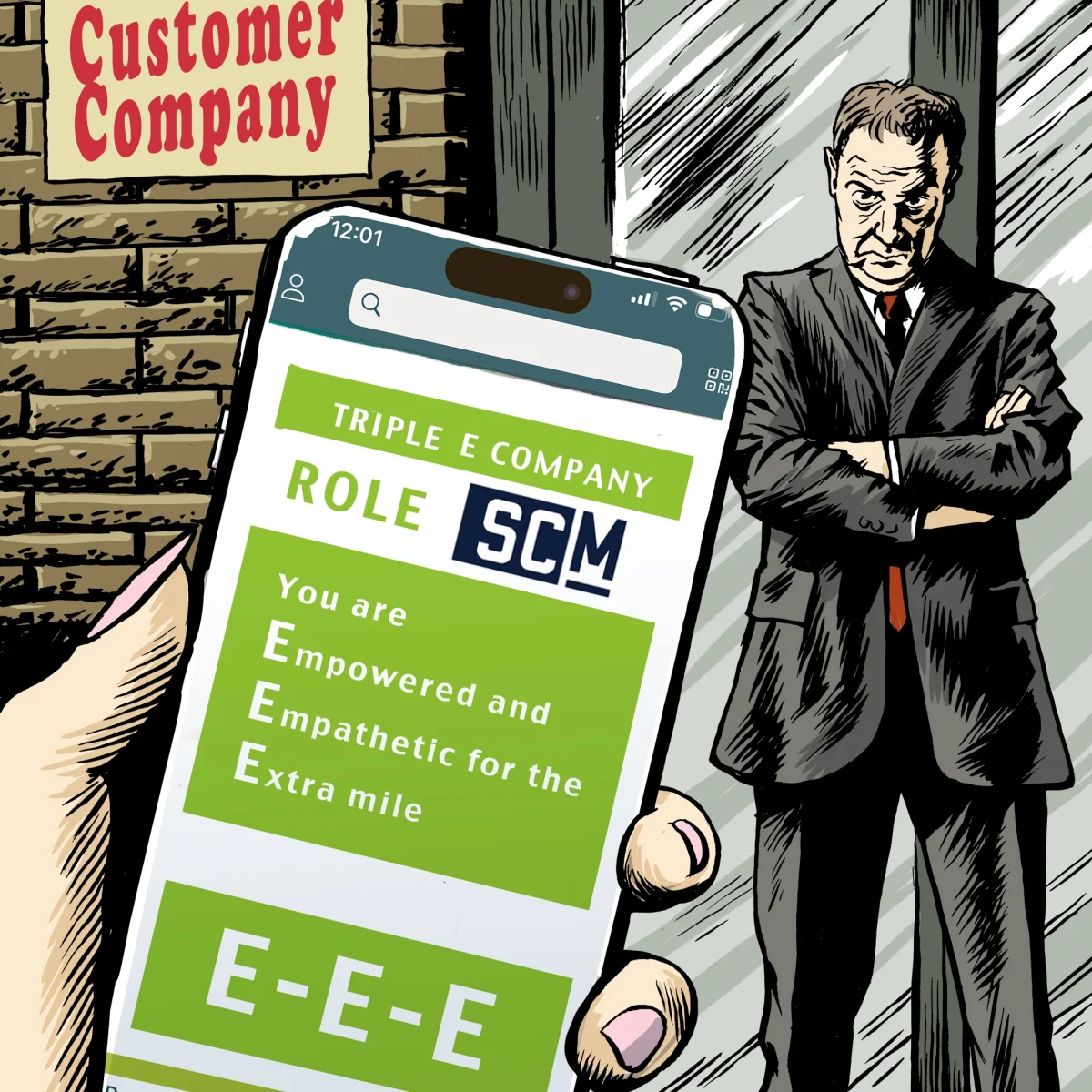
Efficient processes and capable technology can help a company serve customers, but they may not make the service memorable. Steven Van Belleghem’s message at the inNOWvate Supply Chain Event in Amsterdam on 3 June 2026 was that businesses seeking to go the extra mile also need to understand the person behind each customer and empower employees to act on that understanding.
That distinction matters in supply chains, where customer interactions often happen through everyday tasks: arranging a delivery, checking an order, resolving a service problem or answering a question about availability. A process can complete the task correctly and still leave the customer with little reason to remember the interaction. Van Belleghem’s argument points to the human judgment involved in turning competent service into a positive experience.
Novelty fades into expectation
Van Belleghem described how enthusiasm for a new product or technology tends to cool as people get used to it. A new Netflix subscriber may initially be struck by the range of series and documentaries, he said. After a few months, the complaints can shift to the subscription price or the feeling that there is nothing left to watch. He illustrated that familiar frustration with subscribers repeatedly watching “Emily in Paris.”
He sees a similar pattern with technology. The first iPhones made a strong impression, he said, but after two or three years they had become ordinary. ChatGPT also generated excitement when it appeared in November 2022; now, Van Belleghem said, users complain that it is too expensive or too slow.
The examples highlight a practical challenge for service teams: what impresses people at first can quickly become the baseline they expect. A company cannot assume that a new tool or feature will keep customers delighted simply because it was once novel. As users become familiar with a service, their attention shifts to whether it works for them in the moments that matter.
For supply chain operations, that shift can put the focus on how well a service handles customers’ changing needs. Digital tools may give people more ways to place orders or get information, while operational processes support the movement of goods. But the interaction still depends on whether the customer can get a clear answer or useful help when the standard process does not fit the situation. That is where employees’ ability to listen and respond can shape how the service is experienced.
Few customers share a standout experience
Van Belleghem used a show of hands to illustrate the gap between companies’ efforts and customers’ reactions. He asked the 300 people in the room whether they had experienced such a positive interaction with a company in the previous two weeks that they had told friends, colleagues or family about it. Only seven or eight raised their hands.
He said the result was typical, with the question producing a figure between 1% and 5% in settings around the world. In his view, that is a sobering outcome given the many interactions companies and brands have with customers and the work they put into making those customers happy.
The small number of hands suggests that routine satisfaction and an experience worth recommending are different things. A customer may receive the expected service without feeling moved to talk about it later. For operators, that makes the details of an interaction worth examining: whether staff understand what the customer is trying to accomplish, whether they can explain the next step, and whether they have room to respond when a standard answer falls short.
Empathy needs room to shape service
Van Belleghem urged businesses to understand “the person behind the customer.” The phrase shifts attention from a transaction or service record to the individual dealing with the company. In practice, that means noticing the customer’s circumstances and concerns rather than treating every request as interchangeable.
Empathy alone does not complete an order, resolve a delay or answer a question. It can, however, help an employee understand what kind of response would be useful. Empowerment gives that employee room to act on the understanding. Without that room, staff may recognize a customer’s problem but still be limited to repeating a process that does not address it.
For managers, the implication is to consider how people, processes and technology work together during customer contact. Efficient systems can support reliable service, and digital tools can make information easier to access. Employees also need to be able to use their judgment when a customer’s situation calls for a response beyond the routine path. The source does not set out a particular staffing model or operational change; its central point is that technology and process efficiency alone are not enough to create a memorable experience.
The inNOWvate discussion leaves companies with a useful measure to watch: how often service gives customers a reason to tell someone else about it. If that response remains rare, more efficiency may not address the gap. Understanding customers and giving employees room to respond are the human parts of service that can make an ordinary interaction stand out.
Get your digital subscription of Supply Chain Movement No. 62, Q3 2026 now! >>