Friday, August 14, 2026 · Trucking & Freight
Two-Factor Authentication Adds a Second Check to Freight ERP Access
Noted by Team Logi-Sys · 521 reads
Freight ERP accounts can expose shipment, customer and financial data. Two-factor authentication adds an identity check when passwords are compromised.
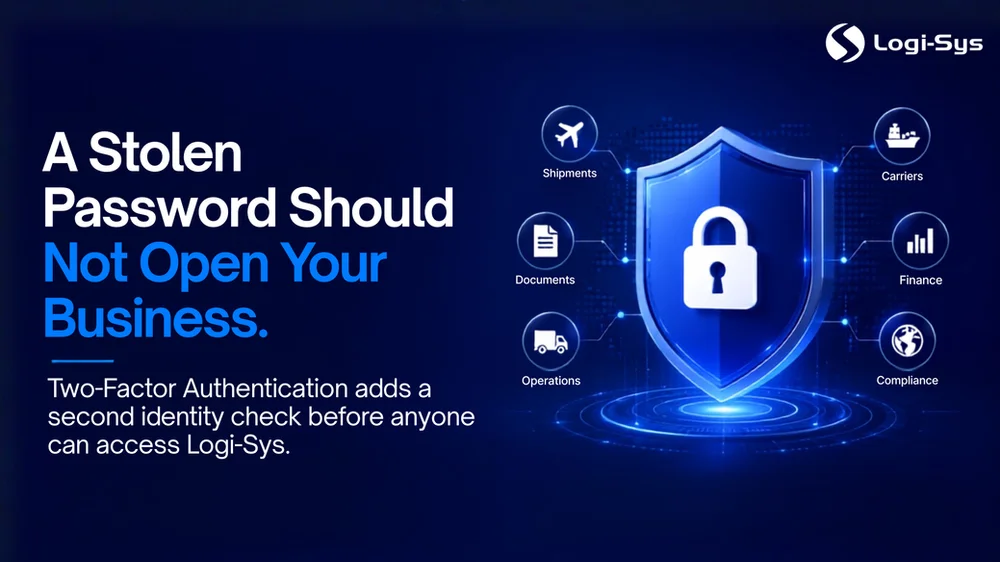
A freight ERP login can open access to shipment records, customer details, commercial invoices, freight rates and operational documents. That concentration of information makes account security a business concern: a stolen password could put data and day-to-day workflows at risk.
Two-factor authentication (2FA) adds an identity check after the password. For freight forwarders whose work depends on connected information and shared systems, that extra step makes a compromised credential harder to use on its own.
One login can reach across freight operations
Freight forwarding links shippers, consignees, agents, carriers, warehouses and finance teams through a chain of shipment activity. An ERP often holds information used across those workflows, including customer and supplier records, financial details, shipping documents and commercially sensitive rates.
A compromised account may give an intruder the access already assigned to its legitimate user. Depending on the account’s permissions, that could mean viewing records or carrying out actions within the system. The source of the incident might be one reused, shared, phished or breached password; the potential consequences can touch operations, finances and customer relationships.
That’s why the risk extends beyond a single employee’s account. If a login exposes information used to coordinate shipments or handle payments, an access incident can disrupt work and undermine customer confidence. The specific exposure depends on the data and permissions tied to that account.
What 2FA changes
A password checks something the user knows. 2FA adds a second identity verification before access is granted. If the password has been exposed, the additional check creates another barrier between stolen credentials and the ERP account.
Logi-Sys offers two-factor authentication for its ERP, adding that second check during sign-in. The stated purpose is to make it more difficult for someone with a compromised password to gain unauthorized access. The source does not specify the verification method, so operators should confirm the available options and login process for their own setup.
2FA addresses one access risk; it does not, by itself, protect every system or account. Its value depends on how it fits into an organisation’s wider security practices, including account permissions, user habits and processes for managing access. It should be treated as one layer in that broader effort.
Make the added step workable
An extra verification step adds a small amount of friction to each login. For teams that use an ERP throughout the day, the practical question is how to make that check part of normal work while ensuring employees can complete it when they need access.
Freight businesses can begin by identifying which employees use the ERP and what information their accounts can reach. They can then explain the sign-in process, make sure users know how to complete the second check, and give them a clear route to resolve access problems. These steps help keep an added security measure from becoming a source of avoidable workflow confusion.
Account access also depends on everyday behaviour. Employees who reuse or share passwords can increase the chance that one exposed credential affects more than one person or system. Clear expectations for individual logins and careful handling of credentials support the protection 2FA is intended to provide.
Security belongs in ERP operations
Digital freight workflows rely on more information moving through connected platforms. That puts access controls alongside the operational decisions involved in selecting, configuring and maintaining an ERP. Security needs attention from the people who manage the platform and the employees who sign in to use it.
Data protection rules and frameworks, including GDPR and India’s Digital Personal Data Protection framework, place importance on protecting personal information and preventing unauthorized access. Using 2FA does not automatically make an organisation compliant. Meeting applicable requirements depends on broader controls, privacy practices, governance and operational processes.
The practical case for a second login check is narrower and clear: it adds protection against compromised credentials. For freight businesses, the check can help guard access to the records and workflows that support daily operations. A password may start the sign-in; the second verification helps establish that the person using it is authorized to enter.


