Monday, October 12, 2026 · Trucking & Freight
Four Fleets Report Safety and Compliance Results After Changing Telematics Providers
Noted by Motive · 858 reads
Four fleets report changes in safety visibility, driver behavior and compliance after switching providers; survey and research figures add context.
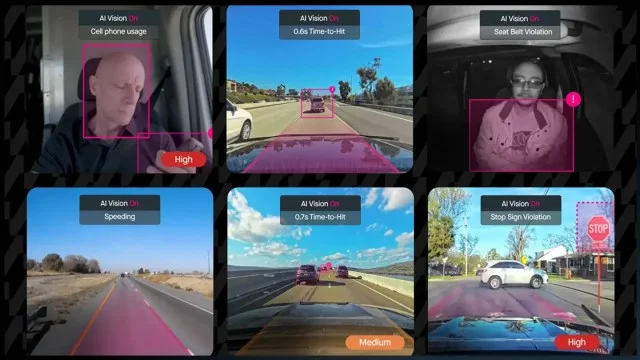
Switching fleet technology can expose problems that an existing system wasn’t detecting, while adding new work for drivers and operations teams. Four organizations that moved to Motive reported changes in safety visibility, driver behavior and compliance, though the figures come from company stories and customer research rather than a controlled comparison across fleets.
Driver feedback shaped two provider trials
Reliable Carriers transports high-value vehicles across the U.S. and Canada, where damage and late deliveries carry significant costs. The company said its previous system didn’t give the safety team enough visibility for proactive coaching. It compared Motive and Samsara in a months-long trial involving 40 drivers. All participating drivers chose Motive, according to the company.
Product Manager Lauren Abrams cited two features behind the preference: the AI Dashcam’s detection accuracy and automatic video tagging, which helped staff find relevant events, and access to dashcam footage through the Motive Driver App. With Samsara, drivers had to call the back office to view footage. Abrams said feedback was consistent across over-the-road, regional and owner-operator drivers.
Reliable reported a 99.9% damage-free delivery rate and a 100% on-time delivery rate over the following year. The company attributed those results to Motive working alongside its hiring requirements, orientation and continuing education. The figures are the carrier’s reported outcomes; the source doesn’t isolate the technology’s contribution.
Reliable Carriers’ customer story and a Motive-Samsara comparison provide further detail.
EnerCorp, an oilfield services company operating in West Texas, faced a different concern: its team wanted more detail than its Geotab telematics provided, while leaders worried dashcams could prompt drivers to leave. U.S. Fleet Manager Aaron Kelver tested Samsara units in seven vehicles for three months, then installed Motive AI Dashcams in the same vehicles with the same drivers for the next three months.
Kelver said Motive detected distracted driving and cell phone use more accurately. He also valued the ability to recognize positive driving habits and reward drivers. After choosing Motive, EnerCorp’s mechanics fitted cameras across 220 vehicles within 90 days.
Within two months of installation, EnerCorp reported a 25% reduction in cell phone use, a 10% decrease in distracted driving and a 19% decline in stop-sign violations. These are company-reported changes, and the source doesn’t describe a separate control group. More information is available in EnerCorp’s customer story and the provider comparison.
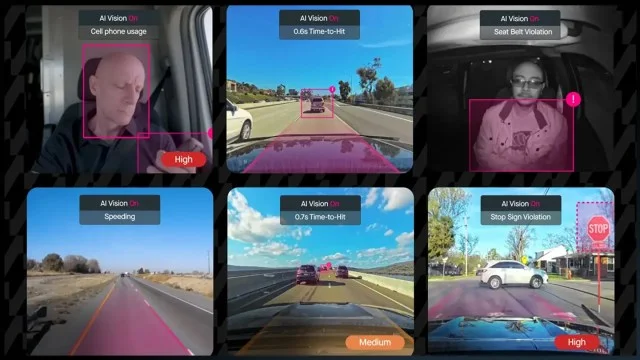
More alerts changed coaching at a Texas carrier
A Texas line haul carrier with 125 vehicles said accidents were rising even as its Lytx dashcams produced few unsafe-driving alerts. The carrier’s vice president of risk management said the low alert count had given leaders the impression that safety was under control. After installing Motive, the company recorded about three speeding events per month before the change compared with hundreds per month afterward. It also reported that Lytx had captured no cell phone events, while Motive captured hundreds in its first month.
Across the fleet, coachable alerts increased 3,900% in one month, or 40 times the previous level. The increase gave the team more events to review and address. The carrier said it now aims to respond within an hour, using video to show drivers which behavior needs attention.
Following the change, the carrier reported a 74% reduction in DOT accidents, a 33% reduction in preventable accidents and a 67% reduction in total video events. The vice president attributed the reductions to accurate, real-time alerts, proactive coaching and greater visibility into driver behavior. The company’s account links increased initial detection with later declines in events; it doesn’t establish that the technology alone caused those changes.
Read the carrier’s customer story or see how Motive compares with Lytx.
Compliance access mattered for a mixed workforce
Heritage-Crystal Clean moves hazardous and recycled materials through more than 90 service branches, with nearly 1,000 vehicles. DOT Compliance and Safety Manager Ryan Duffy said the company’s former telematics system made safety and compliance data difficult to retrieve. Its driver app also crashed, missed trips and disconnected; Duffy said staff received four or five calls a day about app problems.
After reviewing multiple vendors, the company switched to Motive. Duffy said its compliance and safety information was simpler to view and share. Heritage-Crystal Clean also uses the system for OSHA recording across safety-sensitive employees, including staff who don’t drive commercial vehicles but need work hours captured. Since switching, the company reports 25% fewer Hours of Service violations and a 38% improvement in CSA scores. Details are in Heritage-Crystal Clean’s customer story.
Survey and research figures provide wider context
Motive’s 2026 ROI Report says surveyed customers who changed providers reached first value more than twice as fast after moving from Samsara, 1.9 times faster from Verizon Connect and 1.4 times faster from Lytx. The report describes these as average comparisons between each respondent’s time to first return on investment with Motive and with the previous provider. It covers an online survey of 351 current North American customers conducted from June through August 2025.
G2’s Fall 2026 reports put enterprise fleet management customers’ average time to return on investment at 5.7 months for Motive customers, compared with 9.44 months for Samsara customers. The source doesn’t provide further detail here about how those customer groups were selected.
IDC interviewed six organizations using Motive’s AI safety tools for a white paper sponsored by Motive Technologies. Organizations that ran structured, side-by-side trials reported 50% greater perceived AI detection accuracy, on average, than the other solutions they tested, based on their own criteria. Across the six organizations, those achieving the strongest outcomes reported 58% fewer unsafe driving behaviors than with their previous safety technology and a five-month payback on safety investment. IDC cautions that these are customer-reported findings from six organizations operating in real conditions, not a controlled provider comparison or a population-level study.
The full survey details are in the 2026 Motive ROI Report; IDC’s findings appear in “The Business Value of Motive’s Accurate AI for Fleet Safety”. Taken together, the accounts point to a practical measure for fleet teams weighing a change: compare detection, driver access and reporting in their own operating conditions, then track both the workload created by new alerts and the outcomes that follow.


