Wednesday, July 15, 2026 · Ocean Shipping & Ports
Connected Products Push Supply Chain Visibility Beyond Traditional Bills of Materials
Noted by Steve Orrin · 399 reads
Connected products add software, firmware and chip dependencies to sourcing risks. Linking bills of materials can help teams track those dependencies as they change.
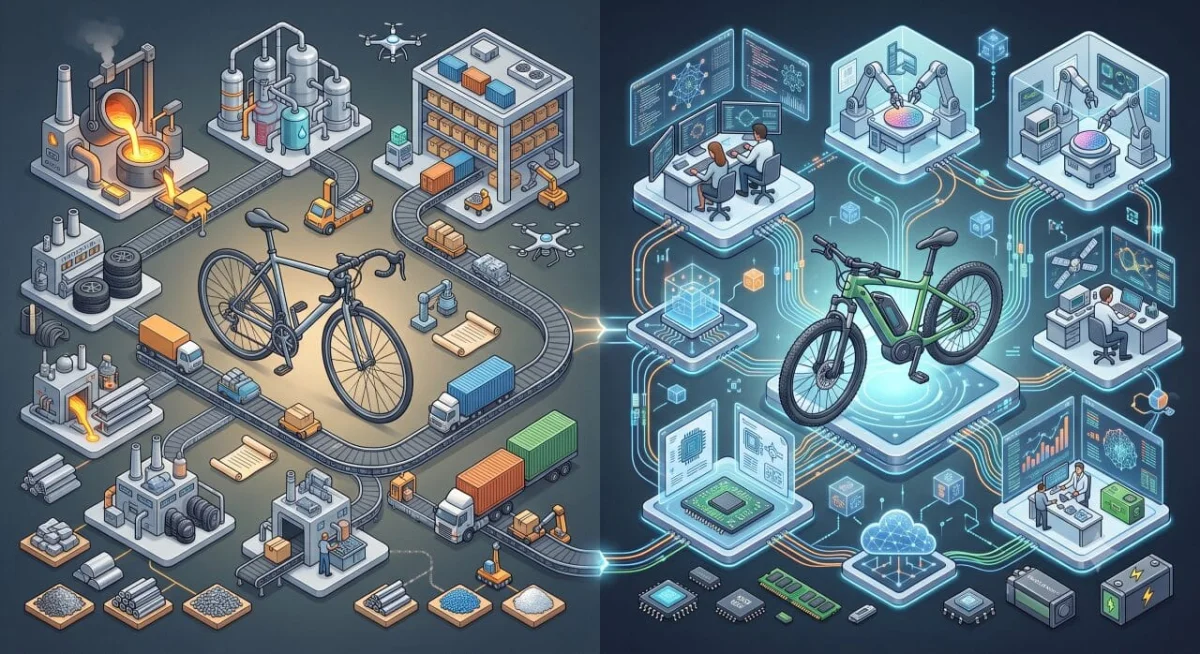
For connected products, a parts list can show what went into manufacturing while leaving important supply dependencies out of view. A company may know its direct suppliers yet have limited insight into the businesses, technologies, routes and resources several tiers upstream. That gap matters when a disruption or newly identified software weakness can affect operations well beyond the supplier where it first appears.
The challenge has grown as products combine physical components with electronics and software. A manufacturer’s supply chain can extend across suppliers, regions and production steps, with separate dependencies for hardware, embedded code and applications. When those connections sit in different records and systems, teams can struggle to see how a change in one part of the network affects the finished product.
Why connected products complicate sourcing
Semiconductors make the layers visible. A chip might be designed in one country, manufactured in another, packaged and tested somewhere else, then supplied as part of a larger system. That system can also contain firmware, software, sensors, controllers, memory and specialized accelerators, each with its own supply network.
Software adds a risk that can change after production. Suppliers using AI code generation or similar shortcuts may produce code that works but has not received the security testing, validation and engineering controls needed for production use. A weakness discovered later could change the risk assessment for a product already in service. Embedded software may need an update, while a semiconductor dependency could create a sourcing constraint.
The difference is easier to see by comparing a conventional bicycle with an e-bike. A bicycle maker needs to track frames, tyres, chains, brakes and other parts, along with their suppliers, material requirements and availability. Components can come from different suppliers and regions, but their basic requirements are relatively stable. A chain that meets its strength standard when purchased is unlikely to acquire a new technical dependency several months later.
An e-bike still needs those mechanical parts, but it also combines batteries, semiconductors, electronic controls, firmware and software. It may depend on cloud-connected services as well. The manufacturer is managing a physical product alongside a computer and connected digital systems. As a result, a product’s risk profile can change after it leaves the factory: a software vulnerability may emerge, firmware may need revision, or a chip supply issue may affect availability.
Connect the records teams already keep
Much of the information needed to improve visibility may already exist in product and supplier documentation. The difficulty is that records have often been separated across systems and organizational groups. Bringing them together can turn documentation from a record of what a company bought into information that helps teams assess dependencies and make operational decisions.
A conventional bill of materials records the physical components used to build a product. A software bill of materials, or SBOM, lists software components and their dependencies. A firmware bill of materials, or FBOM, provides comparable detail about embedded code. A hardware bill of materials, or HBOM, can help identify electronic and semiconductor components.
Each record answers different questions. For the e-bike maker, the conventional bill of materials can cover the frame, tyres, chain and brakes. The hardware record can show electronic and chip dependencies, while firmware and software records help identify the code running those systems. Taken together, the records give teams a more complete view of the product’s components and dependencies.
The practical value comes from connecting these records to production, procurement and logistics workflows. If documents are cross-referenced as products are built and sourced, teams can use them to examine dependencies when making risk decisions. If the records remain isolated or become outdated, they are less useful for understanding a current product or supplier relationship.
Make visibility useful over time
Connected products call for documentation that can inform decisions as suppliers, products and risks evolve. That means keeping relevant information current, connecting it to the work that uses it, and asking suppliers for enough detail to identify dependencies beyond the direct supplier relationship. Collecting more documents alone does not provide a clearer view if teams cannot connect them to sourcing and operational choices.
The shift is especially significant for products whose software and electronics can change their risk profile after manufacturing. A mechanical component may keep the same role and requirements, while a software issue or altered chip availability can affect how a connected system is maintained or sourced. Teams that can trace these links have a better basis for assessing where a change might reach through the supply chain.
As physical products become more connected, traditional parts lists provide only part of the picture. Linking physical, hardware, firmware and software records gives supply chain teams a way to identify hidden dependencies and keep sourcing decisions grounded in the product as it exists over time.
Steve Orrin is identified as a technology and cybersecurity specialist. More about his work is available through his professional profile and Intel Corporation.
The header image was created by AI based on the content of the original post.
Source site: Logistics Matter. Website design: Commpany.


