Monday, July 6, 2026 · Trucking & Freight
Fleet Dash Cameras Can Protect Drivers During July’s Road Travel Surge
Noted by Matthew Villaflor · 532 reads
AAA projects 72.2 million July travelers. Dash camera footage can document collisions, support driver coaching and help fleets manage claims.

For fleets on the road during July’s travel surge, a dash camera can do two jobs: help document what happened in a collision and give managers footage they can use to improve driving. AAA projects 72.2 million Americans will travel at least 50 miles from home during the first two weeks of July. More than 61 million are expected to drive, a record for road travel. Delivery drivers, field technicians and service crews will share those roads with vacationers navigating unfamiliar routes, families distracted by passengers and motorists fatigued by long trips.

That traffic mix raises the chance that a commercial vehicle will be involved in a crash caused by another road user. If accounts conflict, video can help establish the sequence of events. A camera’s value depends on more than whether it’s installed: fleets need to retrieve footage promptly, review it consistently and use it to support practical safety work.
AAA’s crash analysis finds nearly one in three summer traffic deaths involves an impaired driver. For fleet operators, the day-to-day concern is broader than impairment. Heavy traffic, unfamiliar roads, screen use and fatigue can all create hazards around a commercial vehicle, even when its driver is following training and procedures.
Why summer traffic raises the stakes
Federal traffic estimates show July through September, the third quarter, consistently has more traffic fatalities than any other quarter. NHTSA attributes the seasonal pattern to factors including more vehicles and miles traveled, inexperienced drivers and motorists using roads they don’t know.
AAA calls the roughly 100 days between Memorial Day and Labor Day the 100 Deadliest Days. More than 30% of fatal crashes involving teen drivers occur during that period, according to the organization. People hurt in those crashes are often not the drivers responsible: they can be passengers, people in other vehicles, cyclists or pedestrians. Commercial drivers operate among all of them.
Distraction adds to the risk. NHTSA attributes 3,208 deaths in 2024 to distracted driving. The agency estimates that distracted-driving crashes injure 18 people every half hour and kill one person about every two and a half hours. A National Safety Council analysis of NHTSA roadside observations reports that the share of drivers actively handling a handheld device rose from 2.2% in 2015 to 4.5% in 2024.

For fleet managers, those figures describe the traffic environment their drivers must navigate. A passenger car braking suddenly or moving across lanes to reach an exit can leave little time to react. Footage from a forward-facing camera can show the other vehicle’s movements alongside the commercial driver’s response.
Footage can clarify responsibility
At a collision involving a branded truck or van, the commercial operator can face immediate scrutiny because the vehicle is larger and the driver is working. The FMCSA’s Large Truck Crash Causation Study offers a more specific picture of two-vehicle crashes involving a large truck and passenger vehicle. Researchers assigned a “critical reason”—the action or inaction that immediately triggered the crash—to the passenger vehicle in 56% of the crashes studied. The research also found alcohol, illegal drugs and fatigue among passenger-vehicle drivers at substantially higher rates than among commercial drivers.
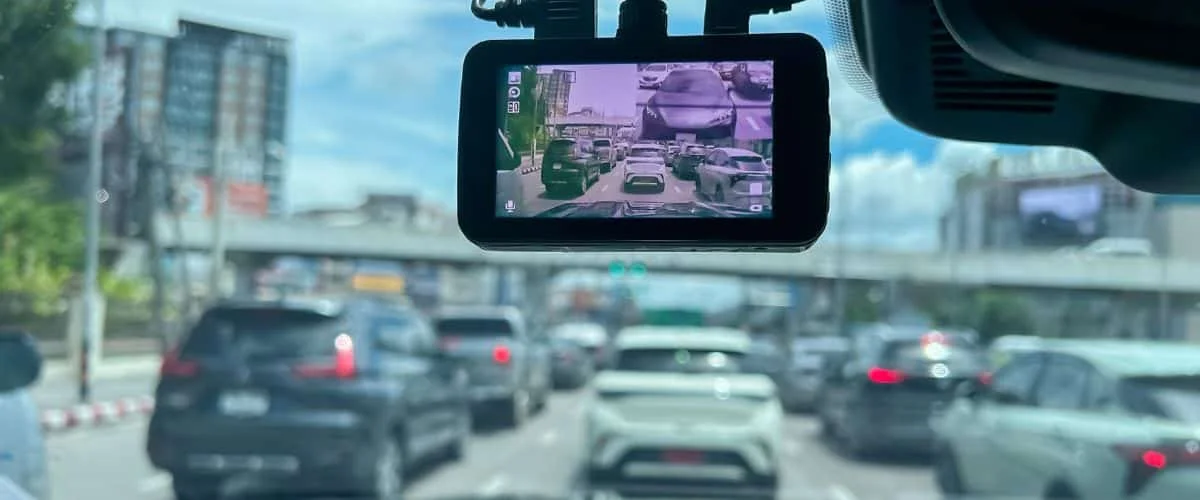
Those findings don’t determine what happened in any particular collision. They do show why a fleet should preserve evidence rather than rely on assumptions or competing recollections. Clear, time-stamped video can help an insurer or legal representative assess the actions of each driver. It can also help a fleet respond to claims with a record of events, instead of relying only on statements gathered at the scene.
A camera that saves footage to an onboard SD card and uploads key clips to the cloud can protect access to the recording if the vehicle is damaged. Fleets should consider how the system marks and stores relevant clips, who can retrieve them, and how quickly staff can act after a crash. A recording that exists but cannot be found when needed has limited operational value.
Four ways camera systems can support fleet safety
Documenting the road
Continuous forward-facing recording gives a time-stamped view of what was happening ahead of the vehicle. That record can help managers review a collision, respond to an insurer’s questions or address a disputed account. Memories fade and physical marks on the road can be difficult to interpret; video can preserve details of vehicle position and movement.
Fleets can choose a single forward-facing camera, a dual-facing unit or a system with cameras covering several views. The right configuration depends on the vehicles, the risks managers want to monitor and how the footage will be used. The purpose should be clear to drivers: recordings can protect them when another road user causes a crash, and can also help the fleet understand safety events.
Giving drivers an earlier warning
A recording system captures events, while camera systems with artificial intelligence can also identify selected risks in real time. Computer vision running on equipment inside the cab can detect lane drifting, short following distances or a driver reaching for a phone. The system can then issue an in-cab alert while the driver still has time to respond.
Those alerts may be useful in dense summer traffic, where a sudden stop or abrupt lane change can quickly become dangerous. The forward-facing camera continues recording the road, capturing what happened before and during an event. In-cab warnings and road footage serve different functions: one can prompt a driver to act, and the other can help reconstruct the event afterward.
Turning video into driver coaching
Recording alone does not improve driving. Someone has to review useful footage, discuss specific events with drivers and follow up on recurring patterns. FMCSA naturalistic-driving research found that onboard video monitoring combined with driver feedback and coaching reduced safety-related events by 52.2% per 10,000 miles and reduced the most severe events by as much as 59.1%.
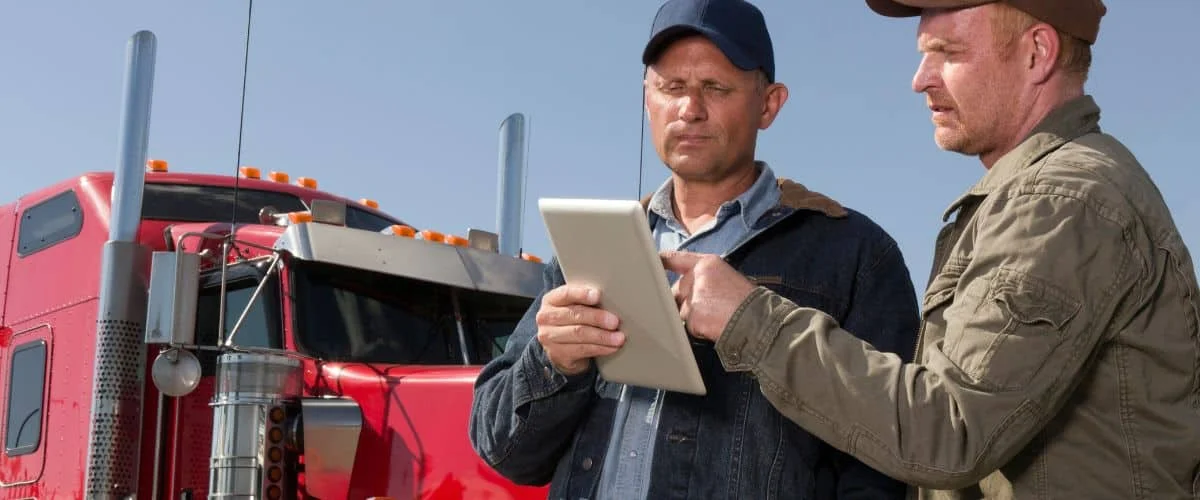
The same research found that a warning light by itself, or coaching that didn’t include video, was not enough to meaningfully reduce events. The practical lesson is to build a review process around the footage. Managers can use camera alerts and safety scores to identify moments involving harsh braking, hard acceleration, close following or possible distraction, then discuss the specific event with the driver.
Used constructively, video can make coaching more concrete. A manager and driver can look at the same moment and discuss what happened and what might reduce the risk next time. Driver-facing cameras can add context to selected events, while raising questions about privacy and notice that fleets should address before rollout. The same system may support both coaching and a driver’s account of a collision; policies should explain how recordings are accessed and used.
Texting is a particular concern. Virginia Tech Transportation Institute research cited by the source says commercial drivers are 23 times more likely to be involved in a safety-critical event while texting. Driver-facing AI cameras can flag some unsafe behavior and alert the driver in real time. Managers can also use relevant recordings to examine whether distraction contributed to an event and where coaching may help.
Keeping footage usable after dark
Summer driving continues into the evening, and camera performance in low light matters. California distracted-driving crash data identifies 6 p.m. to 9 p.m. as the peak period for fatal distracted-driving crashes. Families returning from outings and holiday events share the road with commercial vehicles during those hours.
Infrared and night-vision cameras can help preserve detail in low-light conditions. Fleets evaluating equipment should check whether the system produces footage that remains useful after sunset. A backup battery can also keep a camera recording events when a vehicle is parked overnight, extending coverage beyond a driver’s shift.
Costs and insurance records
Preventing collisions can reduce claims and vehicle downtime. When a collision does occur, footage that shows a fleet driver was not responsible may help keep a claim from affecting the fleet’s loss history. Safety scores and a documented coaching process can also give underwriters a clearer view of how a fleet manages driver risk at renewal time.
The financial result depends on the fleet’s experience and insurer. Cameras don’t guarantee lower premiums. But a sustained record of safer driving, supported by footage and documented follow-up, gives managers more than assurances to discuss. Video, GPS tracking and routing tools can also help bring incident review into the wider fleet operation. FieldLogix describes its GPS tracking features as part of that connected approach.
Plan the rollout and retrieval process
Camera placement, audio capture and driver-facing recording require advance planning. FMCSA does not require commercial fleets to install dash cameras, but it does set limits on windshield-mounted equipment. Under 49 CFR §393.60(e), devices must not block the driver’s view. The rule also sets boundaries for vehicle safety technology, including camera systems and video event recorders, near the area swept by the wipers and within the driver’s sight lines to the road, signs and signals. Fleets should check placement on each vehicle type before installation.
Audio recording raises separate questions. Some states require consent from everyone being recorded. Fleets should check the rules where their vehicles operate before enabling audio, especially when drivers cross state lines.
Requirements for in-cab video also vary by location. A fleet may need to provide notice, obtain consent or make disclosures through its policies. Managers should work with counsel to settle those details before deployment. A written process can explain what is recorded, who can see the footage, how it is retained and when it may be used for coaching or incident review.
Keeping a clear record of camera footage and coaching activity can help a fleet show how it responded to safety risks. The recording system and review process should fit together: staff need a reliable way to find clips, document follow-up and handle footage consistently.
Choose a platform that connects video and fleet operations
A fleet’s camera system is only useful if staff can find recordings and act on what they show. Real-time alerts depend on video processing inside the vehicle; coaching depends on the platform surfacing relevant moments; incident response depends on quick access to footage. In fleets with trucks, vans and electric vehicles, managers may also want video, location and driver-performance information in one place.
Before choosing equipment, fleets can compare camera coverage, low-light performance, onboard storage, cloud uploads, alert types and installation options. They can also assess whether the system connects with existing GPS tracking and fleet management tools, and whether it can scale as vehicles are added. Some providers offer self-installation or professional installation across mixed fleets.
FieldLogix presents its AI-enabled fleet dash cameras alongside GPS tracking and coaching tools. For any system, the operational test is the same: can the fleet retrieve a clear record quickly, use it in a consistent coaching process and give drivers timely warnings? With 72.2 million people projected to travel during July’s first two weeks, those capabilities can help fleets prepare for crowded roads and respond with a clearer account when a collision occurs.
Take a quick tour of the FieldLogix platform to see how its commercial vehicle camera systems connect video, location and driver coaching.
The post How Fleet Dash Cams Provide Iron Clad Evidence Against Distracted Vacation Drivers appeared first on FieldLogix.
===END===

