Monday, October 26, 2026 · Ocean Shipping & Ports
Fleet Management Course Offers 120 Hours of Online Training From February 2027
Noted by José Miguel Fernández Gómez · 653 reads
A self-paced, 120-hour fleet management course starts Feb. 22, 2027, with training on costs, maintenance, telematics, safety and electrification.
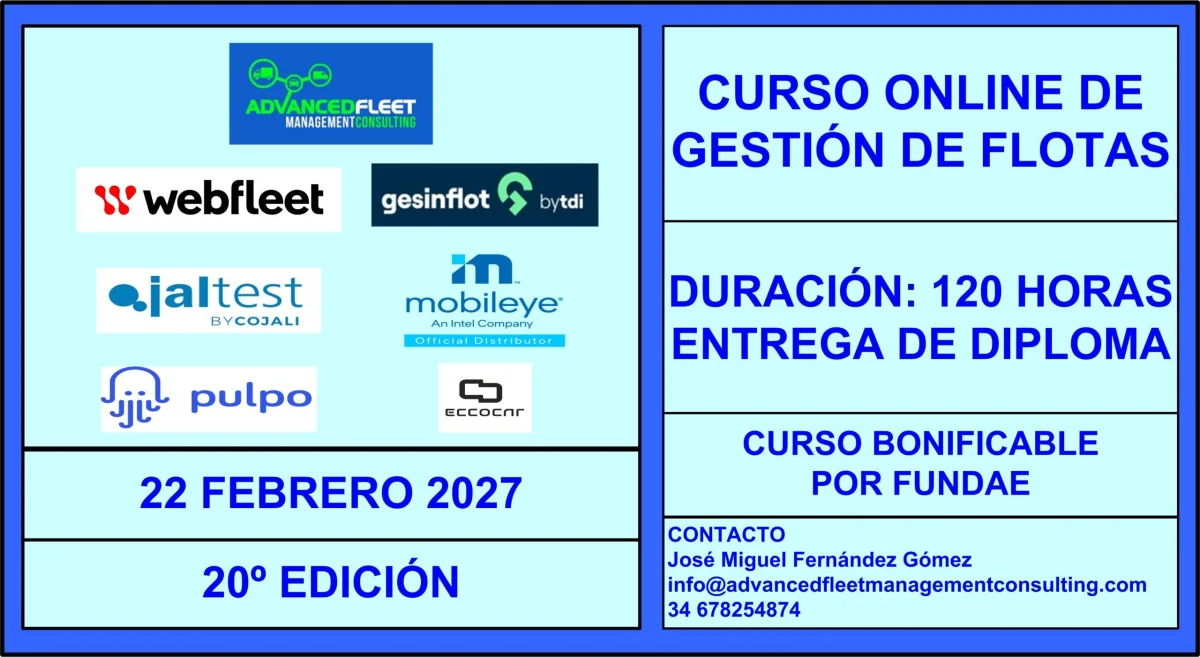
Fleet managers face connected decisions about vehicle costs, service levels, maintenance, safety, technology and replacement cycles. A 120-hour online course scheduled to start Feb. 22, 2027, is designed to bring those decisions into one management framework, with practical work on budgeting, cost per kilometer, total cost of ownership and fleet sizing.
Advanced Fleet Management Consulting organizes the course with Webfleet Solutions, Mobileye, Eccocar, Pulpomatic, Jaltest and Gesinflot. The program is aimed at directors, middle managers, fleet managers and other professionals involved in vehicle fleet operations. It combines recorded lessons and written materials with company presentations covering subjects such as telematics, remote diagnostics, driver assistance systems, refrigerated transport and fleet digitalization.
Participants can study online at their own pace, from any location, with no set daily timetable. The organizer also says it can deliver the course in person at a company’s premises. The listed price is €400 plus VAT; the 21% VAT charge applies in Spain. The course can be funded through Fundae in Spain, subject to the course completion date described below.
Course schedule, price and materials
The online course begins Feb. 22, 2027. It runs for 120 hours, but participants set their own study schedule. Those using Fundae funding in Spain must finish by Aug. 29, 2027. Participants who aren’t using that funding arrangement have as long as they need to complete the course, according to the organizer.
Lessons are recorded on video for later viewing. The course materials also include class transcripts, presentations for each chapter in PDF format, additional fleet management resources and two books developed by the instructor: Introduction to Vehicle Fleet Management and Control and Monitoring of Vehicle Fleet Costs. Participants receive a diploma.
The course is priced at €400 plus VAT. The stated 21% VAT applies only in Spain. The organizer says the course is eligible for Fundae funding in Spain. Once the course has started, the fee is non-refundable.
For information, the course page asks prospective participants to complete its contact form or email [email protected]. The listed contact is José Miguel Fernández Gómez, at that address or by phone at (34) 678254874.
A management framework spanning the fleet lifecycle
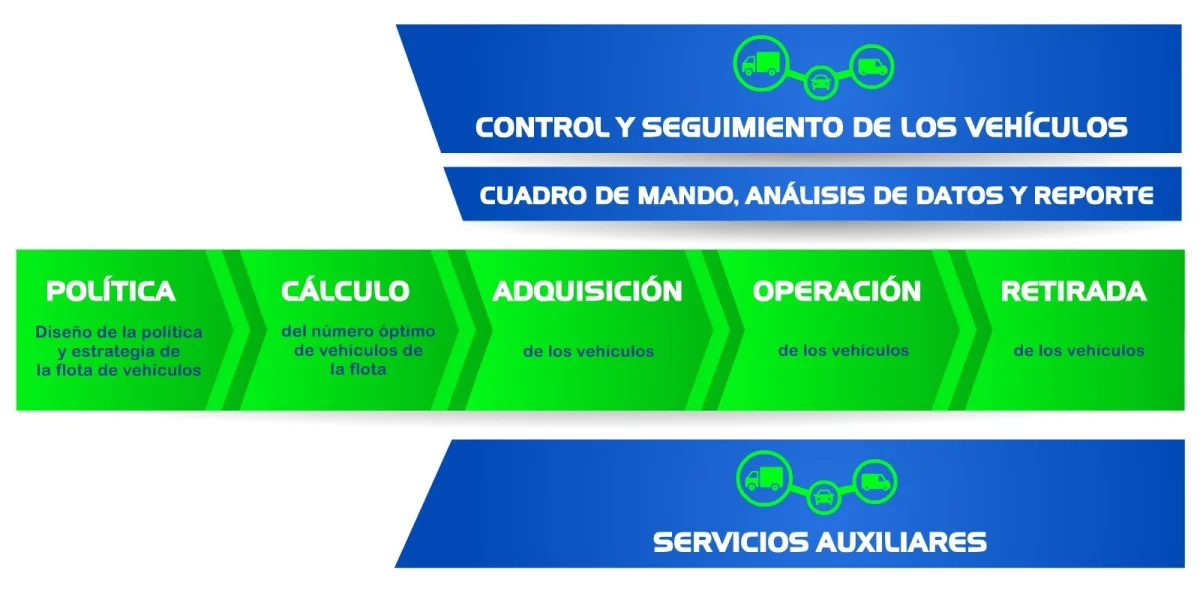
The course defines fleet management as using a group of vehicles to provide a service to another party or carry out an organization’s work efficiently, while meeting service, cost and legal requirements. The stated aim is to give fleet professionals a broad view of the work involved and the links between its component activities.
That scope runs from setting fleet policy and choosing vehicles to operating, tracking and replacing them. The curriculum connects fleet size and service levels to direct costs, and covers how to make decisions about ownership or rental, vehicle specifications, fuel, insurance and suppliers. It also addresses budgeting, cost monitoring, maintenance, tires, fuel consumption, accidents, data and outsourcing.
The organizer presents the course as a way to develop a consistent fleet management methodology. Its central premise is that fleet decisions influence organizational strategy, service delivery, operating expense, emissions and urban mobility. Managers, the course description argues, need the relevant knowledge and experience to work across those areas rather than treating vehicle purchases, maintenance and reporting as separate tasks.
Several modules use practical exercises, including spreadsheet-based calculations of cost per kilometer, total cost of ownership and annual fleet budgets. Other case work covers the relationship between service levels and direct costs, the number of vehicles needed, and policies for retiring or replacing vehicles. The course also includes a case comparing all-wheel drive and four-wheel drive.
Costs, fleet size and vehicle choices
Cost management forms a substantial part of the syllabus. Participants study the types and structure of fleet costs, how those costs change over time, and how to calculate the cost of a vehicle kilometer or a particular service or journey. The course applies these calculations to customer quotations, annual budgets and total cost of ownership, using practical examples.
For fleet sizing, the material examines the link between direct costs and the service delivered, different types of fleets, and methods for calculating an optimal vehicle count. The learning objectives also include establishing a service level and developing a cost dashboard. Together, these topics are intended to help managers assess how fleet capacity relates to the work it must perform and the cost of meeting that demand.
Vehicle acquisition lessons cover ownership and renting, selecting vehicle types and equipment, choosing fuel and insurance, and evaluating suppliers. The outline also lists organizational factors in purchase decisions, vehicle denial and its effect on use and acquisition, vehicle color, and reports that can be requested from Spain’s DGT. The course’s stated learning goals include matching vehicles and equipment to fleet needs.
Replacement planning is another lifecycle topic. Participants examine how to set a retirement and renewal policy, choose sales channels and outside sales providers, set a maximum sales period and account for organizational considerations. The outline includes a practical exercise on a fleet renewal policy.
Maintenance, tires and safe vehicle operation
The operations module covers preventive, corrective and predictive maintenance, along with maintenance management, breakdown analysis and spare parts. Its detailed topics include vehicle diagnostics, warning lights, filters, oil pressure, AdBlue, diesel engine issues, the catalytic converter, airbags, ABS and ESP systems, emergency operating modes and crankshaft sensor faults. The stated aim is to help fleet professionals understand common vehicle systems and maintenance issues that affect operating decisions.
The syllabus also covers the use of in-house or external workshops, including criteria for selecting an outside repair provider. Participants study spare-part management and warranties, plus a range of tire management questions: selection, monitoring, equivalent tire specifications, warranty coverage, pressure, wear patterns, replacement or repair, and the choice between winter tires and chains. The course also considers when mixed tires may be used and where to fit new tires.
Fuel use and emissions appear across both the operating and technology material. Participants learn how to monitor and reduce fuel consumption and emissions, and the company sessions describe telematics indicators for tracking fuel use. The wider operations content includes driver behavior, vehicle operation factors, and ways to prevent and reduce fleet accidents.
Safety topics include accident risk factors, fatigue and drowsiness, driving effects of medicines and drugs, alcohol limits and the Spanish points-based driving license system. The course also addresses front-facing vehicle cameras and accident reports. These subjects sit alongside lessons on driver assistance systems and driving-style monitoring, connecting vehicle use to safety, fuel consumption, maintenance and vehicle life.
Data, tracking and outsourced services
Fleet information systems are covered through dashboards, reporting and data analysis. The syllabus includes deciding what information to record for vehicle traceability, as well as using fleet data to support management. Participants are also asked to consider which fleet activities can be outsourced, the criteria for doing so, and the processes, responsibilities and controls needed when outside companies perform those activities.
Technology lessons examine the requirements for acquiring and operating fleet software or telematics services, including embedded vehicle telematics. The outline also includes a comparison of Google Maps and Waze, cybersecurity topics such as vehicle hacking and tire-pressure monitoring system vulnerabilities, and over-the-air vehicle updates.
Administrative and support work forms another part of the program. Topics include vehicle inspections, vehicle modifications, vehicle records and circulation permits, registration tax, insurance types, vehicle valuation and insurance claims. The outline also covers tachographs, the CAP qualification for some professional drivers, the V16 warning beacon, and the Spanish Vehicle Regulation. These subjects are presented as part of the operational knowledge fleet professionals may need to manage vehicles and related services.
Electrification and alternative energy
The electrification module covers electric vehicle technology, batteries, charging points, vehicle insurance and driving. It also examines battery fires, emissions associated with electric vehicles and the main considerations in converting a fleet. The stated learning goals include understanding the requirements for moving a fleet to electric vehicles, alongside the practical technology involved.
Alternative energy sessions cover liquefied and compressed natural gas, liquefied petroleum gas or Autogas, biofuels and renewable synthetic fuels. The course also looks at future fleet management trends, including the Internet of Things and autonomous vehicles. Separately, the syllabus lists 37 optional classes on automotive technology.
Company sessions focus on applied fleet tools
Recorded presentations from the participating companies add product and operational subjects to the core course. Their listed themes include cold-chain monitoring, remote diagnosis, carsharing, driver assistance, digital fleet administration, connected vehicles, fuel control, trailer management and driver communication.
Gesinflot presents fleet asset management for temperature-controlled freight. The session focuses on the precision and monitoring needed to protect goods during transport, with tools and technology for managing fleet assets used in that work.
Jaltest covers predictive maintenance and remote vehicle diagnostics. Its session describes using technology to identify potential faults, reduce breakdowns and improve maintenance, with the stated goal of lowering costs.
Eccocar discusses carsharing and digital fleet management. Mobileye presents advanced driver assistance systems, including how the technology can help prevent or reduce traffic accidents and assess driving from a safety perspective. Pulpomatic covers the features and benefits of digitizing fleet management.
Webfleet’s recorded sessions cover a wide range of fleet technology and processes. One session focuses on advanced tire-pressure monitoring systems, including real-time pressure readings, fuel consumption, slow leaks, configurable alerts and trailer applications. The material describes tire pressure as relevant to fuel use, emissions, road safety and compliance, as well as tire expense.
Other Webfleet presentations address telematics, fuel consumption indicators, cost-control strategy, and how to make the case for telematics in businesses with light fleets. Additional sessions cover asset location and utilization, connected vehicle services, professional terminals, driver retention, mobile apps, driver communication and the use of tachograph data. The company also lists sessions on improving driving style and using driver indicators to address costs, safety, fuel use and emissions.
Video telematics and dashcams feature in several presentations. The listed material covers cameras that provide context around driving events, help identify risky behavior and support driver coaching. A later session describes video systems using artificial intelligence, driver assistance and monitoring systems, camera types, risk monitoring and the handling of video evidence after traffic incidents. The course listing also describes how these systems may support insurance claim management.
Trailer telematics sessions cover locating trailers, monitoring their use and managing maintenance and tires. The more detailed presentation lists integrations with trailer manufacturers, predictive maintenance, automatic coupling detection, slow-leak monitoring and secure truck parking options through Bosch Secure Truck Parking.
Cold-chain sessions address real-time temperature and location monitoring, door controls, configurable alerts, responding to incidents and producing records for customers. The described applications include food, pharmaceuticals and plants. The material focuses on identifying temperature deviations and providing information to help determine their cause.
Other Webfleet sessions cover vehicle diagnostics and maintenance planning. Their listed subjects include identifying electronic vehicle faults remotely, classifying incidents by severity and using fault information to prioritize maintenance and limit downtime. Sessions on driving performance discuss real-time feedback, monitoring, artificial intelligence tools and gamification to encourage safer, more fuel-efficient driving.
The tachograph presentations cover device services, installation issues, common errors, digital tachographs and tools for managing records. The course listing also describes a session on changes scheduled for 2025, including the requirement to show the previous 56 days during roadside checks, with material on key dates, second-generation digital tachographs and tools for managing tachograph data. A separate session addresses the European sustainability reporting directive and its effect on fleet management.
Instructor background
José Miguel Fernández Gómez manages Advanced Fleet Management Consulting, a Spanish consultancy specializing in vehicle fleet management. He says the course draws on his professional and academic experience. His work includes fleet management consulting projects and collaboration with companies that develop products and services for the sector.
Fernández Gómez worked as a research fellow at INSEAD’s Social Innovation Centre Humanitarian Research Group in France.
He also spent five years as a fleet manager at Urbaser, overseeing 1,000 vehicles used for street cleaning in Madrid. The fleet included heavy and light vehicles, vans, passenger cars and sweepers, with several technologies represented. During that work, he developed models to improve fleet management activities and published an industrial engineering conference paper on selecting and managing fleet tires.
His other experience includes implementing ISO 9001 at a lens manufacturing company and mechanical design and maintenance work. He holds a doctorate in industrial engineering with international research stays at the University of Liverpool and Sweden’s Royal Institute of Technology. His academic background also includes industrial organization engineering, mechanical industrial engineering, a master’s in operations management, quality and technological innovation, and a master’s in industrial organization and management engineering from the Technical University of Madrid. He has published in indexed journals and presented at international industrial engineering conferences.
The course’s breadth makes it relevant to professionals who need to connect fleet economics with daily operating choices. Its schedule starts Feb. 22, 2027; the key planning point for Spanish companies using Fundae funding is the Aug. 29 completion deadline.
More information is available from Advanced Fleet Management Consulting or by email at [email protected].