Tuesday, August 25, 2026 · Warehousing & Fulfillment
Warehouse Automation Shifts Focus from Robot Count to Coordinated Decisions
Noted by David Priestman · 758 reads
Warehouse automation gains depend on coordinating people, robots and workflows, with fleet capacity adjusted to demand.

Warehouse automation is moving beyond the goal of reducing walking. For third-party logistics providers, retailers and ecommerce operators facing labour pressure, demanding service levels and variable volumes, the bigger opportunity is coordinating orders, staff, robots and workflows as conditions change.

Autonomous mobile robots can improve picking productivity, but faster picking alone can shift a bottleneck elsewhere. A robot may finish its task while the pallet it needs is still at the dock, or an exception may sit unresolved with a supervisor. Picking, replenishment, returns, sortation and dispatch need to run as connected parts of fulfilment, rather than separate processes managed by different systems and teams.
That puts operational decision making at the centre of automation. The question for warehouse operators is how a platform prioritises work and responds to congestion, changing workloads and exceptions, not simply how many robots it can send across the floor.
Coordinating work as conditions change
Many mobile robot systems receive a task and carry it out, leaving broader decisions to a warehouse management system or a supervisor. Ocado Group’s Chuck AMR, powered by Ocado IQ, is designed to coordinate work across the operation. The system assesses order urgency, pick locations, available resources, workload and congestion, then groups, prioritises and reallocates tasks as circumstances shift.
That approach lets the system update what should happen next as operational needs change, instead of relying on a fixed task list. Ocado IQ’s app extends system directed workflows into manual and harder to reach areas, including mezzanines, high shelves and bulky item zones. The Bridge gives supervisors a live view of pick rates, queues, priority orders, fleet availability, congestion and service level performance.
Ocado presents those capabilities as parts of a coordinated fulfilment system. For warehouse teams, their practical value depends on how well decisions made across automated and manual work keep the floor moving through a shift.
Adapting picking to the aisle
Warehouse layouts vary, even within one facility. Aisle width, product velocity, pick face density, mezzanines and shifting traffic patterns can all affect how work should be handled. Using the same robot behaviour everywhere can force compromises.
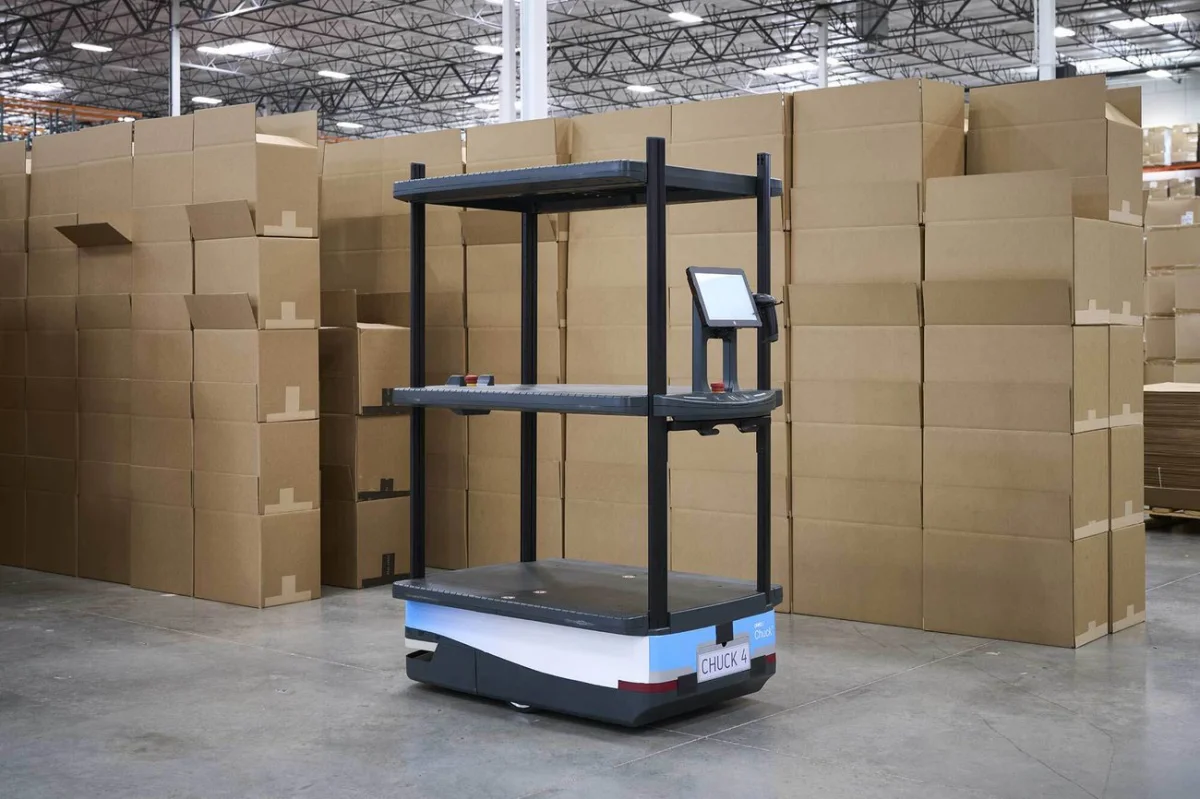
Chuck supports two picking modes that can be configured by aisle. In Sweep, one associate works with one robot through an aisle, a pairing intended to keep picking orderly in narrower spaces. In Rendezvous, several robots wait at controlled points along high velocity aisles, allowing associates to move from one assignment to the next.
The modes can operate at the same time. A robot can work alongside an associate in a narrow Sweep aisle and then move into a Rendezvous aisle, where the layout supports that method. The system also integrates pick to light guidance, providing visual feedback at each pick to support speed and accuracy.
Matching fleet capacity to demand
A leaner fleet can mean more than a lower capital outlay, according to the source. With fewer robots competing for aisle space, congestion and idling can fall, while fewer chargers and parking spaces may free up room for other work. The article also says a smaller fleet can reduce near misses and collisions. These outcomes depend on sizing the fleet to the work and coordinating its activity, rather than leaving equipment underused or competing for space.
Ocado describes its fleet as having three capacity layers: core bots for everyday demand, flex bots for routine spikes such as a busy Monday or a promotional increase, and peak bots for anticipated events such as Black Friday. Operators can add capacity when workloads require it, instead of carrying a fleet sized for peak demand throughout an average day.
Scaling this way also depends on software that can allocate and prioritise work effectively before more robots are added. The platform needs to let operators adjust capacity without disruptive reprogramming and incorporate software improvements over time, the source says.
Different operating pressures, shared requirement
Third party logistics providers need to handle customer orders with different profiles, seasonal patterns, workflows and service commitments. Retail distribution centres may be fulfilling store replenishment, direct to consumer orders, marketplace demand and returns concurrently. Ecommerce operations face rapid volume changes, fixed carrier cut off times and exceptions that can interrupt flow.
Those operating models differ, but each needs systems that can adapt as work changes. A configuration that handles only one workflow or relies on manual replanning can make it harder to maintain service across the operation.
For buyers comparing autonomous mobile robot platforms, the article argues that deployment speed, robot count and reduced travel are no longer enough to assess performance. The relevant question is whether the system coordinates people, robots, orders and manual workflows across the facility.
Reported productivity and deployment figures
Ocado says its mobile robot systems can deliver two to three times the productivity of manual cart based picking, reduce labour costs by as much as 50%, go live in as little as 14 weeks and achieve payback in six months. The company reports deployments at more than 120 sites across third party logistics, retail, ecommerce, pharmaceutical and apparel operations.
Those figures are the company’s claims; the source does not provide details on how they were measured or how results vary by facility. The operational case made in the article is that fulfilment capacity should come from better work allocation and timely adjustments as demand changes. Adding robots can help, but the system’s ability to coordinate each shift shapes how much those robots contribute.


