Friday, August 14, 2026 · Ocean Shipping & Ports
Women’s Retention in Transport Starts With Everyday Workplace Changes
Noted by An Industry Expert · 711 reads
Route to Respect founder Claire McKinlay says listening, suitable facilities and visible career paths can help transport employers retain women.
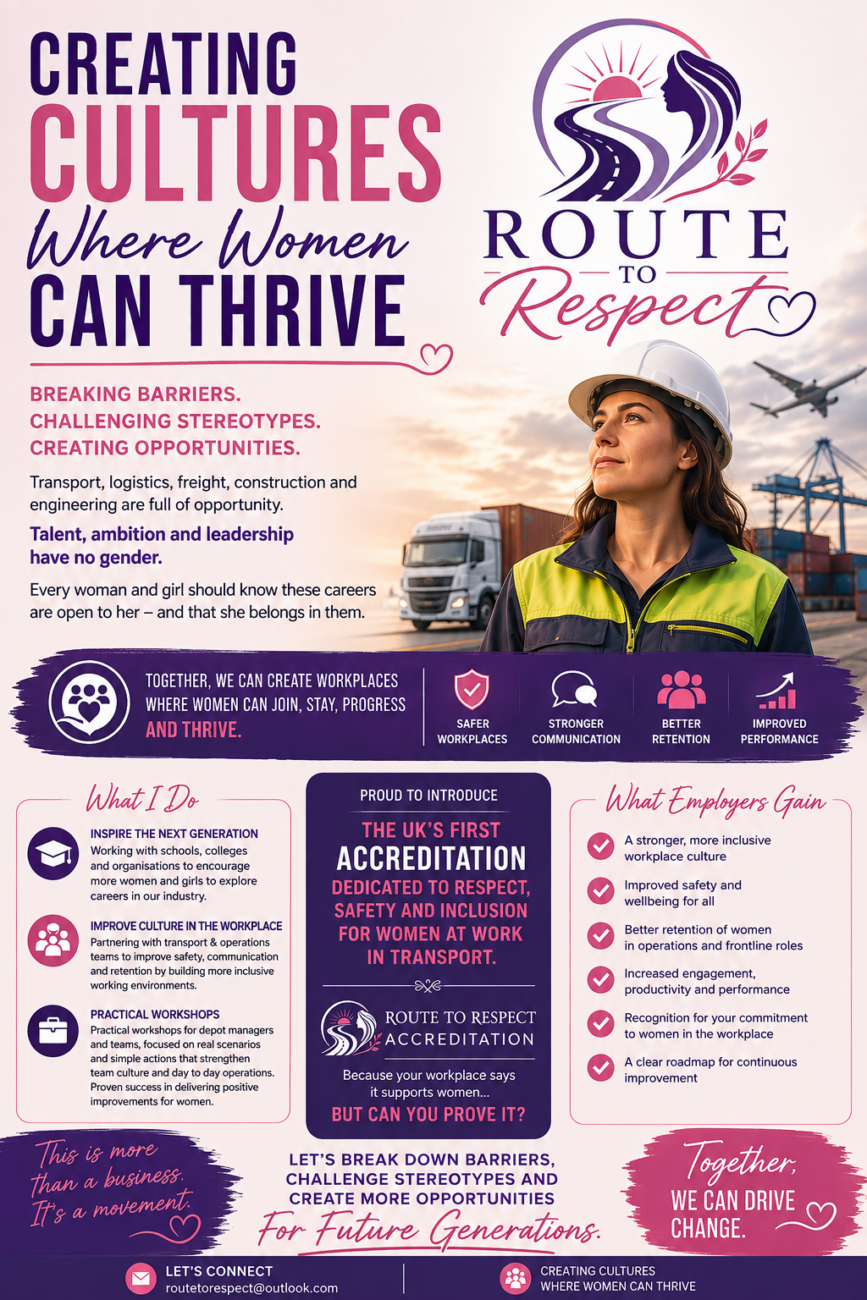
For transport and logistics employers, bringing more women into frontline and operational roles is only part of the task. Whether they stay depends on what they encounter at work: whether they feel respected, have suitable facilities and equipment, can speak up, and see room to progress. Claire McKinlay, founder of Route to Respect, argues that these everyday conditions deserve as much attention as recruitment.
Transport, logistics, freight, construction and engineering have long been described as male-dominated. McKinlay says that description reflects more than who currently works in those fields. Workplace culture and long-held assumptions can shape who sees these careers as possible, who gets encouraged to apply and who feels able to build a lasting career.
Her view is straightforward: talent, ambition and leadership are not determined by gender. A woman or girl interested in engineering, driving, operations, technical work or logistics should be able to picture herself in the role and feel entitled to pursue it. That expectation needs to be visible in recruitment, on the job and in the opportunities employers make available.
Make the work visible to new entrants
Young people are asked early to think about what they want to do, but they can only make informed choices about careers they know exist. McKinlay’s work includes encouraging women and girls to consider transport and operational jobs they may not have encountered before.
Visibility can make those jobs more tangible. Women already working in the sector can describe what their roles involve, how they entered the field and what progression can look like. For a young person who has not seen women in these positions, meeting someone who has built that career may help make the possibility feel real.
That kind of outreach can widen the pool of people considering a role, but it cannot carry the whole responsibility for improving representation. Employers also need to examine the experience that follows a new hire. Recruitment figures show who entered an organisation; they do not reveal whether that person feels able to contribute, develop and stay.
Retention depends on the workplace
McKinlay points employers toward practical questions: Do women feel safe and respected at work? Are their views heard? Do they have appropriate welfare facilities and personal protective equipment? Can they see a path to more responsibility or a different role? Does the workplace culture give them reason to remain?
These questions matter particularly in operational and frontline settings, where the daily working environment shapes a person’s experience. Facilities, equipment, communication and team behaviour are not side issues for staff who rely on them to do their jobs. If an organisation wants to improve retention, it needs to understand how its working practices feel to the people using them.
Through Route to Respect, McKinlay works with transport and operational teams on safety, communication, inclusion and retention, with a focus on women in frontline roles. Her approach puts workplace conversations alongside practical changes, asking teams to look at what happens in their own settings rather than treating inclusion as a matter of recruitment totals alone.
Turn discussion into daily practice
McKinlay’s workshops are aimed at depot managers, frontline leaders and their teams. They use workplace scenarios to help participants consider how communication and routine decisions affect the working environment. The focus is on actions teams can apply in their day-to-day operations, rather than relying only on written policies or presentations.
Her experience in a previous leadership role convinced her that improving workplace culture does not always begin with a large programme. Sometimes the first step is listening to staff. In other cases, a team may need clearer communication or a closer look at a problem that has become accepted as normal. Those steps can help leaders identify where working practices fall short and decide what to change.
Small adjustments still need leadership support. If managers take concerns seriously and follow through, practical changes can improve how a workplace functions for the people in it. The source does not specify particular projects or measured outcomes, but McKinlay says her earlier work produced positive change by focusing on women’s experiences and making practical improvements.
For employers, the point is to connect representation with the conditions that shape whether people remain in a job. That means asking frontline teams what they encounter, checking whether facilities and equipment meet their needs, making room for women’s voices and ensuring staff can see opportunities to develop. The work starts with understanding the local workplace, then acting on what people say.
McKinlay’s central message is that women should be able to enter transport and operational workplaces and have clear reasons to stay. For managers, listening and addressing everyday barriers are concrete places to begin.
The post Driving Change: Respect for Women in Transport appeared first on Logistics Business.


