Tuesday, October 6, 2026 · Trucking & Freight
Legacy Systems and E-Invoicing Put Logistics Data Integration in Focus
Noted by Martijn Graat · 741 reads
Anna Fuller says logistics firms can target automation by mapping workflows and connecting legacy systems with suppliers, carriers and customers.
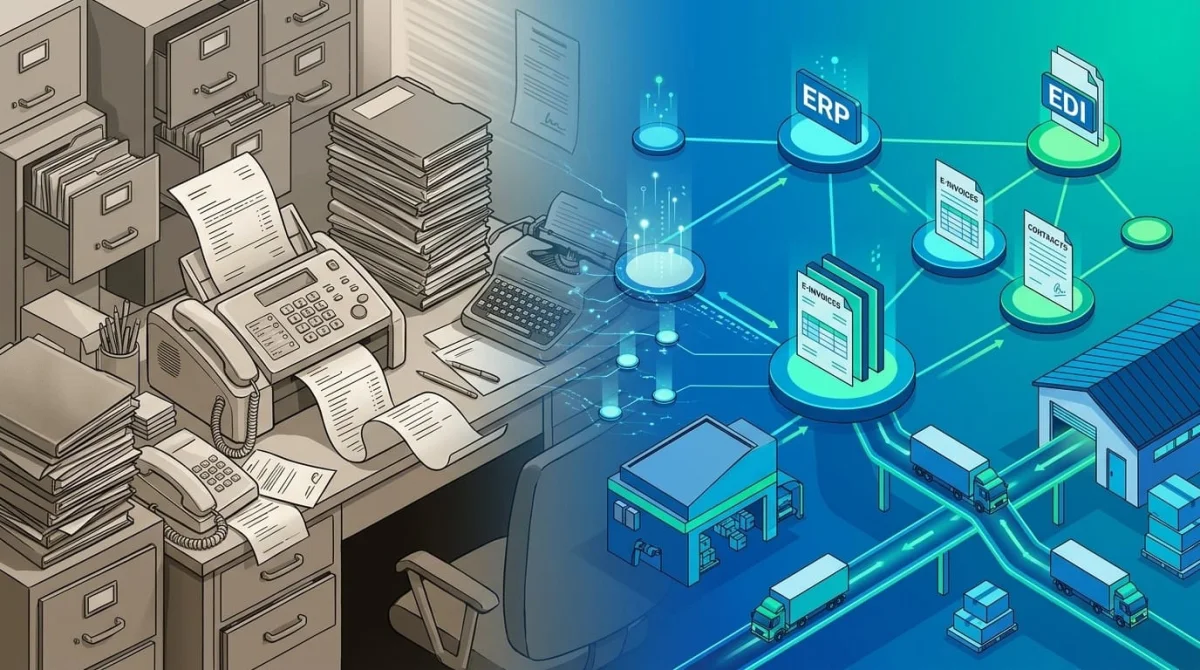
Connecting old systems, newer software and the people who use them remains a practical hurdle for logistics firms. Anna Fuller, a Senior Sales Executive at Descartes, says companies can make progress by starting with their workflows and the staff who manage them, then choosing where digital tools can reduce manual work.
Fuller discussed the challenge on the Does Logistics Matter? podcast. Her experience spans the shift from waiting beside a noisy fax machine for customer orders to working in an industry with modern software and smartphones. Yet many businesses still depend on technology that has been in place for decades, while coordinating daily with trading partners that use different systems and processes.
Upgrading core systems carries operational risk
Replacing an enterprise resource planning system is a major undertaking. These platforms support core business processes, and an abrupt change can create technical and financial risks. If logistics operations are disrupted, the movement of goods and the revenue tied to those operations can suffer. Companies therefore have reason to keep established systems running, even as newer tools become available.
That leaves many businesses working across a mix of older infrastructure and newer applications. The challenge is not simply selecting software. The systems must exchange useful information, and the people handling orders, invoices and other processes need to be able to use the resulting workflows. A new tool that adds steps or fails to fit the work may create complexity without delivering the intended gains.
Fuller points to staff involvement as an early part of the process. Companies can bring operational teams into planning, document how tasks are actually completed and define the business goals before implementation. That groundwork helps teams identify where automation fits and gives technology projects a clearer measure of value.
Partners add another layer of complexity
A company's supply chain reaches beyond its own systems. Suppliers, logistics providers and customers each bring their own software, priorities and operating practices. As a result, a connection that works inside one business may not be enough to keep data moving across the broader network.
Electronic Data Interchange, or EDI, is one established way to exchange structured business information between organizations. Companies may also be introducing newer applications built around APIs while continuing to rely on older ERP platforms. Making those systems work together calls for flexible connections that account for different technical capabilities among trading partners.
For many logistics businesses, building and maintaining those links is a support function rather than a core activity. Their operational need is straightforward: data should reach the right process without teams having to repeatedly move it by hand. When order information and other business messages flow reliably between systems, staff can spend less time handling routine exchanges and more time on exceptions or other work that requires attention.
EDI has often spread because a customer asked a supplier or service provider to use it. Fuller says e-invoicing and e-reporting requirements are now adding pressure for companies to update how they handle invoice data. For finance teams accustomed to paper documents or PDF files, switching to structured, machine-readable XML can mean changing familiar processes as well as technology.
Structured invoices can reduce manual handling
With structured invoice data, information can be read and processed by software rather than entered from a document by hand. That change can help finance teams handle higher invoice volumes more quickly once their systems and workflows are set up to use the data.
“They can see that it does have advantages and that they are actually able to process a lot of invoices much faster. As a result, resources can be allocated to more value-added tasks,” Fuller said.
The potential benefit depends on how well the process fits the business. If teams first map invoice handling from receipt through processing, they can see where repetitive entry or handoffs take place. That gives them a way to focus automation on the parts of the workflow where it can save time and reduce the risk of manual errors.
Fuller's advice is to review current operations before selecting a solution. Businesses can look for tasks with high volumes of repeated manual work, then assess whether EDI or e-invoicing can address those steps. The same review can expose gaps between teams and systems that need to be resolved before a new connection goes live.
For logistics leaders, the practical takeaway is to treat digital change as a workflow and coordination effort as well as a software project. Clear goals, operational input and attention to partner connections give companies a stronger basis for improving data exchange while established systems remain in service. Fuller joined the podcast alongside her Descartes profile; the episode is available through Does Logistics Matter? and podcast platforms including Spotify and Apple Podcasts.


