Thursday, September 10, 2026 · Ocean Shipping & Ports
Smart Containers Put Asset Data, Standards and Ownership at the Center of Logistics
Noted by Martijn Graat · 345 reads
Container level tracking can improve utilization and cargo oversight, but adoption depends on operational readiness, shared standards and clear data ownership.
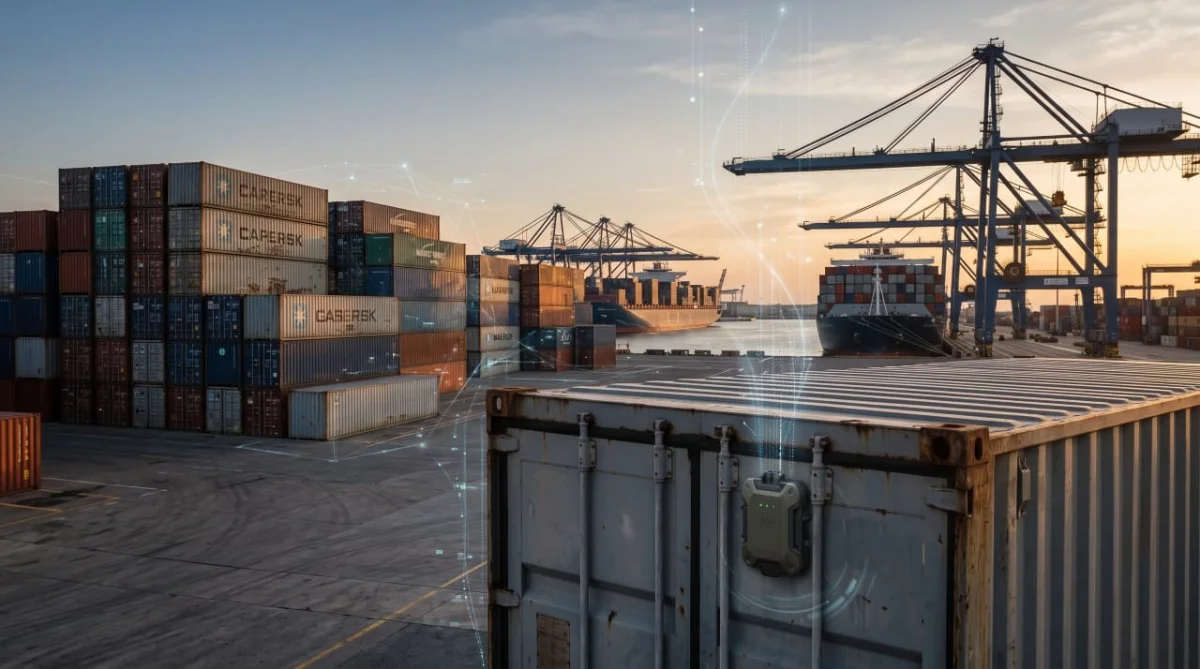
Container tracking can fill a visibility gap that vessel and truck tracking leave open: what’s happening to the individual box carrying the freight. In a recent episode of the Does Logistics Matter? podcast, supply chain specialist Dr Marianna Levtov discusses how connected containers could improve asset use and cargo oversight, and why the technology’s value depends on decisions about operations, standards and data.
Knowing a ship’s estimated arrival or a truck’s route progress gives logistics teams useful movement information. Container level data can add a view of the asset itself. That can help operators assess how containers are being used, identify opportunities to reduce empty repositioning and monitor sensitive or high value loads, including vaccines. The practical promise is clearer visibility into the equipment and cargo moving through a supply chain.
That promise doesn’t make a tracking device an automatic investment. Levtov’s research and the episode’s discussion highlight a basic operational question: whether a provider’s processes are ready to use the data a device produces. A low purchase price may not reflect the full effort involved in deployment, integration and ongoing use. Teams need to consider how hardware fits their existing operations before choosing a solution; otherwise, inexpensive equipment can create costs without delivering useful information.
China’s role in connected container supply
Manufacturing concentration gives China an influential position in the market. The source reports that more than 90% of the world’s shipping containers are made there. As containers gain digital capabilities, the choices made by manufacturers and technology providers in China can shape the equipment available to logistics operators around the world.
Levtov examines this market through her doctoral research, including China’s “Made in China 2025” vision and the approach of Chinese technology providers to smart containers. She drew on anonymous interviews with industry insiders in China. The episode presents her findings as a challenge to some common assumptions about the sector, though the source does not detail those findings. That makes the research’s value less about a simple verdict on one market and more about hearing from people working within it.
For companies assessing connected equipment, the practical questions remain concrete: what information will a device collect, who can access it, and how will that information be handled across business relationships? The answers affect how much operational value a fleet can get from tracking. Better visibility is useful only when teams can interpret the information and have confidence in how it moves between parties.
Data rules and commercial agreements
Once a physical container starts generating digital information, equipment decisions also become data governance decisions. Levtov and host Martijn discuss the tension between international standards and domestic rules, including the EU Data Act and domestic data protection frameworks. The source does not spell out particular compliance steps, but it points to a challenge for companies whose containers and business partners operate across borders: the same data may be handled within overlapping frameworks.
Levtov addresses concerns about adopting containers fitted with hardware from foreign providers. Her business focused approach centers on data ownership and the role of contracts between companies. Clear agreements can define responsibilities around access and data integrity, while leaving room for businesses to use information in supply chain tools such as AI. Contract terms can’t resolve every technical or cross border question, but they give trading partners a place to set expectations before information starts flowing.
For shippers and logistics providers, that means evaluating the information itself as well as the device. A connected container can create value when operational teams know what data they need, who will use it and how it supports decisions about equipment or cargo. Clear allocation of data rights can also help partners avoid confusion as they share information across a movement. Those are planning questions to settle early, alongside hardware selection and deployment.
Standards require coordination
Levtov’s earlier career in diplomacy informed her research into how standards are set in international trade. In the episode, she describes “industrial diplomacy” as the work of bringing competitors, rule setters and customers together to agree on standards that can endure. For connected containers, coordination matters because equipment and data must be useful across organizations, not just within one provider’s system.
Standard setting involves parties with different commercial interests and operating requirements. Their participation can help determine whether shared approaches work in practice and whether companies can exchange information without interrupting established processes. The episode frames that work as a continuing part of digitization: technical hardware alone can’t create an interoperable system if partners have not agreed on how to use and govern the resulting data.
The discussion links smart containers to both sustainability and safety, while raising questions about how connected fleets should be introduced. It does not provide a universal implementation checklist. Instead, its central takeaway is that companies need to align operational readiness, data ownership and standards as they consider adoption. Container level visibility has the potential to sharpen asset use and cargo monitoring; whether it delivers depends on the agreements and processes built around the technology.
Levtov shares her research and practical perspectives in the full Does Logistics Matter? episode. The source page is available from Logistics Matter.
Publisher contact: Marie Baronstraat 11, 3056AA Rotterdam, The Netherlands. CoC: 55851991. VAT: NL001643631B88. Website design: Commpany.


