Thursday, March 12, 2026 · Trucking & Freight
Transportation Management Systems Move From Freight Planning to Automated Execution
Noted by Martijn Graat · 479 reads
Connected TMS platforms can track shipments, flag data gaps and automate responses, while carrier connectivity remains a major operational challenge.
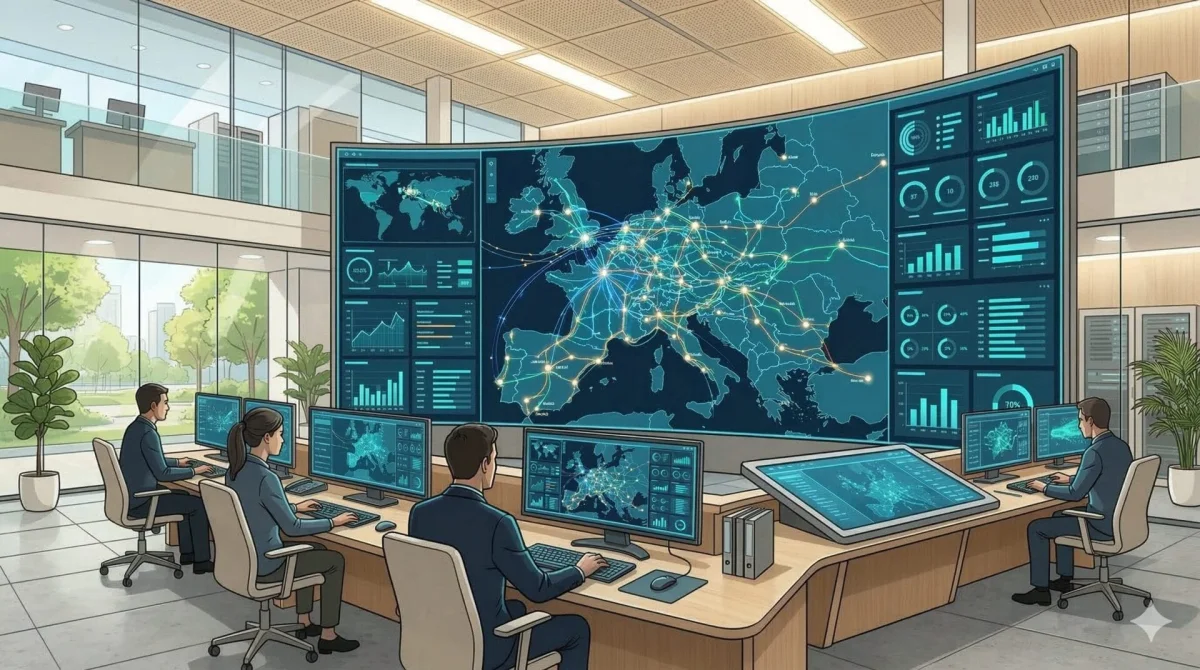
Transportation management systems are expanding from freight planning tools into platforms that can monitor shipments and respond as conditions change. That shift could let logistics teams manage far more freight with less manual intervention, but it depends on a less visible foundation: connecting carriers, drivers and transport data across a fragmented network.
Elmer Spruijt, Descartes’ vice president of transportation management for EMEA, described that change on the Does Logistics Matter? podcast. His central point is that many companies still use only part of what current systems can do. A TMS can plan a move, but it can also help manage the shipment while it is underway and adjust when actual events diverge from the plan.
From route planning to shipment execution
Earlier TMS tools were largely associated with choosing how to move goods from origin to destination at the lowest cost. The systems Spruijt describes draw on a wider range of live and historical information. They can receive data from truck telematics and GPS, connect with ports, customs, rail providers and vessel tracking services, and calculate estimated arrival times using factors such as traffic, driver rest periods, weather and past performance on a particular lane.
They can also exchange documents and track carbon emissions. Taken together, those functions make a TMS part of day-to-day shipment execution, not simply a tool for producing a transport plan. If a container is delayed at port, for example, the system can surface the delay to the people involved. The next step, as Spruijt sees it, is for software to take more of the follow-up actions itself.
That progression matters operationally. A plan is useful only as long as it reflects what is happening on the ground. When a shipment misses a connection or a delivery time changes, someone has to identify the consequences for the next leg and update the parties who depend on it. A connected system can keep those details together and, as automation develops, handle more of the routine coordination.
Carrier connections shape the real cost
Those capabilities rely on dependable data connections, and building them across the transport market remains an ongoing task. Descartes says more than 200,000 companies are connected to its network, while the company adds 2,000 carriers each month. The continuing additions suggest that even a large network does not cover every carrier a shipper may want to use.
That coverage can affect the cost of changing providers. When a shipper selects a new carrier after an annual tender, the shipper and carrier may need a technical connection so shipment information can flow between their systems. If the carrier is already on the TMS network, the connection may be in place; if it is not, it must be added. A lower quoted transport rate can therefore carry extra setup work that is easy to miss when procurement compares prices alone.
For logistics teams, connectivity is part of the operating model behind visibility. Without timely carrier data, a system has less information to work with, and planners may have to fall back on manual updates. Network reach can influence how quickly a company can onboard a carrier and how consistently it can follow freight across different providers.
Two tracking sources can expose a discrepancy
Spruijt also described using a truck’s onboard telematics and a driver’s smartphone tracking app at the same time. In routine operations, both sources can provide richer location information. In a suspected theft or cargo diversion, the second feed can serve another purpose: it gives the shipper or carrier a separate signal to compare with the first.
If a single tracking source is manipulated, it may show a truck continuing along its route. A second source that reports the vehicle as stationary would create a mismatch and a reason to investigate. The two feeds do not, by themselves, establish what has happened, but they can make a problem visible sooner than relying on one feed alone.
This is a practical case for data redundancy. The value is not limited to keeping information available when one system fails. Independent signals can help teams spot inconsistencies in the movement data they use to monitor freight.
Automating driver setup at scale
Shipment tracking also depends on drivers using the relevant app or equipment. Coordinating setup across many drivers, countries and languages can take substantial time, especially when each person needs help installing or activating an app.
Descartes developed an AI agent named Debbie to make those calls. The agent checks whether a driver has installed the tracking app and guides the driver through setup when needed. The company says Debbie has completed 700,000 calls and helped more than 420,000 drivers connect. Previously, teams handled the work through manual calls, which Spruijt characterized as costly, slow and difficult to scale.
That example illustrates a focused use of automation: completing a repeated setup task across a large and distributed group. The system’s usefulness depends on getting drivers connected, since shipment visibility cannot extend beyond the data those drivers and their equipment provide.
Next step: software that takes action
Spruijt sees the next phase as a move from real-time visibility toward systems that can act on it. In his example, a port delay could trigger a sequence: rebook the onward transport leg, notify the carrier handling a later leg and update the delivery schedule. Today, a system may alert the relevant people; the longer-term aim is for it to complete more of that coordination without requiring a person to make each routine decision.
That would change where staff spend their time. Instead of overseeing every shipment step by step, teams could focus more on exceptions that need judgment, while software handles standard changes. The division of work will depend on how reliably systems can interpret events and carry out the required updates.
Spruijt’s stated vision is for one person to manage 100,000 shipments a month. That figure is an ambition, not a measured result presented in the conversation. The operational direction is clearer: broader carrier connectivity, more complete tracking data and automated responses could reduce the amount of manual coordination required for each shipment. For shippers assessing a TMS, the practical questions are how well it connects to their carrier base, what data it can use and which actions it can carry through when a shipment changes course.
Hear the full Does Logistics Matter? episode with Elmer Spruijt through the player on the Logistics Matter website. Descartes’ site is descartes.com.
The source says the image accompanying the original post was created with AI based on the podcast episode.
Source footer: Marie Baronstraat 11, 3056AA Rotterdam, The Netherlands • CoC: 55851991 • VAT: NL001643631B88 • Website design: Commpany.
===

