Thursday, October 30, 2025 · Warehousing & Fulfillment
Warehouse Safety Depends on Worker Behaviour as Much as Technology
Noted by Martijn Graat · 319 reads
At IMHX, warehouse safety experts argued that dashboards and detection tools work only when teams trust them and change daily habits.
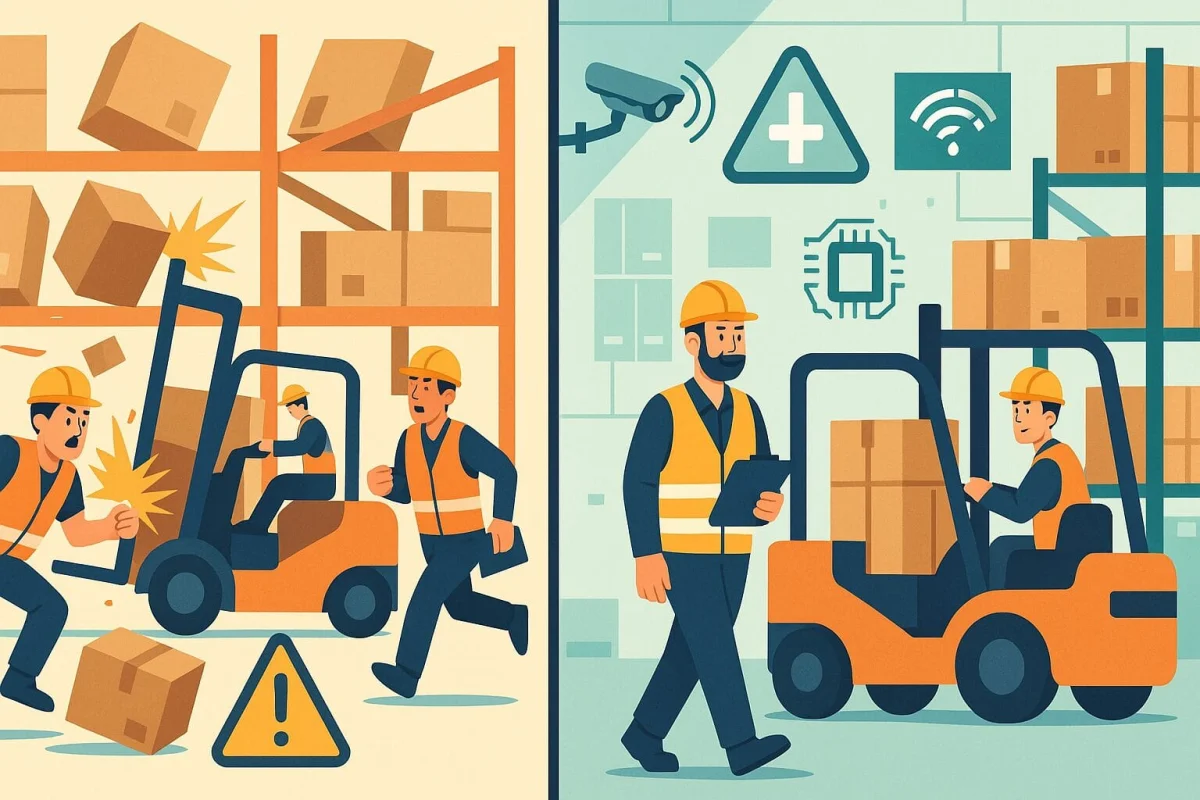
Warehouse safety systems can collect data, flag hazards and prompt checks, but they cannot make a team act on what they reveal. That was the central point of a live Does Logistics Matter? Podcast discussion at IMHX, where Powerfleet’s Director of Enterprise Sales Europe, Ingmar Schoemacher, and Impact Handling Product Manager Colin D’Arcy-Burt discussed the gap between safety technology and everyday behaviour.
The discussion focused on a familiar operational risk: a warehouse can appear safe because serious incidents are rare, while smaller warning signs go unrecorded or unaddressed. Minor equipment damage, near misses, fast turns on forklifts and skipped pre-use checks may each seem manageable in isolation. Taken together, they can point to unsafe routines that have become normal.
Quiet periods can hide risk
A clean incident record doesn’t necessarily mean a site has eliminated hazards. It may also mean that near misses aren’t being reported, checks are treated as a formality, or workers have learned to work around unsafe conditions. When managers rely on “no news is good news,” they can miss the early signals that would help them intervene before an incident occurs.
For warehouse managers, that makes the quality of daily reporting and observation as important as the presence of safety equipment. A pre-shift check, for example, matters only if it is completed carefully and defects lead to action. A near-miss report can help identify a recurring hazard only if workers feel able to raise it and someone reviews what happens next.
The speakers’ examples point to a practical challenge: safety depends on choices made in the flow of work. Forklift operators, pedestrians and supervisors all encounter conditions that a dashboard may not fully capture. A system can record an event, but people still need to understand what the information means and how to respond.
Tools need to fit the work
Warehouses already use digital checklists, telematics dashboards and AI-enabled pedestrian detection. Those tools can support safer operations, but their presence alone doesn’t show that they are useful to the people expected to use them. If workers find a system hard to access, don’t trust its alerts or don’t see why a process matters, the technology may have little effect on their decisions.
“Your phone will grab more attention than a dashboard no one logs into,” was one observation in the discussion. The point is about how information reaches workers: a safety message has to fit the way a team communicates and carries out its tasks. A dashboard that is rarely opened can’t guide a response in real time, however much information it contains.
The speakers also stressed the need to explain the purpose behind safety tools. “You can install all the tools you want, but if people don’t understand why they’re there, nothing changes.” That puts implementation beyond purchasing and installation. Managers need to connect each tool to a clear task, make its use workable on the floor and build confidence that reported problems will be addressed.
AI can connect signals across systems
AI was discussed as a way to help people interpret information, not as a substitute for them. Warehouses often rely on separate systems for enterprise resource planning, warehouse management, order management and workforce operations. When information remains split across those systems, it can be harder to spot patterns that span equipment, tasks and people.
AI can help bring those records together and surface trends for teams to examine. That may support a shift from responding after a problem to noticing patterns earlier. The source discussion didn’t specify a particular deployment, performance measure or safety outcome, so the useful takeaway is the role such tools may play: helping staff see relevant information sooner and make better-informed decisions.
That role still depends on sound practices around the data and the response. A flagged pattern needs someone who can assess whether it reflects a real hazard and decide what action makes sense. Workers also need to know how the tool fits into their routines. Without that link between information and action, AI risks becoming another system that generates alerts without changing work.
Safety is an operating practice
Automation and digital systems are changing warehouse work, but the discussion at IMHX returned to the people doing that work. For managers, the practical question is whether safety processes are visible in daily operations: are checks completed, are near misses discussed, are alerts understood, and do workers know what to do when a hazard appears?
Those questions connect technology choices to the conditions on the floor. A safety program is more likely to matter when equipment, software and staff routines support one another. The podcast conversation’s central message is that buying tools is only one step; teams need to understand and use them as part of their work.
The session was recorded live at IMHX, a major UK logistics and supply chain event. The podcast is available through its player or podcast apps. For warehouse operators, the immediate takeaway is to look at the small signals and everyday habits their systems may be missing—and make sure the people closest to the work can act on what safety tools reveal.


