Wednesday, October 21, 2026 · Ocean Shipping & Ports
Generic and Preferential Certificates of Origin: Exporter Guide
Noted by [email protected] (Kari Crane) · 749 reads
Generic certificates document origin; preferential certifications support duty claims. Confirm the right form, origin rules and authentication requirements before shipping.
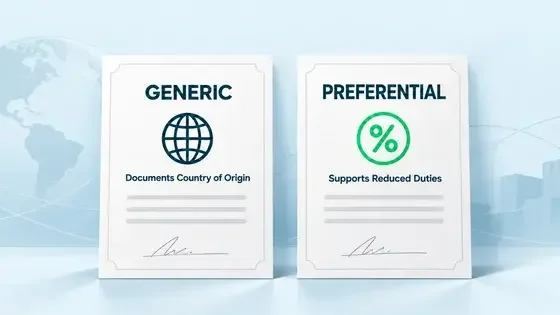
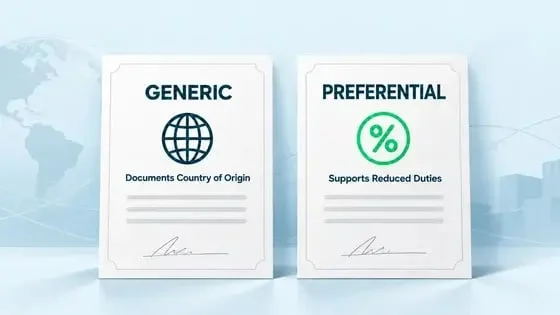 A certificate of origin can document where goods come from or support a claim for reduced duties. Those are different jobs, and choosing the wrong document can leave a customer’s request unmet or a duty preference unsupported. Exporters should first clarify the document’s purpose, then check the origin rules and any authentication instructions.

A generic certificate records the country of origin under applicable non-preferential rules. A preferential certificate or certification supports a claim under a particular trade agreement or preference program, provided the goods meet that arrangement’s origin requirements. Chamber certification is a separate step: a chamber stamp does not make goods eligible for preferential duties.
Start with the document’s purpose
A request for a “certificate of origin” may come from a buyer, the importing country’s customs process or a bank reviewing documents under a letter of credit. It doesn’t automatically mean the shipment needs a chamber-certified form, and not every international shipment requires a certificate. Ask the recipient what it needs before preparing one.
A generic certificate, also called a non-preferential certificate, identifies the country or countries where the goods originated. It doesn’t establish eligibility for a tariff benefit. The country of shipment and the country of origin can differ: storing foreign-made goods in a U.S. warehouse before export doesn’t make them U.S.-origin.

If the buyer accepts an exporter-signed document, a generic form may be sufficient. Complete it with accurate shipment and origin details, and follow any required wording or format. A free generic template is available in the certificate of origin library.
Check whether authentication is required
Before selecting a form or service, confirm whether the recipient requires a chamber stamp, notarization, consular legalization or another authentication step. Ask whether an electronic document is acceptable, too. For shipments paid under a letter of credit, review its documentary conditions closely; a form that satisfies the buyer may still fall short of the bank’s requirements.
If chamber certification is specified, signing a generic template won’t meet that condition. The electronic certificate of origin portal allows exporters to enter shipment details online and submit supporting documents for review. After approval, the exporter receives a chamber-certified certificate. Check separately whether the destination also requires legalization or original paper documents.

The chamber’s certification authenticates the origin declaration based on the information and evidence submitted. It doesn’t convert a generic certificate into a preferential one. The two documents serve different purposes, even when both relate to the same shipment.
Some exporters choose chamber certification even when it isn’t required. A third-party authentication can strengthen the origin documentation provided to a customer or customs team, particularly when buyers want more support than an exporter-signed form. Still, the certificate is supporting evidence. It doesn’t guarantee acceptance of the declared origin or demonstrate that goods meet every applicable sourcing requirement. Importers may need supplier, production and supply chain records as well.
Digital issuance adds a way to check that a chamber-issued certificate is genuine. The International Chamber of Commerce origin verification platform lets recipients authenticate certificates from participating accredited chambers using a certificate number and chamber accreditation code. An exporter-created PDF is electronic, but it doesn’t carry that independent certification or verification mechanism. Confirm that the recipient accepts the format before sending it.

Preferential treatment depends on product rules
A preferential certificate or certification supports an importer’s request for reduced or eliminated duties under a specific trade agreement or preference program. For U.S. exporters, the United States–Mexico–Canada Agreement (USMCA) is one familiar example. Other arrangements have their own origin tests and documentation requirements.
The key work happens before the form is completed: determine whether the goods qualify under the particular agreement. A product made in the United States may fail an agreement’s origin test. Conversely, the use of foreign materials doesn’t automatically prevent qualification. Depending on the product and agreement, the test may involve a change in tariff classification, a regional value-content threshold or a specified production process.
Identify the product’s classification and review the matching origin rule. Keep records that support the determination, including relevant supplier and production details. Recheck eligibility when sourcing, materials or manufacturing processes change. Qualification under one agreement doesn’t automatically carry over to another; each has its own rules.
For U.S. free trade agreements, origin certifications are generally self-certified by an eligible party according to the agreement. A chamber stamp isn’t what establishes preferential eligibility. Under USMCA, for example, there’s no prescribed certificate form or chamber-certification requirement. The certification must include nine minimum data elements and can be completed by the importer, exporter or producer, subject to the agreement’s requirements.
Other agreements may use different names for the document, ask for different information or limit which parties can certify origin. Use the requirements for the agreement being claimed. Templates in the certificate of origin library, including USMCA and other agreement-specific forms, can help organize the required details. A completed template documents the claim; it doesn’t replace the underlying eligibility review.
Common errors to prevent
- Using the shipping country as the origin. Determine origin under the rules that apply to the product.
- Assuming domestic manufacture automatically qualifies. Apply the specific agreement’s test.
- Sending an unsigned-by-the-chamber form when a stamp is required. Confirm authentication instructions with the recipient.
- Using a generic certificate to claim preferential duties. Follow the agreement’s certification requirements.
- Certifying without supporting records. Gather the information needed to substantiate origin or qualification.
- Reusing one agreement’s analysis for another. Review each agreement’s rules separately.
Choose and prepare the right document
When a customer’s request is vague, ask for the document name, required wording and certification instructions. If the purpose is simply to document origin, confirm whether an exporter-signed generic certificate is acceptable or a chamber-certified version is required. If the purpose is to claim preferential duties, identify the agreement, verify product eligibility and follow its certification rules. The importer makes the preference claim when the goods are imported.
Shipping Solutions provides free generic and agreement-specific templates through its certificate of origin library. Exporters who need chamber certification can use the electronic certificate portal; registration is free, with fees applying when a document is submitted for certification.
For more help with origin determinations, the company offers webinars featuring experts from the American World Trade Chamber of Commerce: Determining the Country of Origin for Your Products covers origin determination, transformations, “made in” language and certificate preparation. Ask Me Anything: Determining the Country of Origin for Your Products addresses exporter questions about origin and documentation.
The practical sequence is straightforward: establish what the recipient needs, identify the applicable origin test, gather evidence, then choose the form and authentication method. That order helps keep the document aligned with the shipment and the claim it is meant to support.


