Wednesday, August 5, 2026 · Supply Chain Tech
Same-Day Parts Delivery Can Limit Manufacturing Downtime Costs
Noted by Mckailyn Woodward · 566 reads
A Siemens and Senseye study found frequent, costly unplanned downtime. Same-day parts delivery can shorten waits when a replacement isn’t in stock.
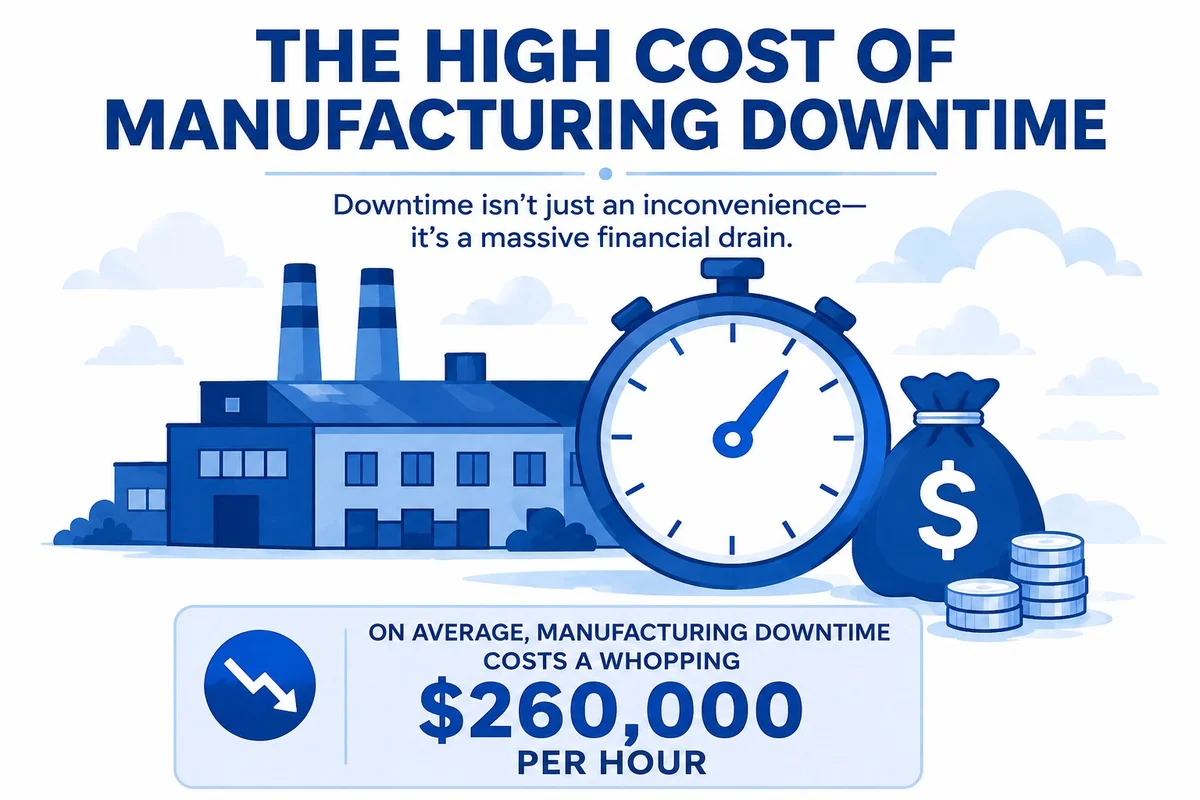
A missing replacement part can keep a manufacturing line idle while a facility waits for standard shipping. Same-day delivery gives maintenance teams another way to shorten that wait: arrange a direct pickup from a supplier and rush the part to the plant, sometimes within hours. It can’t prevent a breakdown, but it can reduce the time between finding a replacement and getting equipment back into service.
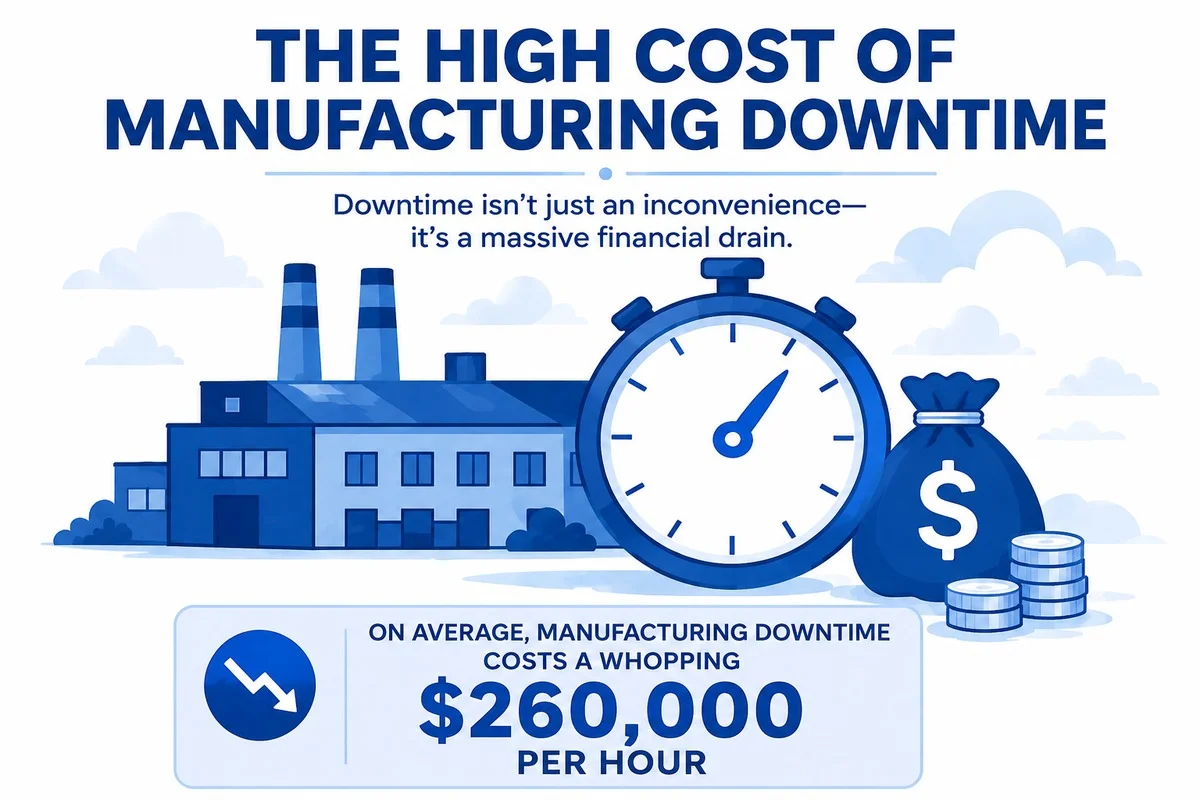
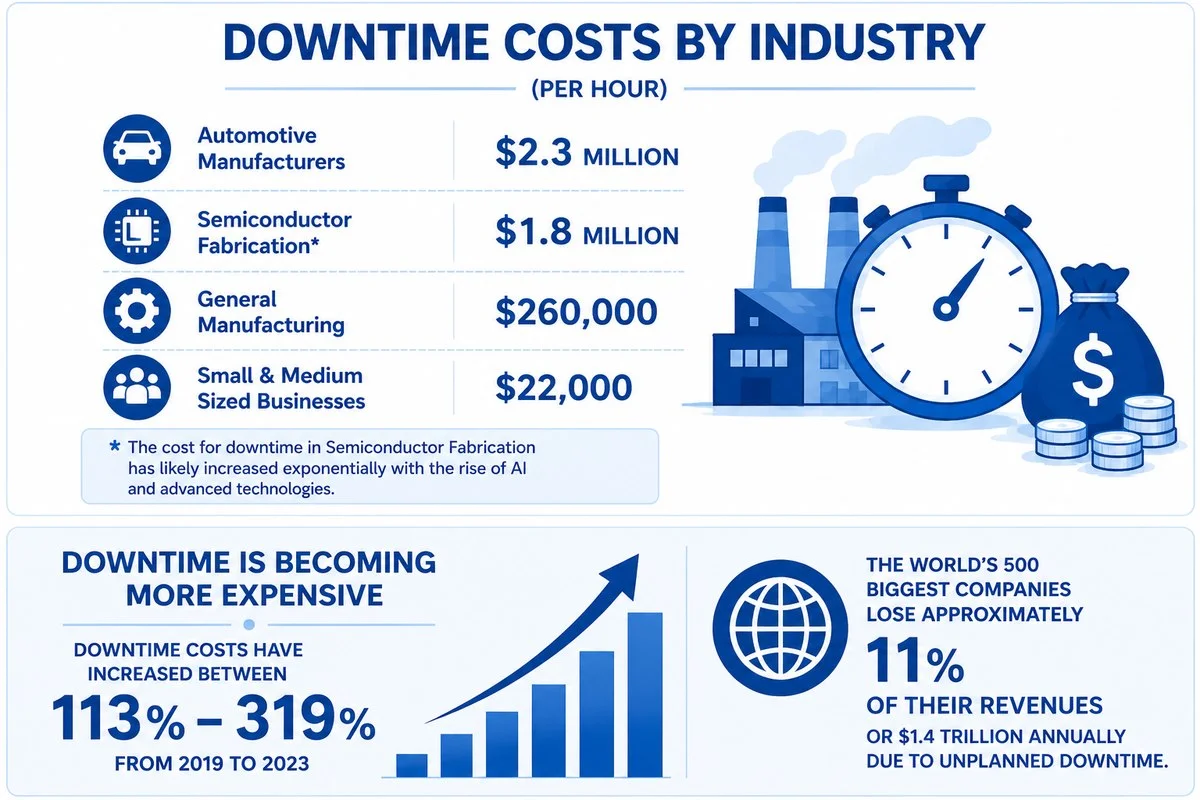
The potential cost is substantial. A study by Siemens and Senseye found that two-thirds of manufacturers experienced unplanned downtime at least once a month. The study put downtime costs at approximately $2.3 million per hour for automotive manufacturers, $1.8 million for semiconductor fabrication, $260,000 for general manufacturing and an average of $22,000 for small and medium-sized businesses. Costs vary with a company’s scale and output.
Downtime carries costs beyond lost production
The Siemens and Senseye study reported that downtime costs rose by 113% to 319%, depending on the industry, between 2019 and 2023. It also estimated that the world’s 500 largest companies lose about 11% of their revenue, or $1.4 trillion annually, to unplanned downtime. Those figures put the cost of a stalled line in context, but the bill for any individual plant also depends on how long the interruption lasts and what it takes to recover.
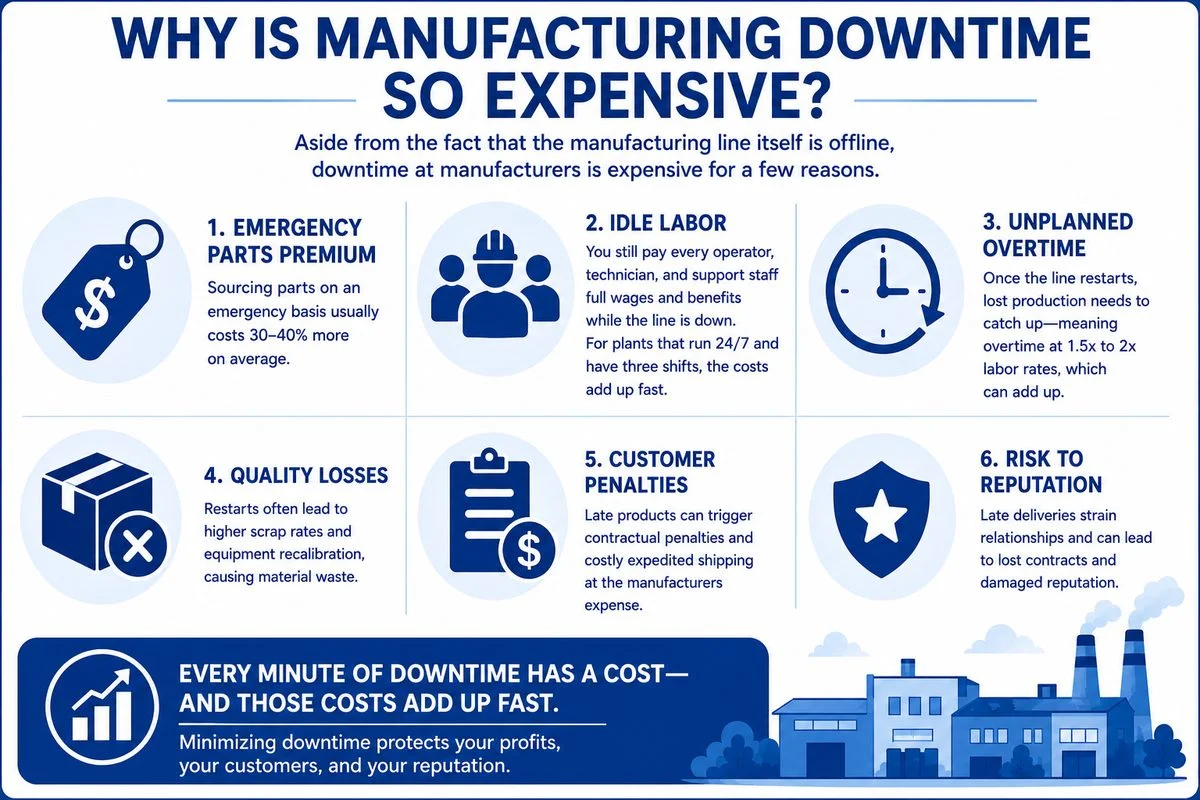
A line stoppage can trigger several expenses at once. Emergency parts sourcing may cost 30% to 40% more on average, the source article says, particularly when a replacement is available only from a distant supplier. Workers still need to be paid while production is paused, including operators, technicians and support staff. For a plant running three shifts around the clock, that idle labor cost can accumulate quickly.
Restarting production brings its own pressures. A facility may need overtime to recover lost output, at labor rates of 1.5 to 2 times regular pay. Equipment may also need recalibration; the first batches after an unplanned stop can have higher scrap rates if they fail to meet specifications. Late orders can prompt customer penalties and expedited shipping costs, while repeated delays may strain customer relationships or put contracts at risk.
Equipment failure leads reported causes
Equipment failure was the most common cause of unplanned downtime in the figures cited by the source, at 42%. Human error accounted for 23%, process issues for 15%, supply chain disruptions for 12%, and IT or software failures for 8%. The source also links equipment failure to the finding that two-thirds of manufacturers face unplanned downtime at least once a month.
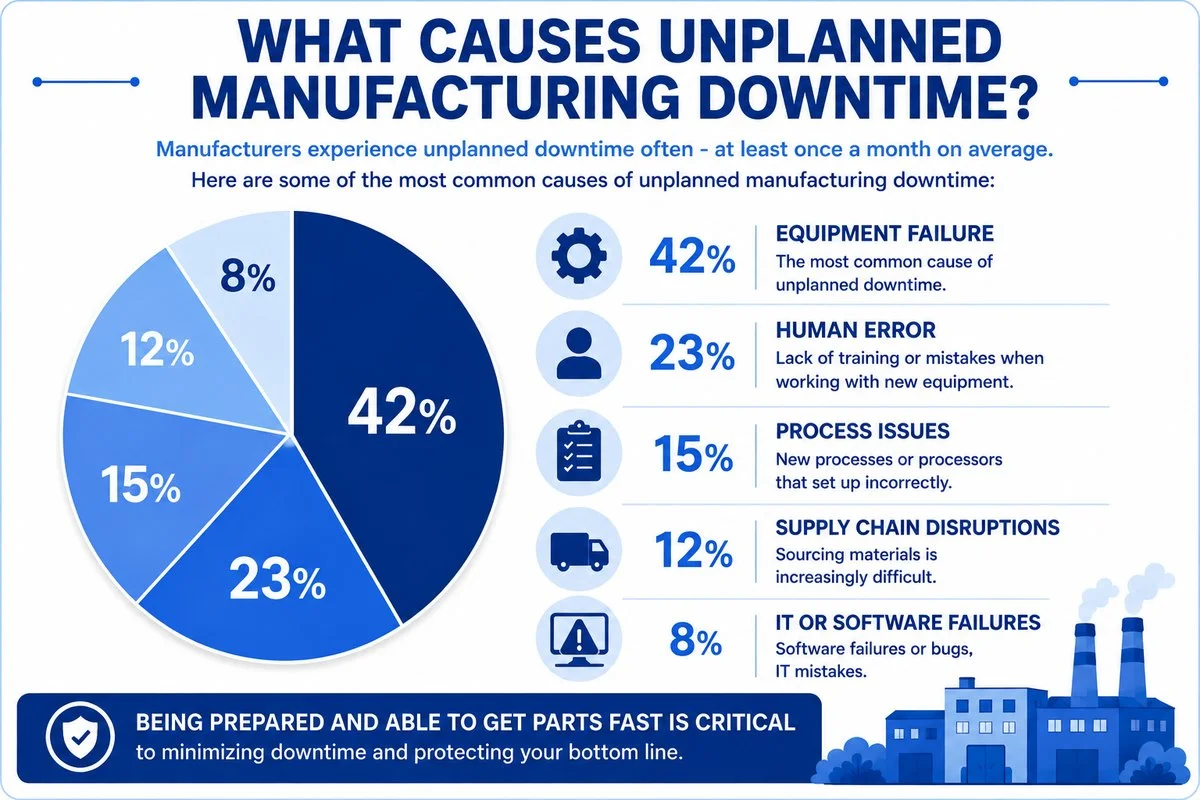
That breakdown points to several different maintenance needs. Equipment wear calls for inspection and replacement planning; process issues may require changes to how work is carried out; and human error can be addressed through training and clear procedures. A part that isn’t available onsite creates a separate problem: even after a team identifies the failure, the line may remain down while a replacement travels to the facility.
Lean inventory can lengthen the wait for a replacement
Many facilities use just-in-time manufacturing to keep inventory low and avoid the storage costs of holding parts that may sit unused for years. That approach can work when suppliers can meet demand on schedule. If a part fails and the plant has no spare, though, a standard shipment may take 24 to 48 hours, leaving production exposed to one or two days of lost output.
The source article points to just-in-time manufacturing as part of the reason replacement parts may not be kept onsite. Same-day delivery can help bridge that gap: a courier collects the needed part from its supplier and takes it directly to the affected facility. For plants where every hour of downtime carries a high cost, the relevant comparison is the delivery charge against the time and recovery costs a longer wait could add.
How an urgent delivery is arranged
The process begins with a check of the facility’s spare-parts inventory. If the required component isn’t available, maintenance or purchasing staff identify a supplier that has it. They then contact a courier serving the supplier’s area, or a national provider with drivers in multiple locations, and request a pickup and direct delivery to the plant.
Once the delivery quote is agreed, the courier collects the part and takes it to the facility, with delivery potentially completed within a few hours. Direct transport can give maintenance teams a clearer estimate of when the component will arrive. That helps them coordinate the people needed to install it, such as technicians, engineers or equipment specialists.
Same-day delivery for manufacturing parts is one option when standard shipping would extend a production interruption. Whether it suits a particular breakdown depends on the part’s location, the urgency, the courier’s reach and the transport required.
Make urgent delivery part of maintenance planning
Preventive maintenance reduces failure risk through planned inspections and service. A typical program starts with an asset inventory that records equipment, serial numbers, manuals and locations. Teams rank assets by their importance to plant operations and safety, then set inspection schedules based on time intervals or machine runtime. Written procedures guide cleaning, inspection and parts replacement, while maintenance software records completed work, costs and schedule changes.
Predictive maintenance uses equipment data to identify signs of wear and prompt intervention. Teams select high-value assets, install sensors that measure conditions such as heat, vibration or pressure, and establish normal operating ranges. Software can then flag anomalies and generate work orders. Reviewing alerts over time helps teams refine warning thresholds and reduce false alarms.
Both approaches can help a facility anticipate and address equipment problems. Neither ensures that a needed replacement will be available when a failure occurs. Adding an urgent delivery option to the maintenance plan gives teams a response for that inventory gap: identify the supplier, arrange transport and coordinate arrival with the repair crew.
What to assess in a courier service
Manufacturers evaluating courier services can start with response speed and geographic coverage. A provider should be able to handle rush deliveries and reach the supplier as well as the plant. If a part is too far away for a road trip to meet the required timing, the source says some services can arrange next-flight-out transport.
Vehicle options matter, too. Parts range from small components to pallets of equipment, so a provider with sedans, cargo vans and box trucks can cover a wider range of loads. The source describes Reliable Couriers’ fleet as including vehicles from sedans to box trucks with lift gates, with capacity for pallets weighing up to 10,000 pounds.
Availability at any hour can matter when a breakdown happens overnight or on a weekend. The source describes Reliable Couriers as operating 24 hours a day, seven days a week, 365 days a year. It also cites upfront pricing and real-time tracking as service features: a clear price helps teams record the cost of each emergency shipment, while tracking helps them estimate arrival and schedule repair staff.
The practical takeaway is to plan for the period after a failure as carefully as the maintenance work intended to prevent one. An inventory check, supplier contact, transport quote and delivery tracking can help turn an uncertain wait into a more manageable repair window. The source article identifies Reliable Couriers’ online quote request as a way to ask about delivery.
The original post appeared on Reliable Couriers’ website.


