Wednesday, October 29, 2025 · Trucking & Freight
Courier, Carrier and Postal Services: Choosing the Right Delivery Option
Noted by Mckailyn Woodward · 656 reads
Couriers prioritize speed and direct delivery, postal services handle smaller parcels, and carriers move bulk freight over long distances.
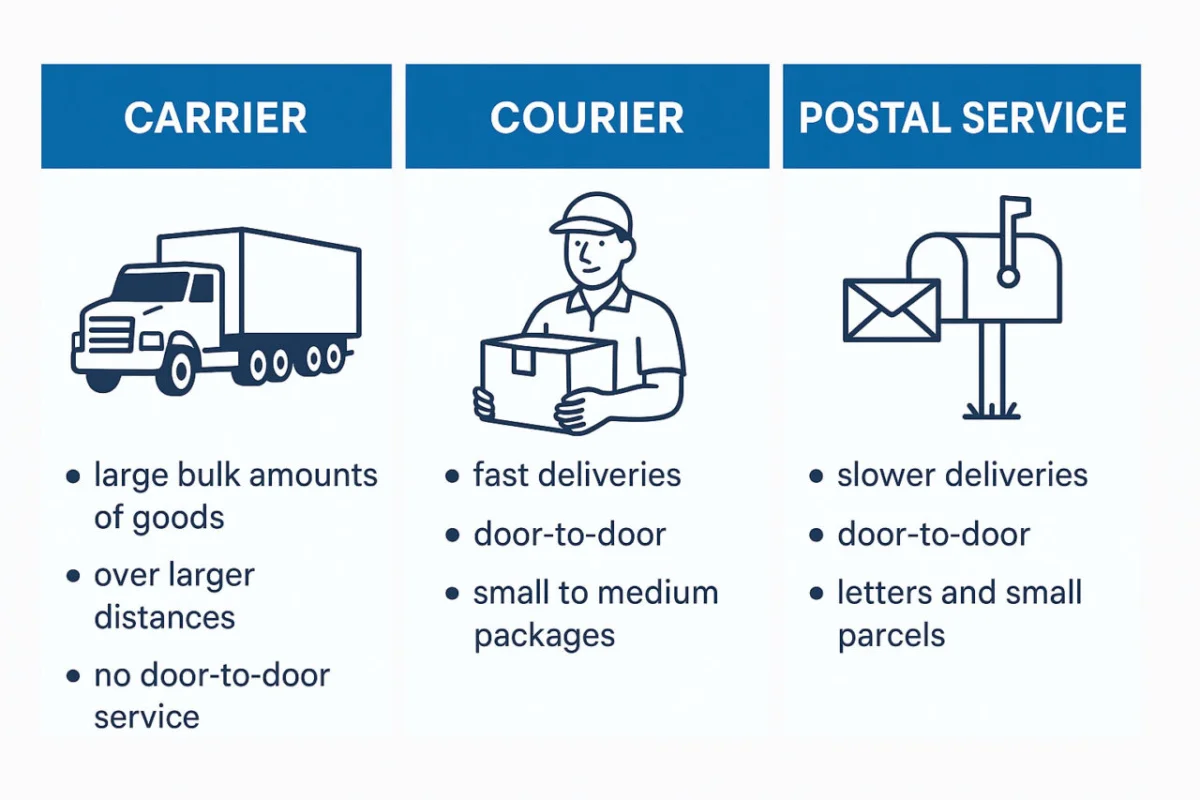
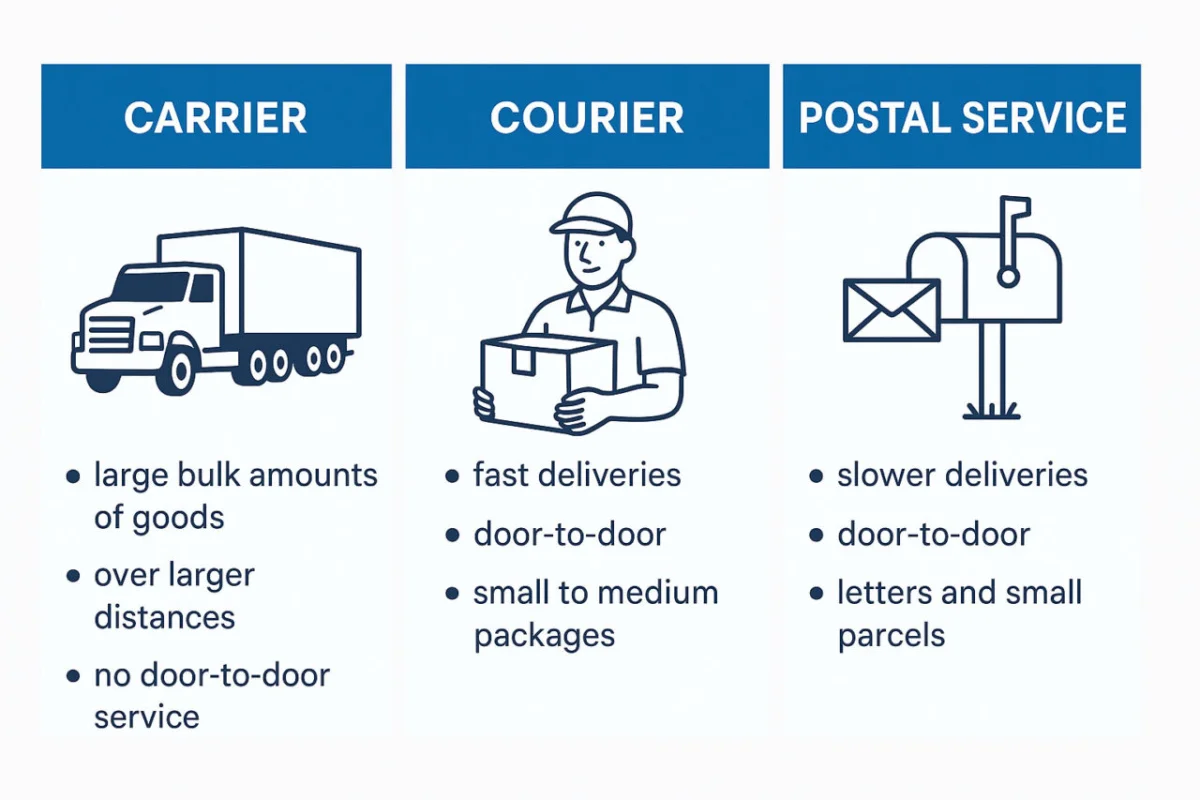
Choosing among a courier, a carrier and a postal service comes down to what needs to move, how far it must travel and when it needs to arrive. Each handles a different mix of shipment size, speed, cost and delivery control. For shippers, the practical distinction is between a fast, direct trip; a parcel moving through a broad mail network; and freight transported in larger volumes across long distances.
A courier can collect a shipment and take it directly to its destination, often within hours or by the end of the day. Postal services generally handle letters and smaller parcels, with delivery ranging from about a day to a week. Carriers specialize in larger loads, including freight moving across cities, countries and continents. Their network may include trucks, aircraft, ships or rail, but their service typically does not include a direct trip to the recipient’s door.
That division shapes both price and service. Postal and carrier networks can be less expensive than a dedicated courier, especially when delivery speed is flexible. A courier’s direct handling costs more, but can suit urgent, fragile or time-specific shipments. The right choice depends on the shipment’s dimensions, its destination and the cost of waiting.
Carriers move freight at scale
A carrier is a logistics organization that transports goods over distance, often in large quantities. Its network can connect cities, countries and continents, and may handle international freight. The term covers several operating models, which differ in who can use the service and who owns the transportation operation.
- Common carriers transport goods for multiple customers. The source describes them as holding a license from a regulatory authority and serving different shippers in a day.
- Contract carriers provide transport for one shipper over a longer-term arrangement. The operator might be an individual with a minivan or a large company with trucks, ships, trains and aircraft.
- Private carriers move a company’s own products using equipment the company owns and operates.
Carriers can use several modes in the same broader freight network. Road transport, typically by box truck or semi-truck, offers flexibility over short and medium distances. Air freight is the fastest of the listed modes for international shipments, but generally costs more. Rail can move bulk cargo over long inland routes at a cost-effective rate. Ocean transport suits large volumes traveling long distances and internationally; its lower cost comes with longer transit times and fewer direct delivery options.
Those modes make carriers a fit for loads beyond ordinary parcel networks. The source describes typical carrier shipments as weighing more than 100 pounds, with some loads reaching a ton or more. Carriers can also move multiple containers. Some handle certain hazardous materials for destinations with specific clearance requirements; the source gives USCIS and immigration as examples.
Moving freight through a carrier network can involve multiple pickups, warehouses, sorting points and vehicles. Each transfer adds handling and time. Consolidating shipments and moving them in larger vehicles can lower the cost per item, but the process usually does not suit a delivery with a short deadline. Extra handling can also increase the chance of damage or loss, particularly when packages are transferred between facilities or modes.
Examples in the source include Amazon, DHL, A.P. Møller–Maersk and Kuehne + Nagel International AG. The article reports that Amazon handled 6.3 billion U.S. packages and was on track to surpass USPS by 2028, citing Pitney Bowes.
It also reports DHL revenue of €84.2 billion in 2024 and describes the company as headquartered in Germany, with aircraft and road vehicles in its fleet. The source says DHL uses other ocean carriers for global sea freight rather than operating its own ships; it links to DHL for the revenue figure. Maersk is described as based in Denmark, with more than 100,000 employees and offices or subsidiaries in 130 countries. Kuehne + Nagel, founded in Germany and now based in Switzerland, is described as having about 1,300 offices in more than 100 countries and more than 79,000 employees.
For a shipper, the key carrier question is whether the load’s scale and distance justify the extra transit time and handling. A large international shipment may benefit from a carrier’s transport network and lower unit cost. A small, urgent package is unlikely to benefit from being routed through a freight process designed around volume.
Postal networks handle smaller shipments
Postal services focus on letters, documents and parcels, generally at a smaller scale than freight carriers. The source describes services such as USPS as serving addresses throughout the United States, with packages up to 70 pounds accepted in some services. It places the typical postal parcel below 10 pounds, while noting that size and weight restrictions apply. The source links to the carrier’s package guidance.
Postal delivery commonly uses sedans, vans or postal trucks. How a particular driver receives route changes or records delivery can vary by operator; the source says drivers may rely on personal devices. It also notes restrictions on certain contents, including limits related to liquids and other substances. Shippers should check service rules for the item and destination before tendering a parcel.
Price depends on shipment size, weight, service level and how quickly the sender wants delivery. Standard service can be an economical option when the package is small and the deadline is flexible. Faster service costs more. The source describes overnight options as sometimes taking one to two days in practice, and says two-to-three-day shipments can arrive later than expected, linking to coverage of delayed parcel delivery.
Postal networks reach a broad range of addresses, which makes them useful for everyday documents and small parcels. Their cost advantage is clearest when a sender can accept the standard transit window. Paying for a faster tier narrows that advantage, while size and content restrictions mean postal delivery is not suited to every item.
The source raises concerns about parcel handling, including packages shifting in vehicles or being affected by other deliveries. Handling practices vary across routes and operators, so a shipper with a fragile or unusually sensitive item should weigh the service’s packaging requirements and available handling options before choosing a low-cost parcel service.
Couriers trade network scale for speed and control
Couriers provide door-to-door delivery, usually by road, and can be operated by an individual or a company with a vehicle fleet. Depending on the provider and service, a courier may carry anything from an envelope to pallets. The source gives a typical delivery window of an hour to less than a day, making courier service the clearest option when timing and direct handling matter.
Courier offerings vary, but the source describes seven common types: rush or hot shot, same day, nationwide, on demand, local, legal and overnight. These labels describe different combinations of urgency, geographic reach and specialization, rather than a single standard service available from every company.
Rush and hot shot
Rush and hot shot services are built for urgent deliveries. A driver collects the shipment and takes it to the destination without making intermediate stops. Depending on the provider, delivery may take less than an hour or be completed by the end of the day. A direct trip limits transfers and can suit important or delicate items, but the dedicated vehicle and short deadline can make this one of the more expensive courier options. The source discusses when this premium may be worthwhile in its guide to rush delivery.
Same-day and next-day
Same-day couriers aim to deliver on the day the order is placed and the shipment is collected. They may be less expensive than a rush service when the package does not need immediate, direct transport. Some providers also offer next-day delivery, including for shipments prepared later in the day when the recipient’s location is closed. The source links to details about same-day delivery.
Nationwide, on-demand and local
A nationwide courier can use drivers positioned around major cities to serve nearby towns and suburbs. The company may hand a shipment from one driver to another to keep it moving across a wider area. That can extend a service beyond one local route while preserving more direct handling than a typical multi-stop parcel process.
On-demand couriers respond to a pickup and delivery request and usually carry the shipment directly, much like a rush service. Local couriers work within a defined area and may offer hot shot or on-demand runs. A local operator may focus on smaller packages and lack the box trucks needed for larger freight, so vehicle availability matters when a shipment is bulky.
Legal and overnight delivery
Legal couriers handle physical documents and related tasks for law firms and businesses. The source lists court filings, summonses, contracts, complaints, document retrieval, incorporation documents, apostille services and courtesy copies. These couriers may track custody of documents, protect confidentiality and return stamped copies to the client. Their familiarity with court locations and procedures is part of the specialized service.
Overnight couriers collect a shipment on the day it is ordered and aim to deliver it the next day, often if pickup happens before a cutoff around 5–6 p.m. The source says packages are typically stored securely during the overnight period. This option can cost less than same-day or on-demand delivery, with a later arrival as the tradeoff.
Match the service to the shipment
A carrier is the natural fit when a shipment contains bulk goods or multiple containers, must travel a long distance or move internationally, and can tolerate a slower schedule. The source suggests asking whether the load is large, whether the route is international and whether speed is a priority. A carrier is likely to make sense when at least two of those conditions apply.
A courier fits a different operating need: a time-sensitive package, a direct door-to-door trip, a fragile item or a delivery with specific pickup and arrival instructions. Couriers can also handle some bulky loads. The source estimates that a courier may carry up to eight standard pallets, or what fits in a 26-foot box truck, while carriers can move multiple containers.
Postal service suits small shipments that are not urgent. The source gives 70 pounds as an upper package limit for some services, but typical postal parcels are smaller and service rules vary. Postal networks can send internationally, though delivery may take longer. They are not designed to move bulk freight.
Courier capacity also depends on the provider and vehicle. A fleet might include scooters, sedans, cargo vans and box trucks; the source says some courier operations can move as many as eight pallets. That flexibility can serve shipments that are too large for the mail network but too time-sensitive for a standard freight route. It typically comes at a higher cost per shipment than consolidated carrier transport.
Courier customers may include medical, legal, trade show, airport, remote-office equipment and same-day freight operations. These shipments can call for quick pickup, direct delivery or special handling instructions. A courier can coordinate a defined collection and drop-off window, but the sender should confirm the provider’s vehicle capacity and ability to meet the requested timing.
Across all three options, the decision is not simply about the fastest quoted transit time. Shipment size, access to the recipient, number of handling steps and delivery commitments all affect whether a service fits. A small envelope with a flexible arrival date can travel through the mail. A full load moving across long distances belongs in a carrier network. When a package needs to reach a specific person quickly, a courier’s direct route may justify its higher price.
Before booking, confirm weight and size limits, destination coverage, pickup cutoffs, expected transit time and any handling restrictions. Those details determine whether a low-cost service can meet the requirement or whether a direct courier run is the more reliable operating choice.
Common questions
What separates a carrier, courier and postal service?
Carriers move larger quantities of goods over long distances and usually do not provide door-to-door delivery. Couriers make direct deliveries quickly and can collect and deliver at specified locations. Postal services handle letters and smaller parcels through a broad delivery network, typically on a slower schedule than couriers.
Why choose a courier?
A courier can shorten transit time, reduce transfers and provide direct delivery. That can help with urgent or fragile shipments, exact pickup and arrival requirements, or items that need more attention than a standard parcel service provides. The tradeoff is a higher cost than many postal or carrier options.
How much can each service carry?
The answer depends on the operator and vehicle. Postal services impose package limits; the source cites a maximum of 70 pounds for some services. A courier may carry up to eight standard pallets or a load that fits in a 26-foot box truck. Carriers can move bulk freight, including multiple containers.
What deliveries use couriers?
The source identifies medical and legal items, trade show freight, airport deliveries, remote-office equipment pickups and same-day freight. A courier can be useful when these shipments need an on-demand pickup, a direct route or instructions tailored to the delivery.
For shippers, the service choice starts with a simple operational question: does the shipment need scale, reach or speed most? Carriers provide capacity for bulk freight, postal networks cover smaller parcels, and couriers offer the most direct control over urgent delivery.
The post What is the Difference Between a Courier, Carrier, and Post? appeared first on Reliable Couriers.


