Monday, September 8, 2025 · Ocean Shipping & Ports
Same-Day vs. Next-Day Delivery: Costs, Use Cases and Retailer Examples
Noted by Mckailyn Woodward · 454 reads
Same-day delivery can lift sales and satisfaction but costs more; next-day service offers a faster, lower-cost option for a wider range of shipments.
Choosing between same-day and next-day delivery comes down to the customer’s deadline, the shipment’s purpose, the delivery area and the cost a business can absorb. Same-day service can help win urgent orders and serve time-critical needs. Next-day delivery gives customers a faster option than standard shipping, usually at a lower cost than same-day service. Each can support sales, but the operating demands differ.
What same-day service requires
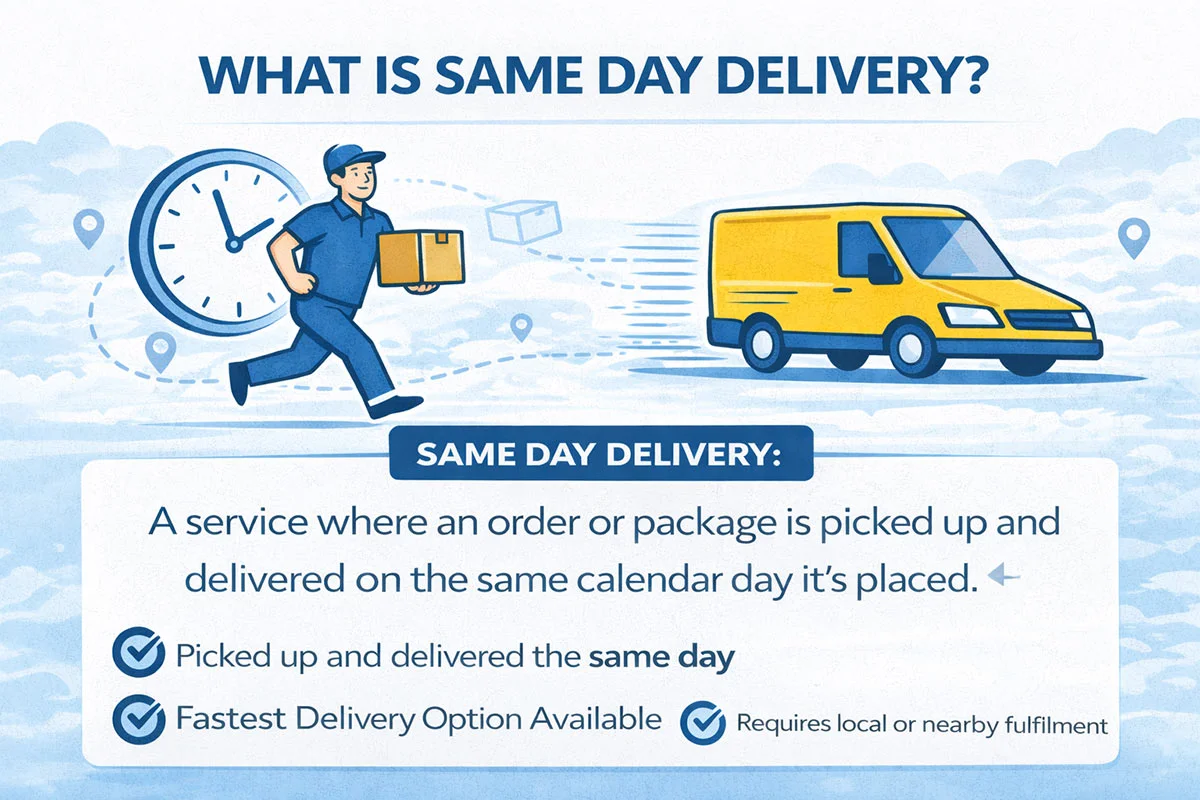
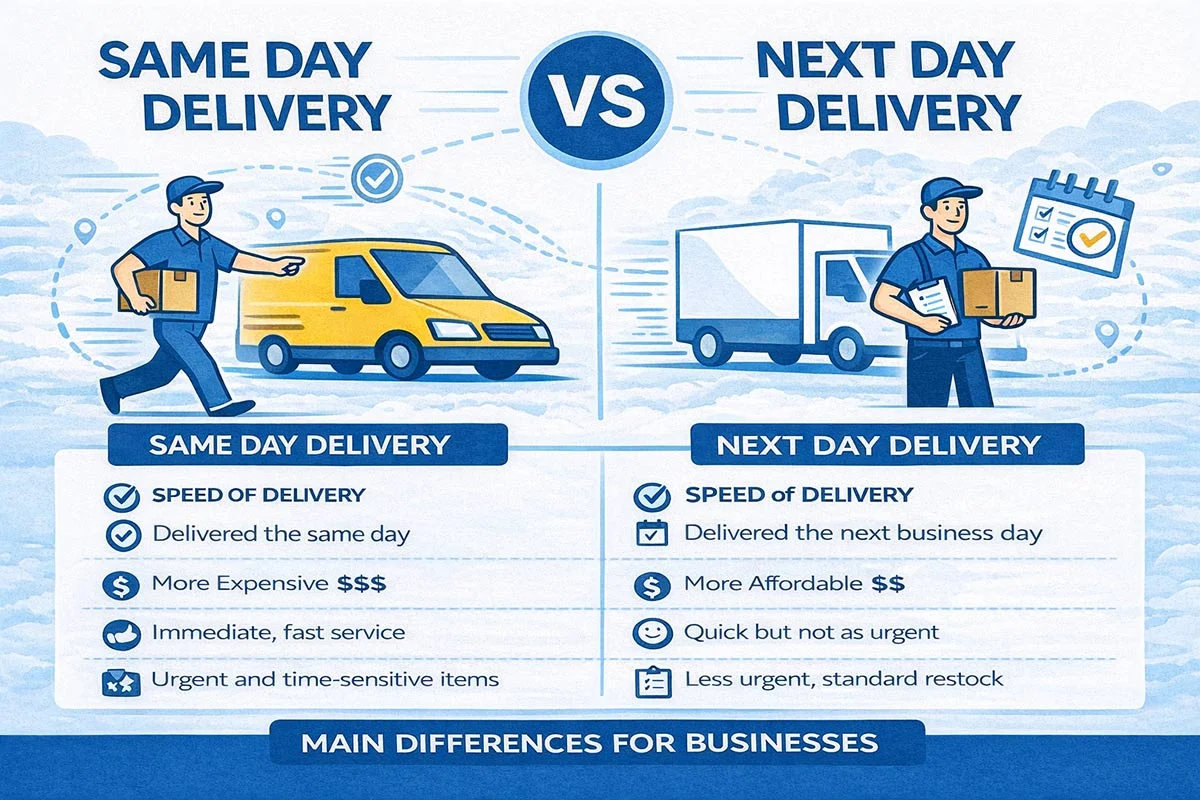
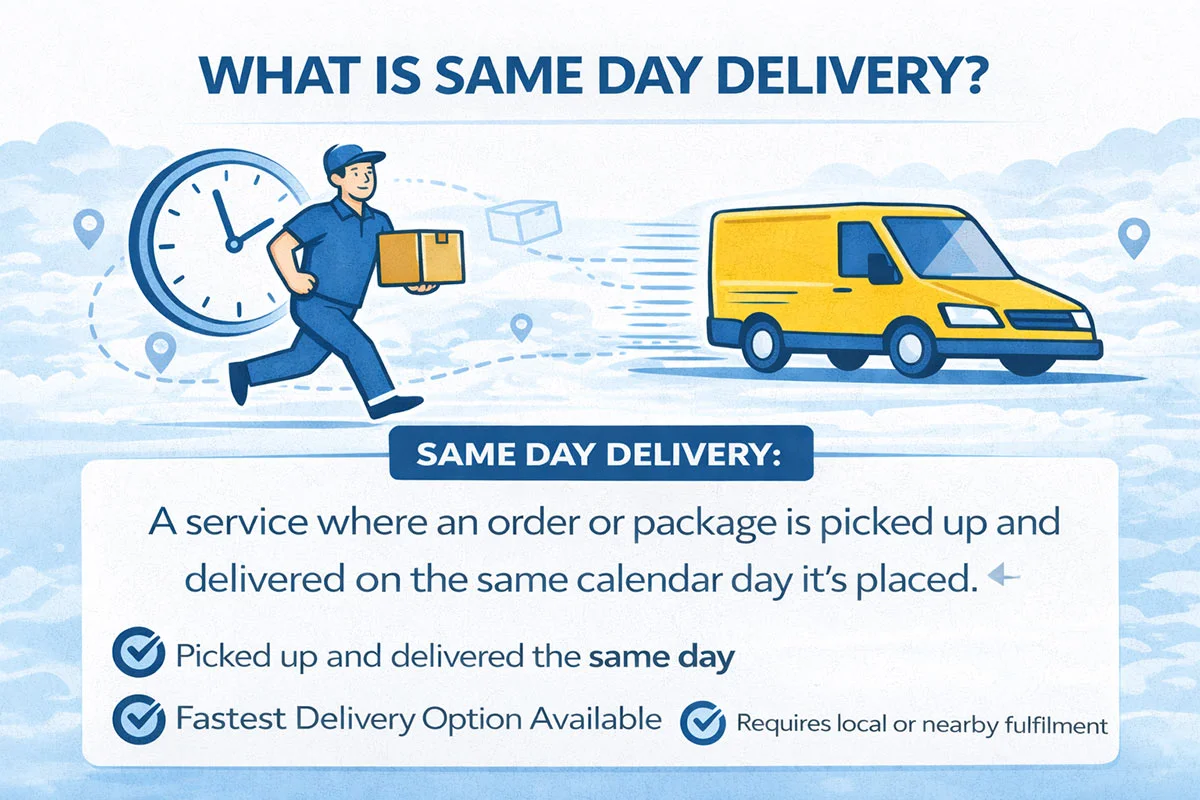
Same-day delivery means an order is shipped and delivered to the customer on the day it is placed. It’s generally suited to businesses with a local customer base, nearby fulfillment sites or access to a courier network that can collect and deliver quickly. The speed comes at a higher price: the source describes same-day delivery as the most expensive option, with added demands on facilities, labor, fuel and dispatch.
The commercial case is strongest when speed is a meaningful part of the offer. The source cites a study in which 68% of shoppers were likely to shop online if same-day delivery was available, and a Capital One survey finding that 81% of consumers expect retailers to offer it. It also cites a Roadie survey in which 80% of industry leaders reported higher customer satisfaction when products arrived the same day.
Those figures point to two distinct potential gains: attracting purchases and improving the experience after checkout. A fast delivery option may help a retailer close a sale when customers are comparing sellers, and a reliable service can give buyers a reason to return. Repeat orders and recommendations may follow, though the source does not quantify those effects.
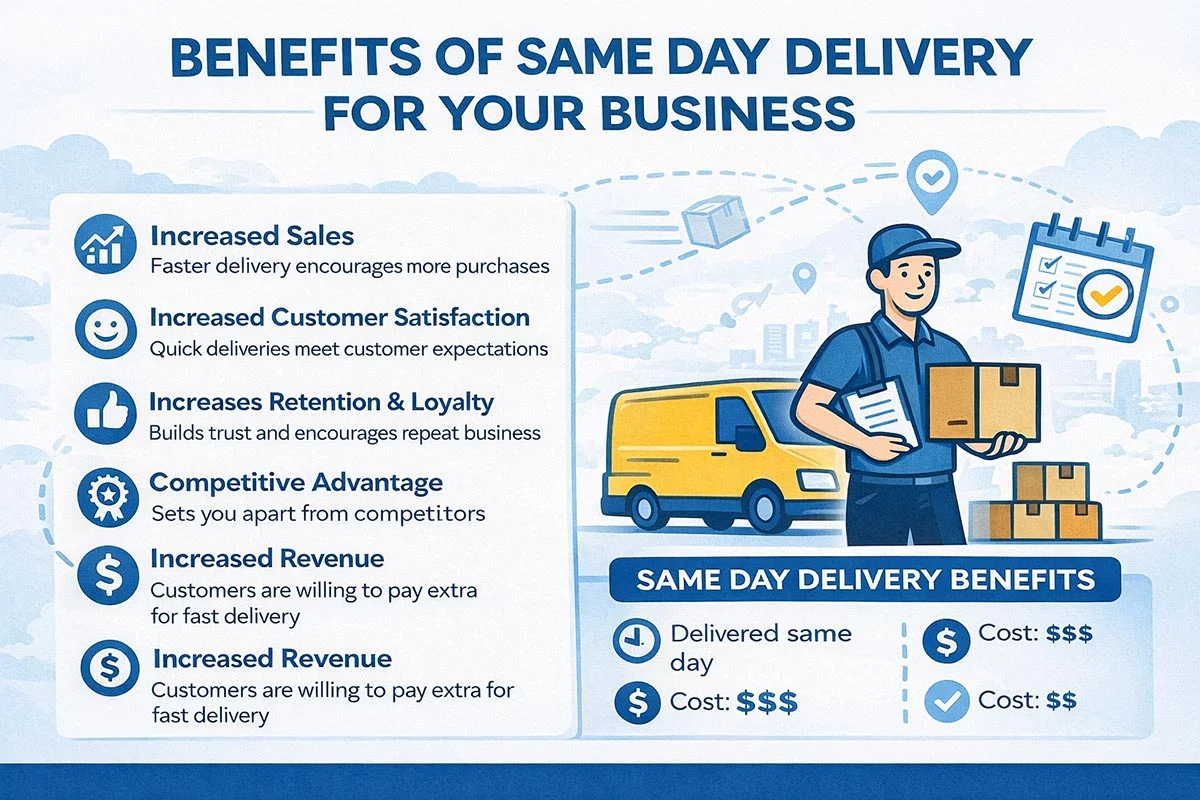
The article also cites research suggesting that same-day delivery can strengthen a seller’s competitive position by 85% compared with businesses that do not offer it. It says nearly 86% of companies offering same-day service reported higher revenue per order, with customers willing to pay a premium for speed. These are reported study findings, not a guarantee that every business will see the same result; product mix, delivery coverage and operating costs will shape the outcome.
Where same-day delivery fits
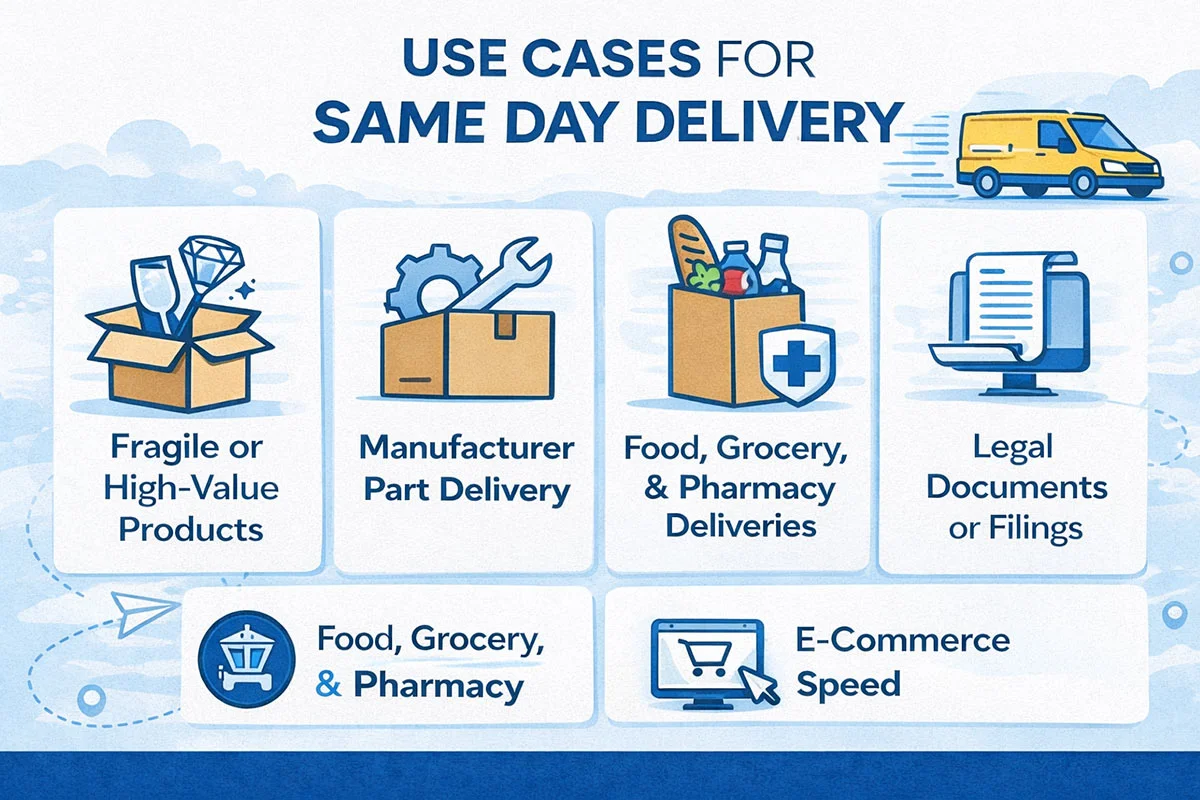
Urgent shipments are the clearest use case. A manufacturer may need a replacement part delivered after a breakdown has slowed or stopped production. A clinic or hospital may need bulky equipment in time for treatment or surgery. The same timing can matter for pharmaceuticals and other health products when a patient needs them promptly.
Same-day service can also suit fragile products and prototypes that need careful, direct handling; grocery and food orders; and online purchases made on impulse, when a short wait could change the customer’s decision. The source lists delivery of legal documents, including real estate closing papers, court filings, sealed bids and contracts, as another possible use. In each case, the business needs to check the shipment’s handling needs and the recipient’s deadline before promising delivery that day.
Large retailers have used broad networks to extend same-day options. The source says Amazon offered the service to Prime members in more than 1,000 U.S. cities and towns and planned to expand it to more than 2,300 areas by the end of 2025. Walmart’s service reached over 93% of U.S. households as of early 2025. Target offers same-day delivery through Target Circle 360 or for $9.99 per delivery at checkout, according to the source. Home Depot lists same-day delivery for thousands of smaller, top-selling items, while CVS and Walgreens offer it across most of their U.S. locations or service areas.
The operational cost of speed
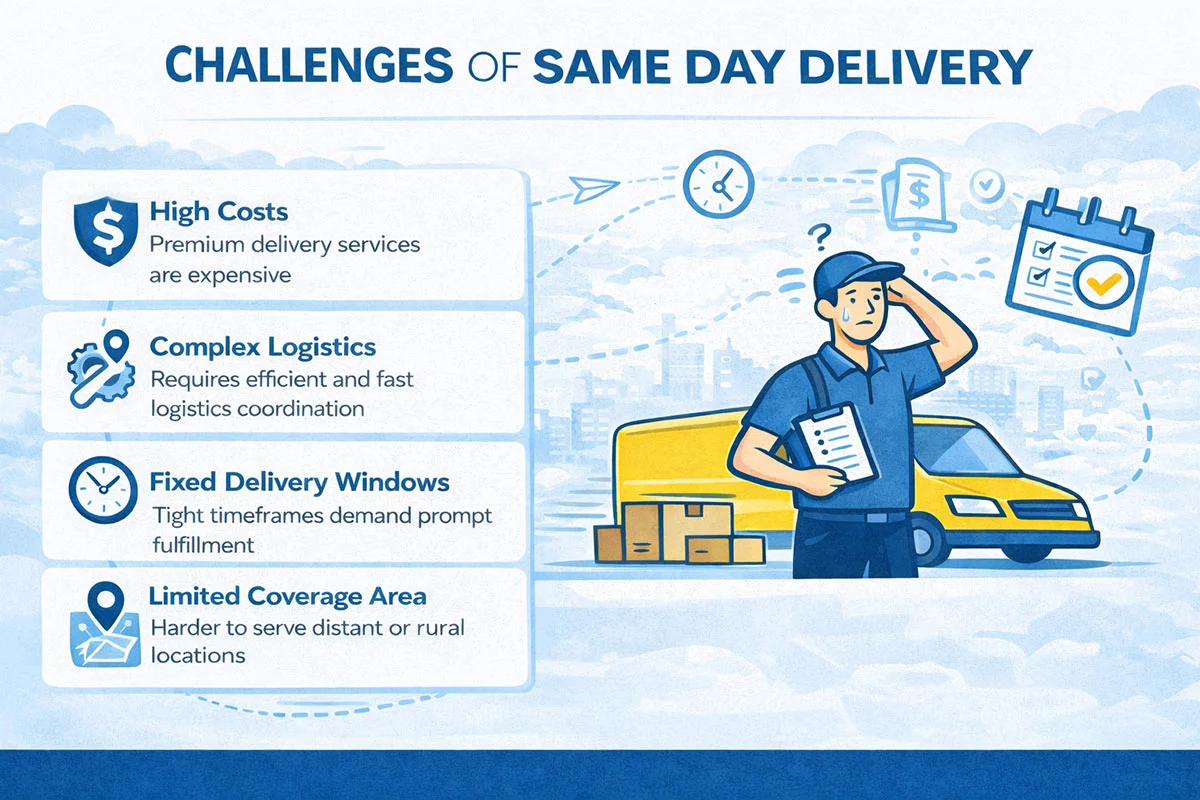
Fast delivery puts pressure on fulfillment and dispatch. Businesses need current inventory information, efficient route planning and rapid order handling, from picking and packing through courier pickup and final delivery. A delay at any step can put the promised window at risk.
Coverage is another constraint. Same-day service is more likely to make financial sense in areas with enough nearby customers and orders. Lower shipment density can leave a business paying for a fast service across a wide area without enough volume to spread the cost. Local fulfillment sites, additional labor and fuel can also squeeze margins, especially for smaller businesses.
Technology and coordination matter as well. A business needs tools and processes to track inventory, manage orders and organize delivery schedules in real time. Companies that lack those systems may find it difficult to meet short turnaround times consistently. Outsourcing can be an option: a courier provider may already have drivers, dispatch technology and local delivery infrastructure. The source points to Reliable Couriers as one provider, but businesses would still need to compare service coverage and costs with their own requirements.
Next-day delivery trades speed for cost
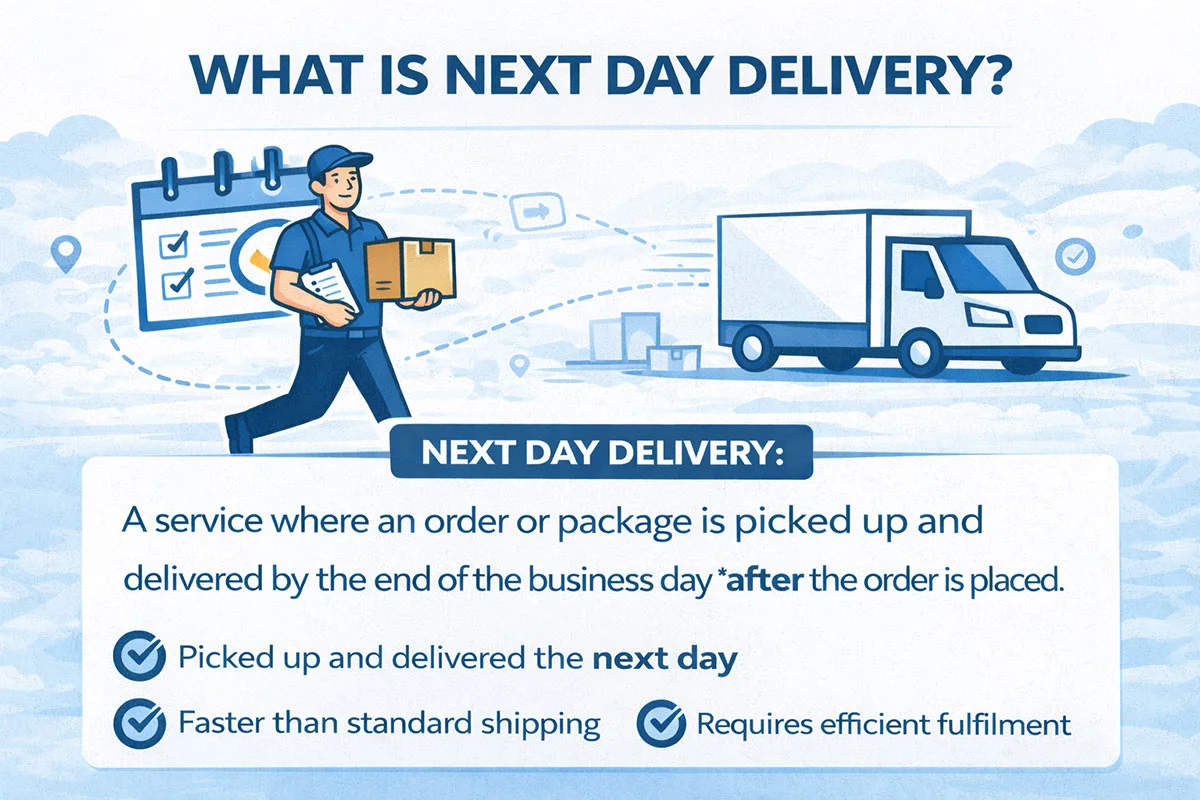
Next-day delivery gets an order to the customer on the day after it is placed. It still serves time-sensitive demand, but it allows more time for fulfillment and transport than a same-day commitment. That makes it a fit for shipments that need to arrive quickly but don’t require delivery within hours.
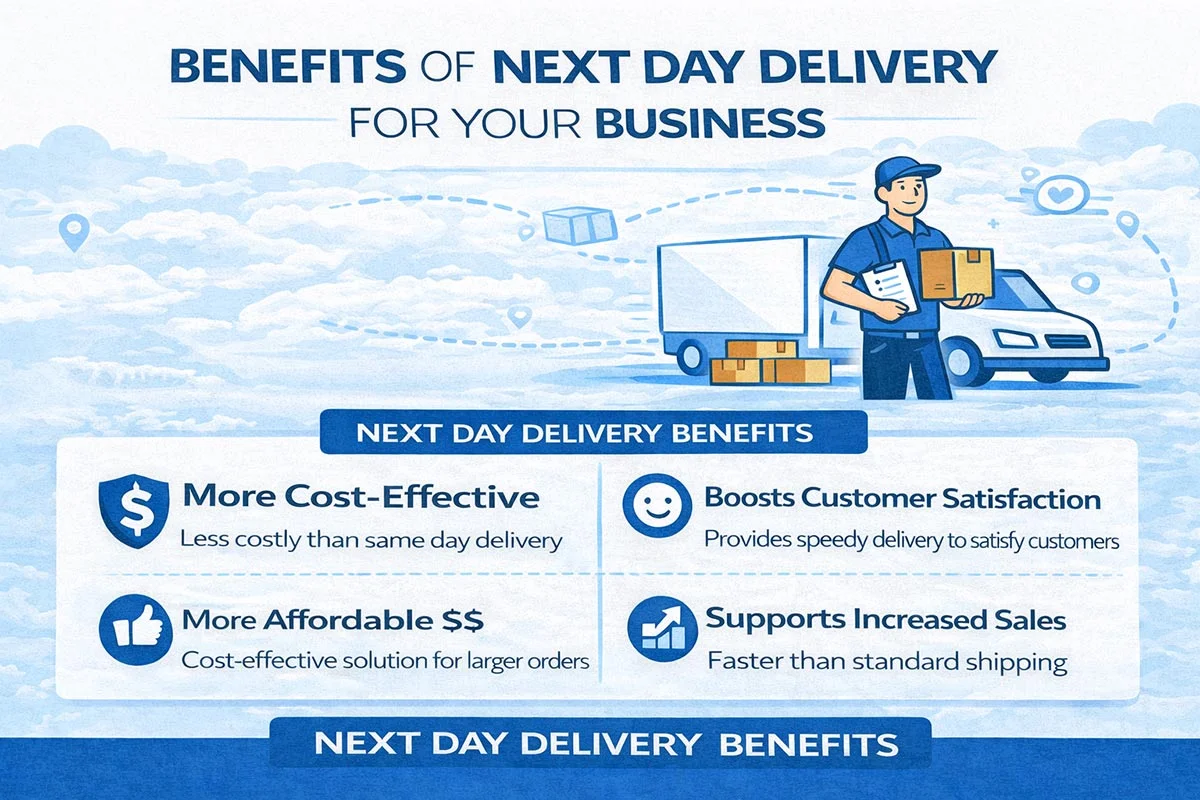
The main advantage is cost. The source says same-day delivery can cost two to four times as much as next-day delivery, reflecting the extra drivers, priority logistics and tighter routing needed for a shorter delivery window. That gap gives businesses a way to offer faster service while controlling shipping expense, provided the next-day promise matches the customer’s actual deadline.
Speed can influence both customer satisfaction and buying decisions. The source cites research linking faster delivery with higher satisfaction and purchase intent, and a study reporting that almost half of respondents had abandoned an online shopping cart because of longer shipping times. Next-day delivery can therefore give customers a defined arrival window without the full cost of same-day service.
Products and businesses suited to next-day service
Next-day delivery is common in ecommerce, where customers want clothing, gifts and electronics promptly. It also suits products with a limited shelf life, including dairy, seafood and meal kits, if the shipping process can protect the goods in transit. Medical and health businesses may use it for time-sensitive medicines, treatments, pet supplies and other products whose effectiveness or condition can depend on timely arrival.
Business-to-business shipments can be another fit. Office supplies, wholesale goods and art supplies may be needed to keep another business running. Next-day delivery gives the receiving company a quicker replenishment window than standard shipping while leaving more time for the seller to consolidate orders and plan transport.
The source names several retailer examples: Nordstrom for clothing and department-store goods, Best Buy for electronics and accessories, IKEA for furniture, and Lowe’s for home-improvement products. These examples show how next-day service can cover different product types, though the available items, destinations and terms depend on each retailer’s offer.
Many retailers can also use third-party logistics providers to handle faster shipments. That can reduce the need to build a delivery network from scratch, but outsourcing still requires clear handoffs, accurate inventory and a service promise that the carrier can meet.
Choosing the service for your operation
Start with the customer’s deadline. Ask whether buyers truly need delivery on the day they order or whether the next day is fast enough. Customer feedback and order patterns can help establish whether same-day service addresses a real need or adds cost without changing purchasing behavior.
Then assess the product. Its size, weight, fragility, perishability and handling requirements can affect which delivery window is workable. Map the service area too: local coverage may be practical before expansion to more distant customers, especially where order density is lower.
Finally, review fulfillment speed and budget. Orders must be picked, packed and ready for collection quickly enough to meet the carrier’s schedule. Compare the delivery expense with the price customers will pay and the value of winning or retaining the order. A business may choose different speeds for different products, locations or customer needs, as long as its delivery options and timing are clear.
Same-day delivery is most useful where urgency justifies its operating cost and the business can support rapid, local fulfillment. Next-day service reaches a broader set of orders at a lower stated cost. The practical decision is to match the delivery promise to the shipment’s deadline, the available network and the economics of each order.


