Friday, August 14, 2026 · Ocean Shipping & Ports
What Makes a Warehousing Region Competitive for Distribution?
Noted by a Guest Author · 556 reads
Strong transport links, modern facilities and flexible 3PL capacity help regions move freight efficiently and handle changing demand.
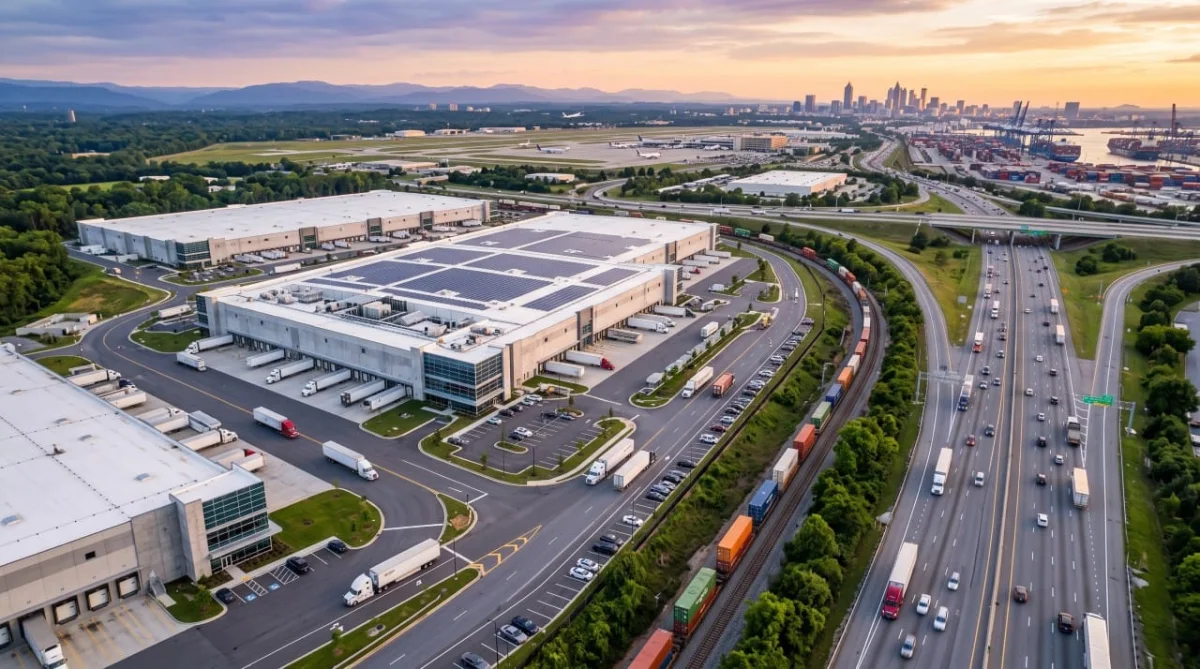
A competitive warehousing region gives companies options: routes to multiple markets, access to more than one freight gateway, facilities that can support current operations and capacity that can expand when demand rises. North Carolina illustrates how those pieces can work together, but transport access alone doesn’t determine whether a distribution network can keep pace.
For shippers comparing locations, the practical question is how infrastructure, buildings and service providers fit their freight flows. A location that looks close on a map may still create longer delivery times if routes are congested or the available warehouses can’t handle the equipment and throughput a business requires.
Transport access sets the reach
Highway density and interstate connections shape how quickly freight can move between warehouses, suppliers and major East Coast population centers. Strong road access can make it possible to reach several metropolitan areas within one business day, supporting time-sensitive shipments and tighter delivery schedules. It can also reduce the extra time and operating effort associated with congested routes or infrastructure constraints.
Access to ports and airports adds routing choices. When a company can use more than one gateway for inbound or outbound freight, it has greater flexibility if congestion affects a particular route. North Carolina has an extensive highway system, four international airports and two seaports. The state’s transport connections give businesses multiple options for moving goods.
Warehousing location also affects the final leg of delivery. Shorter distances from a distribution center to customers can reduce transportation costs per unit, fuel use and delivery windows. That can matter particularly for frequent orders and time-sensitive shipments. E-commerce operations have an added reason to consider customer proximity: delivery speed can influence whether customers complete purchases and return to shop.
Distance to suppliers matters too. Placing warehouses closer to supply chain partners can cut mileage between distribution nodes, shorten lead times and reduce wear on fleet vehicles. Lower maintenance needs can contribute to savings over time, alongside reduced transportation expense. Companies assessing possible sites should map both supplier and customer locations rather than choosing a warehouse based on either side of the flow alone.
Buildings need to match the operation
Regional capacity is useful only if the facilities can support the work. About 52% of U.S. manufacturing facilities are between 30 and 60 years old, according to JLL. Older industrial buildings may lack the ceiling height, floor load capacity or power supply needed for robotics, modern material handling and advanced warehouse management systems.
Those constraints can limit throughput or make technology upgrades harder to implement. Businesses evaluating a region should check whether available warehouse space can accommodate their intended racking, automation and handling equipment, as well as the power those systems require. The presence of buildings alone doesn’t establish that a region can support a company’s operating plan.
New industrial construction and substantial facility upgrades can help regions serve companies with plans to expand or modernize. For a shipper, the key is whether suitable space is available for the operation’s needs and growth plans. A building that works for current storage volumes may not support higher throughput or automated processes later.
Flexible capacity helps manage peaks
Demand often changes through the year. Retailers may need additional space ahead of holiday shopping, while agricultural businesses may need room for harvest-related inventory. Leasing enough space to cover a seasonal peak can leave companies paying for unused capacity during quieter periods.
Short-term storage and variable-cost arrangements offer another way to cover these fluctuations. Through third-party logistics (3PL) providers, businesses may be able to adjust storage and operating capacity with actual throughput. Crown LSP Group describes short-term warehousing and flexible 3PL operations as options for handling inventory spikes without paying year-round for peak-period space. Companies still need to assess whether the capacity and services available match their timing and handling requirements.
A region with a strong 3PL network can give shippers access to shared capacity that expands or contracts with demand. This can reduce fixed overhead while allowing a company to respond to a surge. Before relying on that flexibility, businesses can assess what services local providers offer, including temperature-controlled storage and on-site warehouse operations.
Provider coordination affects execution
Storage, fulfillment, distribution and last-mile delivery may each be handled by a different provider. That arrangement can create extra handoffs, communication gaps and inconsistent service. Coordinating those functions through one regional partner may simplify the flow of work and make it easier to assign responsibility when a shipment or order is delayed.
Local 3PL providers can also bring carrier relationships and knowledge of the area, which may help companies get operations started. A provider’s facility coverage and specialized capabilities matter when inventory patterns are complex or seasonal. For companies entering a logistics-rich region such as North Carolina, that coverage can affect how well the network handles changes in volume and storage needs.
There’s no single measure of regional competitiveness. Companies need to weigh road and multimodal access against customer and supplier distances, building suitability, scalable storage and the range of local logistics services. Regions that combine those capabilities give businesses more ways to manage daily flows and respond when volumes shift.
For site selection, the useful takeaway is to evaluate the whole operating network: how freight reaches the region, how it moves through facilities, and how providers can support changing demand. That assessment shows whether a location can serve both current delivery requirements and future operating needs.


