Monday, August 10, 2026 · Trucking & Freight
How TMS Can Cut Freight Costs and Transport Emissions
Noted by Martijn Graat · 452 reads
Real-time planning, fuller trucks and flexible delivery windows can lower transport costs and emissions, though some greener choices still cost more.
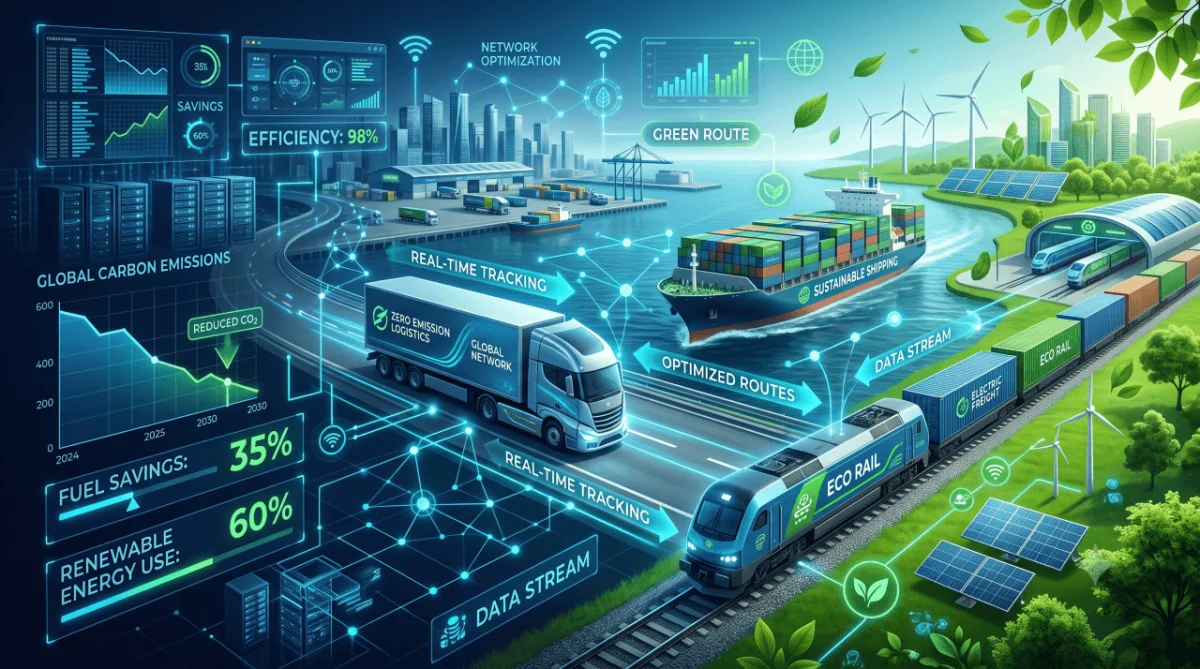
Transport management software can help shippers reduce freight costs and emissions together, especially when it gives planners more time to consolidate loads and choose how goods move. In a conversation with Elmer Spruijt, Descartes’ vice president of transportation management for EMEA, the central point was practical: better visibility and more flexible planning can prevent costs that a low freight quote alone won’t reveal.
Spruijt returned to the Does Logistics Matter? podcast after an earlier discussion of automation and the development of transportation management systems (TMS). This episode focused on sustainability and what companies can do with the data and tools already available. The discussion also acknowledged that environmental goals and cost savings often align, but not in every case.
Low rates can hide downstream costs
Freight price is only one part of the cost of moving goods. A shipment can arrive at a port without enough visibility for the receiving team to coordinate pickup or prepare the warehouse. Delays may then lead to demurrage charges, while staff scramble to arrange the next step. Any initial saving on the ocean rate can be eaten up by a poorly coordinated arrival.
That example makes visibility an operational issue, not just a reporting feature. Knowing where freight is and when it is expected to arrive helps teams coordinate carriers, pickup, warehouse capacity and delivery. Spruijt’s argument is that an upfront investment in smarter planning can cost less over the full journey than choosing a cheap service with little information about what happens next.
Planning for fuller trucks in real time
Truck utilisation is another opportunity. The challenge is to combine orders efficiently while meeting delivery windows and responding quickly as circumstances change. An order placed in the morning might be cancelled or redirected later in the day, when a truck is already travelling toward the same destination. If planners can adjust the plan in time, they may be able to use capacity that would otherwise go unfilled.
That pace of replanning is difficult to sustain through manual work alone. Traditional planning often happens at set times, but modern TMS platforms can keep assessing orders, carrier capacity and route options as new information arrives. Traffic and weather can change the plan, as can a carrier’s confirmation of available space. The system can then recalculate rather than waiting for the next scheduled planning round. Artificial intelligence can help process those changes faster and identify options for planners to act on.
Improving a truck’s load factor can reduce both cost per shipment and emissions per shipment, the conversation suggests. The same pattern may apply when a shipper moves suitable freight from air to ocean or rail: the freight bill can fall along with the transport footprint. These results depend on the shipment and service requirements, but they give logistics teams a reason to assess price, transit time, capacity and emissions together.
There are exceptions. An electric truck still carries a higher upfront price, Spruijt said, and slower ocean service takes longer. Some choices that lower emissions can cost more or require a longer delivery window. Recognising that trade-off helps companies compare actual options rather than assume every sustainability measure will immediately reduce spending.
Emissions data can inform carrier and route choices
Spruijt pushed back on the idea that companies lack the information to assess transport emissions. Modern TMS platforms can calculate emissions in real time, include CO2 in carrier selection alongside price and transit time, and optimise routes to reduce kilometres. That gives shippers a way to put emissions into routine transport decisions, rather than treating them as a separate calculation after freight has moved.
Shippers can also make emissions requirements part of carrier tenders. The podcast notes that European reporting requirements apply to companies above certain size thresholds, adding to the reasons businesses may need clearer transport data. For teams managing multiple carriers and modes, the practical task is to make emissions information useful at the point where routes, capacity and service levels are being chosen.
More delivery flexibility creates room to consolidate
Delivery preferences influence what a carrier can consolidate. When customers accept a wider delivery window at checkout, carriers may have more time to combine shipments and plan routes efficiently. Not every customer needs next-day service, and the conversation’s point is that a meaningful share of flexible orders can give planning software more options. It doesn’t require every customer to choose a slower delivery.
Corporate buyers can shape the same choices through their procurement requirements. A shipper that considers emissions in carrier tenders can make the transport footprint part of the selection process. Consumer delivery windows and corporate purchasing decisions operate at different points in the chain, but both can create room for better consolidation and mode choices.
What AI can do at scale
The discussion returned to Debbie, an AI agent built by Descartes to call drivers and help them install a tracking app. Debbie had made 700,000 calls when Spruijt appeared on the first episode; by the second, she had passed one million. The calls span languages and countries. Debbie checks whether the app is installed, guides drivers through setup when it isn’t, and responds to questions or objections.
Previously, teams made those calls manually, a process the source describes as slow, expensive and difficult to scale. Automating the contact can help improve the number of drivers using the tracking app, supporting the visibility needed to coordinate shipments. The episode also describes this use of AI as a way to improve safety, though it provides no further operational detail about the safety outcomes.
The broader takeaway is that delivery speed affects the choices available to planners. Tight next-day expectations leave less time to consolidate freight, select a lower-emission mode or coordinate arrivals. A wider delivery window can give software more room to build a workable plan. For shippers, the useful question is not simply how fast each order can arrive, but where greater flexibility can improve service, utilisation and emissions across the operation.
The earlier episode with Elmer Spruijt covered smart automation and the evolution of TMS. The later conversation examines how continuous planning, emissions data and delivery choices can shape day-to-day transport decisions.


