Friday, October 2, 2026 · Trucking & Freight
Singapore Shippers Weigh Rate Volatility, Surcharges and Capacity Risks in 2027 Budgets
Noted by Deborah Ong · 721 reads
A Singapore freight roundtable highlighted rising spot rates, opaque fuel surcharges and disruption risks shaping shippers’ 2027 ocean budgets.

Shippers planning 2027 ocean freight budgets face a difficult mix: spot rates have climbed, fuel surcharges remain hard to predict, and schedule reliability has weakened. At a Singapore roundtable hosted by Xeneta, procurement and logistics leaders from mining, consumer goods, electronics, apparel and food logistics compared how they’re preparing for those pressures. Their shared takeaway was that a budget now has to account for dependable supply as well as freight cost.
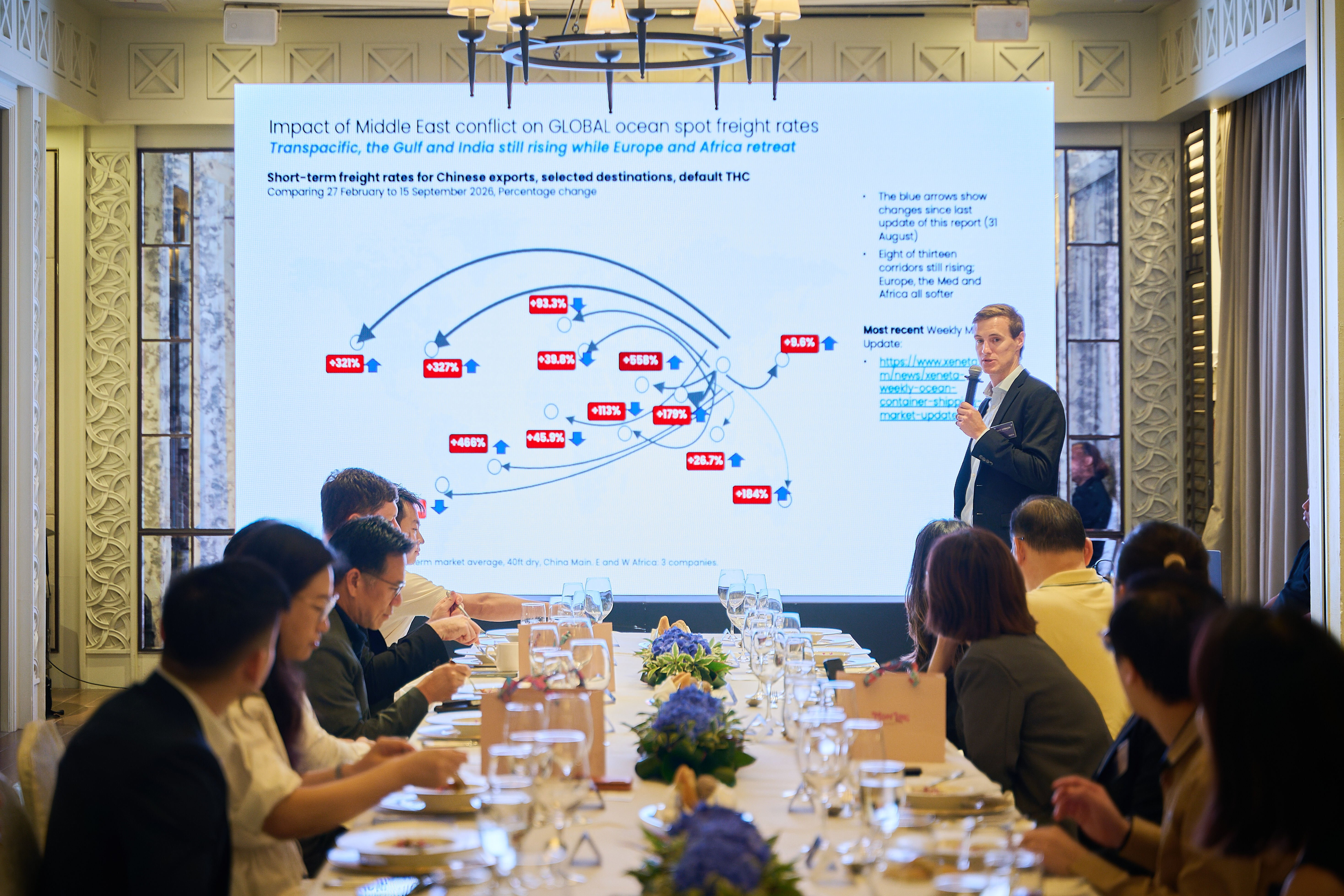
Rates have risen even as trade growth slows and new vessel capacity approaches. The roundtable participants saw disruption, rather than stronger demand, as the main force supporting the market. They expect that pressure to persist into 2027, making it harder to choose a budget figure and a contract strategy with confidence.
Disruption is supporting rates as fleet capacity grows
Since February, spot rates have increased 558% from China to the Middle East, 327% to the US East Coast, 321% to the US West Coast and 93% to North Europe. Seaborne container trade is growing around 3% this year, down from about 6% in 2024. Meanwhile, scheduled container ship deliveries are set to reach a record 4.7 million TEU in 2028, pushing fleet growth back to 11%.
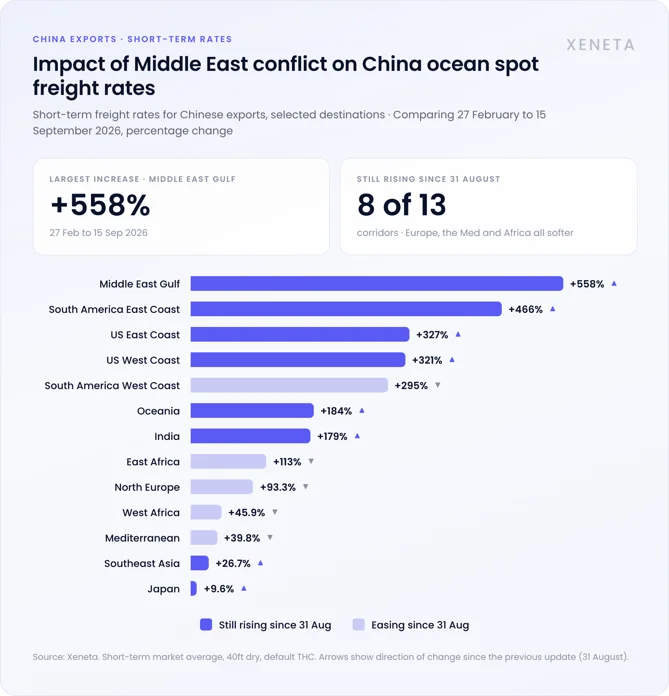
Participants pointed to Red Sea rerouting, union action on both US coasts, congestion at Asian ports and a November decision point for USTR Section 301 measures as factors absorbing capacity or putting upward pressure on rates. Remove those disruptions, they argued, and rates could fall quickly. Their expectation was that these pressures would still be present before 2027.
Fuel charges are complicating contract costs
Bunker surcharges drew the sharpest debate. Bunker prices spiked in March and have been broadly flat since late April, while surcharges continued to rise. From February to the end of July, the Far East–Mediterranean surcharge climbed from $250 to $533 per FEU, up 113%. The Far East–US West Coast charge went from $426 to $717.
Shippers said carriers often add charges after the base rate is agreed, with little explanation. One attendee said contracts no longer feel settled when each new surcharge has to be negotiated as it appears. Several carriers were described as taking a “take it or leave it” approach to bunker charges.
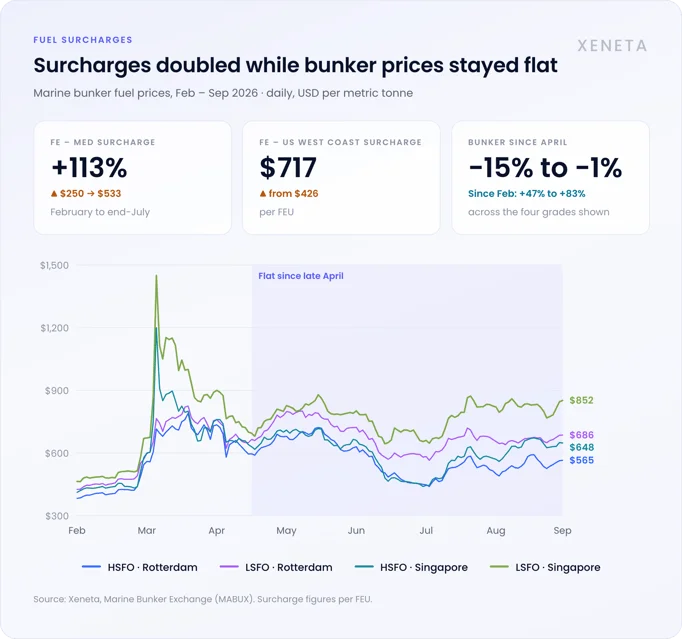
The group’s recommendation for the next tender was to separate the base rate from fuel and set a transparent bunker adjustment mechanism. Participants said it’s close to impossible to introduce that structure midway through a contract, so tendering is the time to negotiate it.
Reliability and congestion need lane-level scrutiny
The Gemini Cooperation began in February 2025 with schedule reliability above 90% and a commitment to maintain that level. By August 2026, reliability had dropped to 52%. That still exceeded the 29% global average, but fell well short of the original promise. Some shippers had moved volume to Gemini for its reliability; they’re keeping it there because they see no more reliable alternative. Participants said the cause of the decline was unclear, with congestion and carrier capacity management both raised as possible explanations.
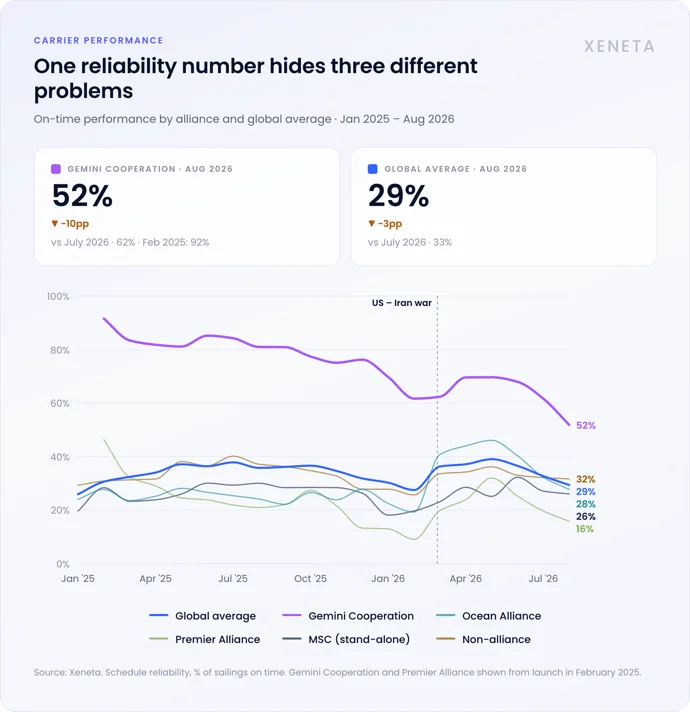
That uncertainty makes carrier scorecards useful during tender preparation. Shippers can compare actual and promised transit times, schedule reliability, blank sailings and off-capacity. One attendee reported a four-day transit-time difference between two carriers on the same lane, a gap that affects working capital as well as service.
Congestion prompted disagreement. Some participants viewed it as a carrier explanation, especially in Singapore, where transshipment hubs cite limited berth availability even though carriers control berth sequencing and vessel schedules. Others said infrastructure in the US and Europe is already at capacity and can’t quickly expand roads and railways. They expect congestion to worsen and argued that getting containers out of ports may become a bigger challenge than bringing them in.
Both sides agreed that congestion in China is real and is adding seven to 10 days on some lanes. The group also stressed that Asia’s port conditions need to be assessed individually. Some shippers are using trucking as a short-term workaround; others are building longer transit times into internal plans to avoid rushed choices when surcharges arrive.
Panama poses a contingency risk for East Coast cargo
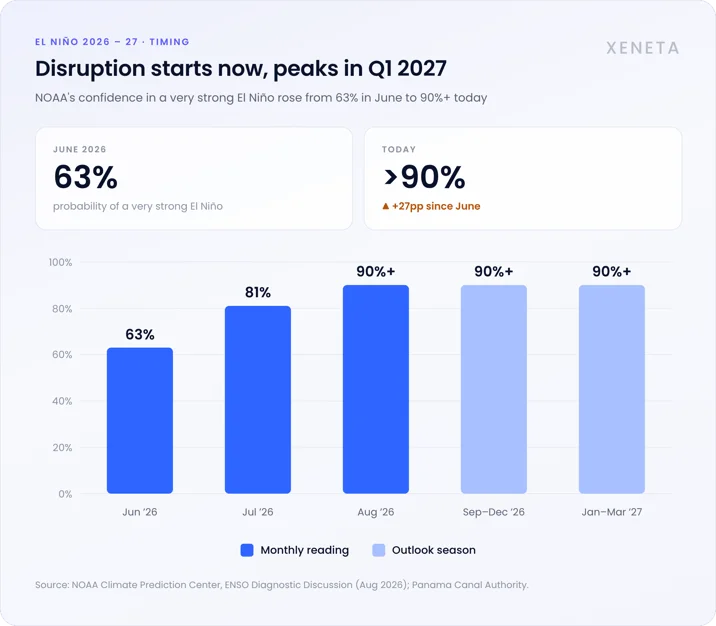
El Niño in 2026 is expected to be one of the largest on record, with NOAA’s confidence in a very strong event rising from 63% in June to more than 90%. The greatest operational effect is expected from January through April 2027. Daily Panama Canal transits have already declined from 36 to 32. During the 2023–2024 drought, containership transits fell from nine a day to seven.
Asia–US East Coast spot rates have nearly doubled since June, rising from $5,000 to $9,791 per FEU as Panama surcharges and blank sailings coincide with peak season. The US West Coast is already congested and may not have room for diverted cargo. At the roundtable, no participant had a contingency plan to shift East Coast volume to the West Coast.
Build the budget around supply assurance
Participants described different priorities for 2027. A mining company wants to balance cost with service reliability; a consumer goods manufacturer wants to secure vessel space; and a food logistics provider wants confidence that service will match commitments. An electronics company said its relevant budget covers all door-to-door costs, not ocean freight alone. None named the lowest rate as the main objective.
That shift reflects the cost of service failures. One attendee described a container bound for Europe that sat in Lebanon for 60 days. The group also discussed a move away from just-in-time inventory toward holding more stock in warehouses. A freight-only budget can miss the downstream cost of delays and the inventory needed to manage them.
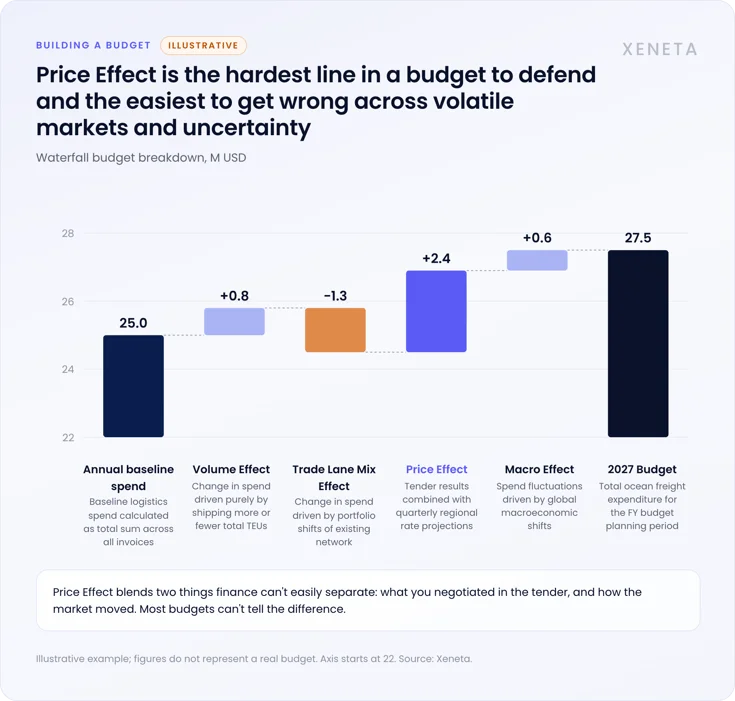
The proposed budgeting framework has five parts: baseline spend, volume effects, trade mix shifts, network changes and broader price effects. Bunker should be modeled separately under two scenarios. VLSFO averaged $535 per tonne in 2025 and $668 so far in 2026. The EIA’s 2027 forecast was $528 if the conflict resolves, compared with $639 in its projection from a month earlier. Since surcharges rely on trailing averages, changes in fuel prices can take a quarter or two to appear on invoices.
Contract duration and index-linked pricing
Around 85% of shippers remain on 12-month contracts, while 25% to 30% have switched to rolling three-month extensions. Many chose shorter terms expecting rates to decline before their next commitment. Instead, they’re facing the same elevated market, with less negotiating power than a full tender might provide.
Some shippers are considering index-linked rates for the first time. Their questions include whether the index is reliable, how the formula works and whether it protects minimum quantity commitments. Participants already using indexed contracts reported strong delivery against those commitments this year despite rate spikes.
Regional data and peer experience
Xeneta says it is expanding data partnerships across Asia Pacific, with China, South Korea, Japan, Australia, New Zealand and India as priority markets through 2027 and 2028. The company says its platform displays the sample size behind each rate, so shippers can assess lane coverage as regional data expands. Its analysts also work with customers on forecasting, tender preparation, negotiations and quarterly reviews.
Roundtable discussion added a practical layer: shippers could compare short-term extensions with index-linked contracts and challenge one another’s explanations for congestion. For 2027 planning, the concrete task is to model fuel separately, assess carrier service by lane and prepare for disruption to East Coast routes. The budget should reflect what it takes to keep cargo moving and goods available, not just the contracted ocean rate.