Friday, October 16, 2026 · Ocean Shipping & Ports
Route Optimisation Leads Sustainable Logistics Adoption, KLU Survey Finds
Noted by Henrieke Wagenvoort · 315 reads
A 1,085-person KLU survey finds route and supply chain optimisation widely adopted, while infrastructure and skills gaps slow other measures.
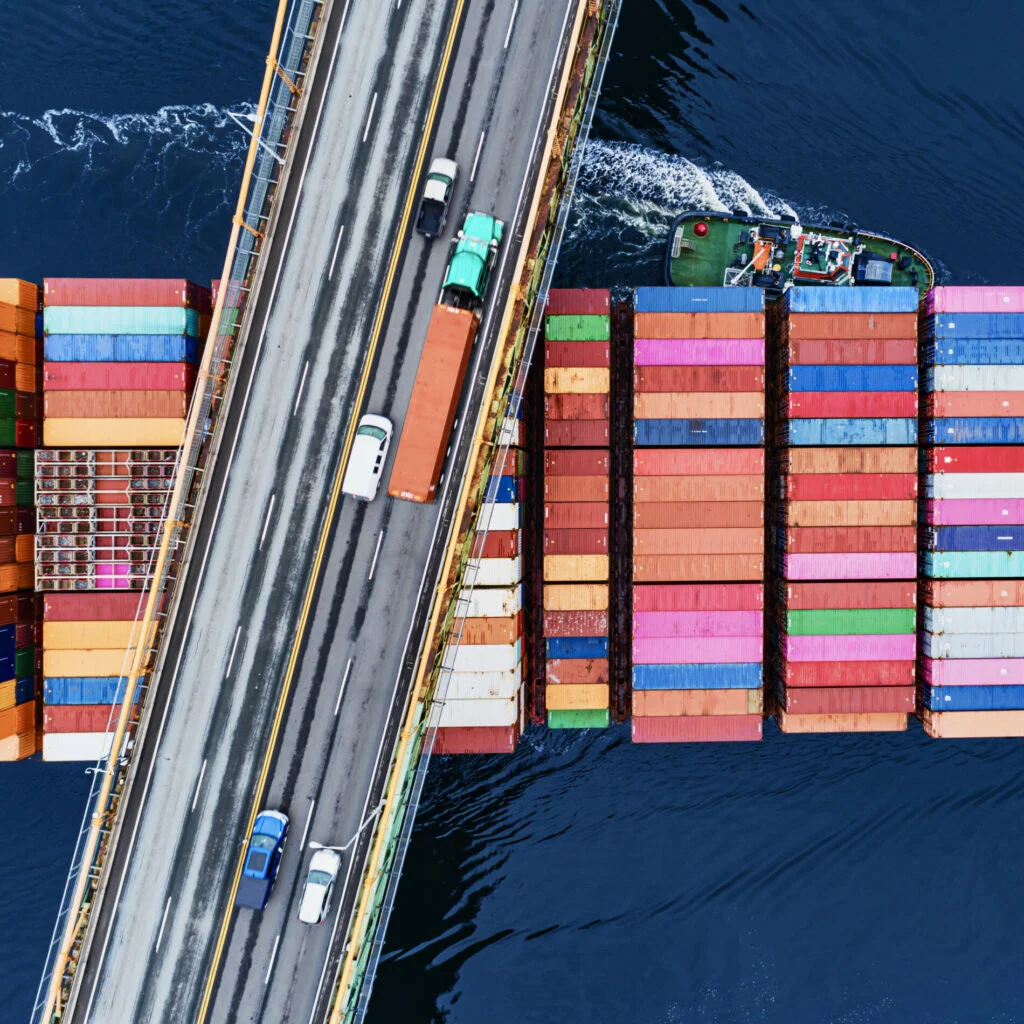
Route planning and supply chain changes are delivering some of the most widely adopted sustainability gains in logistics, while fleet electrification and low-carbon fuels remain harder to put into practice. That is the central finding of Kühne Logistics University’s 2026 Global Sustainable Logistics Survey, which gathered responses from 1,085 people in 64 countries.
The study compared 21 sustainability solutions across four categories. Operational and supply chain measures ranked highest as a group for both adoption and perceived effectiveness. Route optimisation and supply chain optimisation stood out for combining strong effectiveness ratings with broad use. The pattern suggests that companies can often make progress through planning, coordination and operating changes before taking on larger equipment and infrastructure commitments.
Operational changes are already in use
Route optimisation can include dynamic planning based on GPS, AI-assisted routing and live congestion information. Those tools can help planners adjust trips as conditions change. Their potential depends on the data available and how well routing decisions fit day-to-day operating requirements, but the survey places this measure among the solutions respondents consider both effective and practical.
Supply chain optimisation covers a wider set of decisions, including pooling inventory, coordinating with suppliers and managing orders. Operational efficiency includes measures such as automated loading and improving load factors. These approaches address different points in the movement of goods: better routing changes how vehicles travel, while inventory and order coordination can change what needs to move, when it moves and how much capacity each shipment uses.
These measures can be attractive to operators because they do not necessarily depend on major capital spending and may generate savings that help pay for implementation. That does not make them effortless. Teams still need reliable information, clear processes and coordination among the people making transport and inventory decisions. The survey’s findings point to operational execution as a practical route to progress, rather than a one-time technology purchase.
KLU also points to examples where collaboration extends the gains beyond a single company. The Lean & Green approach involves more than 600 European companies. Participants start by aiming to reduce emissions per transported unit by 20 per cent within five years, then move toward collaboration and supply chain redesign. In Japan, four major brewers jointly use rail containers and lorries for long-distance transport; the arrangement has reduced emissions by around three-quarters, the report says.
Infrastructure shapes what companies can implement
Respondents also regard low-carbon fuels, fleet electrification and charging or refuelling infrastructure as effective. Adoption, however, is much lower. These measures can require substantial investment and depend on infrastructure and policy conditions that an individual company has limited ability to control. Modal shift and circular logistics can also be difficult to expand independently because they require changes involving other organisations.
That gap between perceived effect and feasibility is a key part of the survey’s account of slow implementation. The findings do not point to a major divide between logistics providers and the companies buying their services. KLU reports that the two groups have very similar views on effectiveness, stakeholder expectations and feasibility. Their assessments line up for commonly implemented measures—including digital coordination, route planning, supply chain optimisation and operational efficiency—as well as for less adopted options such as alternative fuels and charging infrastructure.
The clearest shared signal is around route optimisation. On a five-point scale, logistics service providers gave it an average effectiveness score of 4.10, while their customers scored it 4.18. Supply chain optimisation received scores of 4.06 and 4.12, respectively. Operational efficiency scored 4.04 among providers and 4.07 among customers. KLU says respondents also rate the feasibility of these measures relatively highly.
For shippers and carriers, those closely matched ratings matter because they suggest both sides see value in practical operating changes. They also make coordination a useful place to focus: customers and providers can compare routing, order and loading processes against shared goals, while recognising that investments in vehicles and supporting infrastructure may face constraints outside an individual firm’s control.
Skills are another constraint
Tools alone cannot scale sustainability measures. KLU assessed 21 skills and found high relevance for knowledge of sustainable transport technology, interpreting data and supporting decisions, strategic planning, scenario thinking, putting sustainability plans into operation and training. End-to-end supply chain management, data analysis, financial knowledge and the ability to integrate logistics systems also matter.
The researchers identify three technical capabilities that are important but in short supply: calculating and reporting emissions, understanding sustainable transport technology, and using digital sustainability tools such as emissions tracking, optimisation software and digital twins. The ability to calculate Scope 1, 2 and 3 emissions is a particular shortfall in Sub-Saharan Africa, where 61 per cent of respondents cite a gap. KLU also identifies the issue as a relatively significant bottleneck in West Asia, South-East Asia and Latin America.
In Europe, the reported skills gap takes a different shape. Analytical and strategic capabilities are relatively scarce. In Western Europe, respondents point to system dynamics and a holistic approach as shortcomings. That finding broadens the workforce challenge: companies need staff who can measure emissions and understand transport technology, alongside people who can interpret that information and apply it to decisions across a supply chain.
The survey’s practical takeaway is that sustainability work needs to match the intervention to the company’s ability to carry it out. Routing, coordination and efficiency measures already combine high adoption with strong effectiveness ratings. Scaling the more infrastructure-dependent options will require investment and wider coordination, while progress on both fronts depends on building the technical and analytical skills needed to turn plans and data into operating decisions.
The post Route optimisation emerges as the frontrunner in making logistics more sustainable appeared first on Supply Chain Movement.